
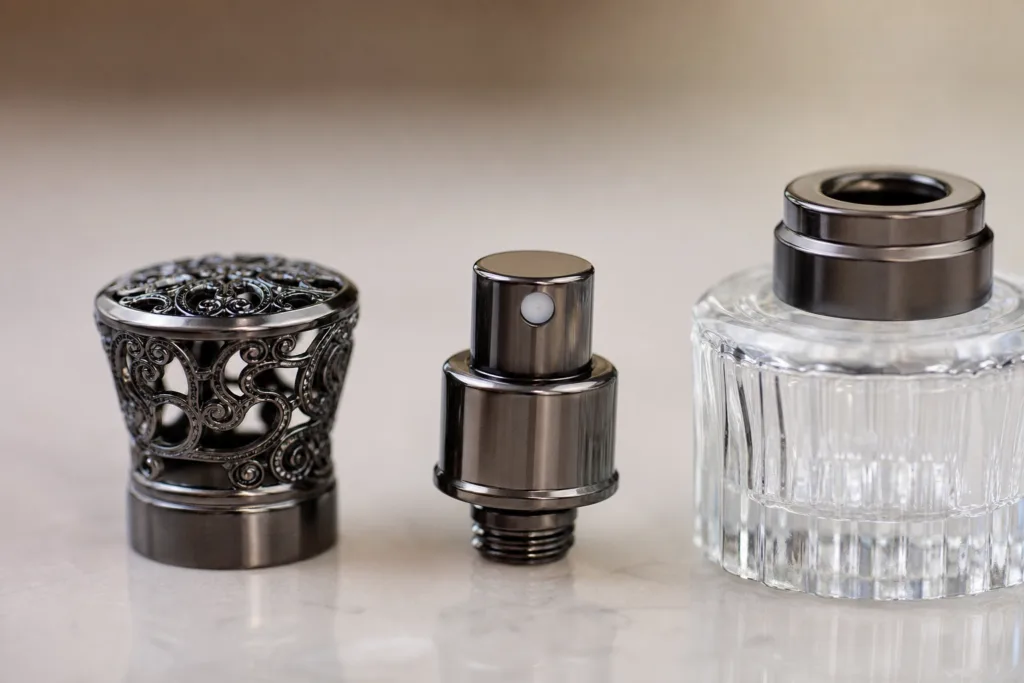
A decorative perfume cap and a spray pump cap are not the same component, and many fragrance packaging delays begin when buyers treat them as if they are interchangeable. In practical sourcing terms, the perfume spray nozzle cap discussion should always separate the visible outer cap from the functional pump, because fit, appearance, retention, and assembly performance depend on how those two parts interact with the bottle neck, collar, and insert structure.
If your project requires premium decoration, reliable retention, and clean alignment over the actuator area, custom perfume bottle cap manufacturing support becomes important early in development. We typically help buyers confirm bottle dimensions, cap inner structure, decorative metal construction, finish direction, logo treatment, and sample validation so the final cap works with the selected pump system instead of only looking correct in a rendering.
What is the difference between a decorative cap and a spray pump cap
The short answer is simple: the pump dispenses fragrance, while the decorative cap protects and covers the pump assembly. A buyer may purchase both within one packaging project, but they perform different jobs and should be specified separately in any RFQ, drawing set, or sampling request.
Functional roles in fragrance packaging
A spray pump is the functional closure system. It includes the actuator path, stem, crimp or screw attachment to the bottle, and the sealing structure that supports spraying performance. If the pump is wrong, the package may leak, mis-spray, sit too high, or fail to assemble correctly.
The decorative cap is the outer cover that sits over the pump or collar area. Its role is to protect the actuator, contribute weight and hand feel, support premium presentation, and create the final brand impression when the bottle is handled on shelf or in unboxing.
For luxury fragrance projects, the decorative cap is often made from zinc alloy or another metal-forward structure because weight, rigidity, and finish quality strongly influence perceived value. From our manufacturing perspective, buyers usually focus first on appearance, but long-term success depends just as much on internal structure, insert design, and retention force.
| Component | Main Function | Typical Buyer Concern | Key Risk if Unspecified |
|---|---|---|---|
| Spray pump | Dispensing and sealing | Neck finish, dosage, crimp or screw type | Leaks, poor spray, assembly failure |
| Decorative cap | Protection and presentation | Fit over pump, weight, finish, branding | Loose fit, scratches, poor alignment |
| Insert or inner part | Retention inside cap | Grip diameter, material, assembly tolerance | Cap falls off or fits too tightly |
| Collar or visible pump shell | Visual transition around neck | Height, diameter, finish match | Gaps, cap interference, uneven look |
Key takeaway: Buyers should never ask for “the cap” without clarifying whether they mean the functional spray pump or the outer decorative cover, because the specification logic is different for each part.
Where compatibility issues occur
Most compatibility problems happen at the interfaces, not on the visible top surface. The critical zones are the bottle neck finish, pump attachment method, collar diameter, actuator height, decorative cap inner cavity, and the insert that grips the pump or collar area.
One common mistake is approving a cap diameter from artwork or bottle renderings without checking the real pump geometry. Another is changing pump suppliers after cap sampling. Even small changes in collar profile, actuator height, or neck tolerance can affect whether the cap sits flush, rattles, grips correctly, or damages the finish during repeated use.
Buyers should also understand that crimp-neck and screw-neck bottles are different systems. The difference between FEA crimp finishes and screw neck perfume bottles matters because the pump attachment, visible profile, and outer cap fit can change significantly between those formats.
When we review new projects, we pay close attention to the cap’s internal clearance and retention path. A heavy decorative metal cap may look excellent, but if the inner dimensions are based on assumptions rather than confirmed pump data, the buyer can face loose retention, friction marks, or assembly damage during bulk packing.
What buyers should specify before requesting quotes
The best RFQ is not the one with the most pages. It is the one that clearly separates bottle, pump, decorative cap, and finish requirements so the manufacturer can evaluate fit and production risk accurately.
At this stage, we recommend that procurement teams prepare the actual bottle sample when possible, not only drawings. Real components help confirm interface details that are often missing from simplified packaging specifications.
Bottle neck finish and pump type
Start with the bottle neck finish. If the neck type is unclear, the rest of the specification becomes less reliable. Buyers should state whether the bottle uses a crimp finish or a screw finish, the relevant neck dimensions, the pump supplier if already selected, and whether a collar or over-shell is part of the visible assembly.
This is also where early dimensional review matters. If your team needs a deeper reference on tolerance logic, our guide to perfume bottle cap sizing and fit requirements explains why small variation around the neck and shoulder area can create visible cap alignment problems later.
- Bottle drawing or physical bottle sample
- Neck finish type and nominal dimensions
- Pump attachment method: crimp or screw
- Pump brand or supplier, if locked
- Collar diameter and visible height
- Actuator height from bottle shoulder reference
- Required cap seating position
- Any existing insert or retention standard
For custom fragrance packaging, the buyer should also say whether the decorative cap is expected to grip the pump collar, an overcap shell, or a separate insert landing area. This affects internal geometry and can change both mold design and retention testing.
Decorative cap requirements
Once the pump system is defined, the decorative cap specification becomes much clearer. Buyers should specify material direction, target weight, external dimensions, finish style, logo treatment, and whether the cap should sit tightly, remove softly, or deliver a heavier premium pull-off feel.
Zinc alloy is frequently chosen when the objective is a dense hand feel, precise decorative surface, and a more premium visual presence than lightweight plastic can usually provide. The trade-off is that heavier caps require more attention to balance, insert design, and packaging protection during transit.
| Decorative cap point | What to specify | Why it matters |
|---|---|---|
| Material | Zinc alloy, aluminum, plastic, mixed construction | Affects weight, mold route, finish options, cost |
| Inner fit | Insert type, grip area, target retention force | Controls cap stability and user experience |
| Outer size | Diameter, height, wall thickness expectations | Impacts visual proportion and mold feasibility |
| Weight target | Approximate cap weight range | Helps control premium hand feel and balance |
| Finish | Electroplated, painted, polished, matte, brushed effect | Determines process route and approval standard |
| Branding | Engraving, embossing, debossing, printed logo area | Affects artwork preparation and clarity |
If the cap is intended to match a plated collar or pump shell, buyers should say that explicitly. A gold-look outer cap next to a warmer or cooler gold collar can make an expensive bottle look inconsistent even when both parts are acceptable in isolation.
This is where bottle fit engineering for decorative cap alignment becomes especially relevant. The outside silhouette may appear simple, but the hidden internal structure often determines whether a cap sits centered, clears the actuator correctly, and removes smoothly without scraping the pump assembly.
How a perfume spray nozzle cap project should be specified in one RFQ
Buyers get better supplier feedback when the RFQ is broken into functional sections. Instead of asking for a “metal perfume cap,” define the bottle system first, then the pump, then the decorative cap, then the approval criteria.
- Project type: new launch, line extension, private label, or replacement cap
- Bottle volume and bottle supplier status
- Neck finish standard and measured dimensions
- Pump type, collar shape, and visible finish
- Decorative cap material and target weight
- Cap fit method: insert grip, friction fit, or custom inner structure
- Surface finish expectations and color references
- Logo artwork format and branding location
- Sample quantity and approval checkpoints
- Estimated order volume, launch timing, and destination market
Key takeaway: A good RFQ does not only describe how the cap should look. It defines what the cap must fit, how it must perform, and which dimensions are fixed versus still under development.
When electroplated and painted cap finishes create different fit risks
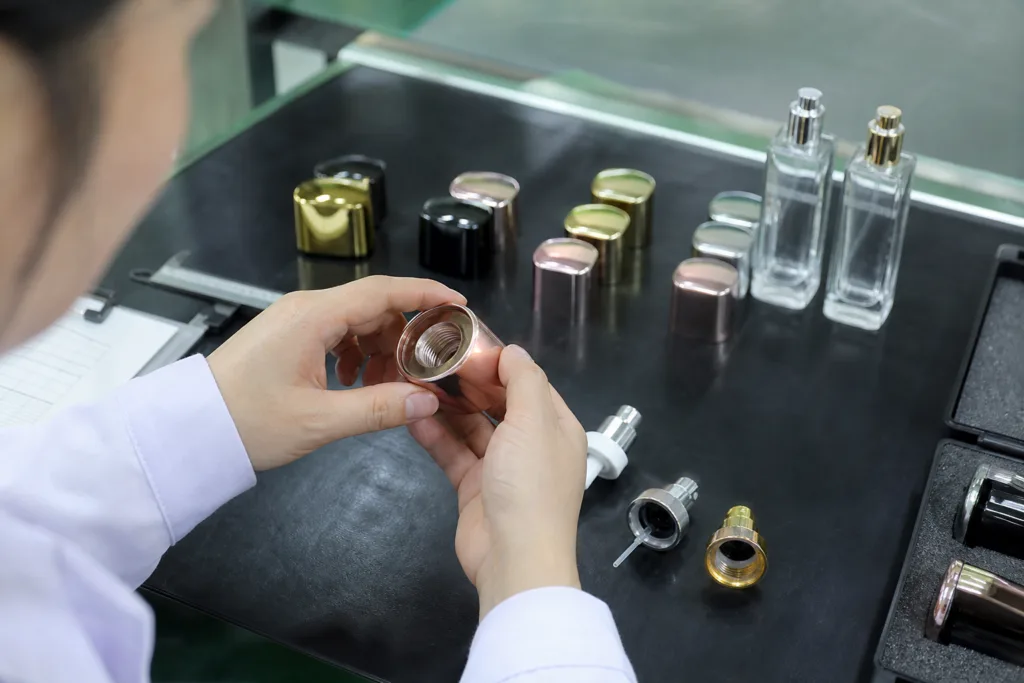
Finish selection changes both aesthetics and dimensional behavior. Electroplating can sharpen a luxury appearance and support metallic effects, while painted finishes can offer broader color flexibility, softer tones, or better match opportunities with brand color systems.
However, buyers should remember that finish builds add thickness, and different process routes influence edge appearance, logo readability, and wear behavior. On a tight-tolerance inner cavity, finish buildup may affect assembly feel. On visible outer surfaces, insufficient polishing before plating can make even a premium color look inconsistent.
| Finish type | Strength | Typical approval focus | Common risk |
|---|---|---|---|
| Electroplated | Bright metallic appearance | Surface smoothness, tone consistency, adhesion | Base polishing defects become visible |
| Painted | Flexible color control | Color match, coverage, edge cleanliness | Scratch visibility or uneven coating |
| Matte finish | Soft premium feel | Texture consistency | Patchiness across lots |
| High polish | Luxury reflective look | Surface preparation quality | Minor defects show easily |
From our decorative metal cap production experience, the finish approval standard should include both visual and functional checks. A cap that passes color review but scratches the collar during insertion is not production-ready. The same is true for a cap that looks acceptable alone but does not match the adjacent pump finish on the assembled bottle.
How manufacturers coordinate cap and pump alignment
The practical answer is that alignment is coordinated through shared dimensions, physical sampling, and repeatable assembly checks. Drawings are useful, but physical validation is what exposes hidden conflicts between the cap insert, pump collar, actuator height, and bottle shoulder geometry.
Sample testing and assembly validation
Before bulk production, the buyer should request assembled samples using the actual or final-equivalent bottle and pump. This step is where many packaging risks can be reduced at relatively low cost compared with correcting a mold or reworking finished inventory.
Our normal recommendation is to include removal and replacement testing, not only a static fit check. That is because some caps appear correct on first placement but gradually loosen, mark the pump shell, or catch the actuator after repeated consumer use.
For projects that involve multiple suppliers, structured sample development for cap and pump assembly validation helps identify whether the issue comes from the decorative cap, the insert, the pump collar profile, or the bottle tolerance stack.
- Check cap seating height on assembled bottle
- Check centering relative to bottle body and shoulder
- Confirm no actuator interference
- Measure retention consistency across multiple samples
- Inspect finish contact points after repeated opening cycles
- Review logo orientation if directional placement matters
- Test transit packing with separators if the cap is heavy metal
If the project is for private label fragrance packaging, the team should also confirm whether future bottle lots will come from one glass source or several. Small bottle variation can be manageable, but only if the cap retention system has enough tolerance control built into the design.
Production consistency checks
Bulk production success depends on controlling the same details that were approved in sampling. This includes cap dimensions, insert hardness or grip behavior, finish consistency, logo clarity, assembly cleanliness, and packing method.
We also advise buyers to document which sample becomes the approval standard. Without a signed and traceable sample reference, later discussions about acceptable fit or finish can become subjective. That is especially risky when the decorative cap supplier and pump supplier are different companies.
Documented inspection discipline is not just a large-brand requirement. Broader cosmetic packaging quality inspection and GMP-based control practices support the idea that component checks, assembly verification, and recorded approval criteria reduce avoidable quality failures in cosmetic packaging projects.
In our day-to-day work at Caps Ltd, production control for decorative fragrance caps usually includes dimensional checks, finish review, insert verification, assembly confirmation with matching components, and packaging inspection before export release.
| Checkpoint | What to inspect | Why buyers should care |
|---|---|---|
| Incoming components | Base castings, inserts, finish references | Prevents hidden variation early |
| In-process dimensions | Inner diameter, seating depth, top-to-insert position | Protects assembly fit |
| Surface finish | Color consistency, plating quality, paint coverage | Controls shelf appearance |
| Branding | Logo depth, position, edge clarity | Protects brand presentation |
| Assembly test | Fit on approved bottle and pump set | Validates real compatibility |
| Final packing | Tray layout, separators, export carton integrity | Reduces transit damage |
This is why buyers should ask for defined quality control checkpoints for production consistency before confirming mass production. A beautiful approved sample is useful, but it only becomes reliable purchasing information when the same acceptance logic is applied to bulk output.
Common mistakes that cause cap and pump mismatch
The most common mistake is assuming the decorative cap can be finalized before the pump system is fixed. In reality, cap development should follow confirmed bottle and pump data, not the other way around.
- Using bottle artwork dimensions instead of measured physical samples
- Changing pump supplier after cap sample approval
- Ignoring collar height differences between similar pumps
- Approving finish only by color chip, not assembled bottle view
- Skipping repeated on-off cycle testing
- Not defining acceptable retention feel
- Failing to specify whether insert replacement is allowed during production tuning
Another frequent issue is over-focusing on outer dimensions while under-specifying the insert. For many decorative caps, the insert is the true fit-control component. Its diameter, material behavior, and assembly position can determine whether the user experiences a secure premium closure or an inconsistent pull-off cap.
Key takeaway: Most fit failures are not caused by the visible cap shell alone. They come from the full system interaction between bottle neck, pump profile, insert geometry, and production tolerance.
How buyers can reduce sourcing risk before mass production

The most effective risk reduction step is to lock the assembly stack before tool release or final finish approval. That means confirming the bottle, pump, collar appearance, decorative cap structure, and sample review method as one coordinated package.
We generally suggest that buyers prepare the following before issuing a final purchase decision:
- Approved bottle sample from actual production source
- Confirmed pump specification and supplier details
- Target cap weight and finish reference
- Artwork file for logo treatment
- Defined sample sign-off process
- Expected MOQ and launch schedule
- Drop, transit, or abrasion concerns if relevant to channel requirements
- Clear packaging method for export and warehouse handling
This preparation is especially useful for packaging distributors and procurement teams handling line extensions. Similar-looking bottles often have small but important differences in neck area geometry, and those differences can determine whether an existing cap design can be reused or requires tooling adjustment.
Conclusion: specify the system, not just the cap
For fragrance brands and packaging buyers, the safest way to approach a perfume spray nozzle cap project is to think in systems. The decorative cap, spray pump, bottle neck finish, collar profile, insert structure, and final packed assembly all influence whether the package performs well in production and in the consumer’s hand.
When the RFQ clearly separates functional pump data from decorative cap requirements, suppliers can give more accurate feedback on fit, finish, tooling, sampling, and lead time. That reduces the chance of avoidable mismatch, repeated sampling, and costly production corrections later.
FAQs
What is the main difference between a perfume bottle cap and a spray pump cap?
The main difference is that the spray pump is the functional dispensing component, while the outer bottle cap is the decorative and protective cover. Buyers should specify them separately because they have different dimensions, materials, and performance requirements, and confusion between the two often causes fit and assembly problems.
What should buyers include in an RFQ for a perfume spray nozzle cap?
Buyers should include the bottle neck finish, pump type, collar dimensions, actuator height, decorative cap size, insert method, material preference, finish reference, logo details, sample requirements, and expected order volume. The more clearly the bottle, pump, and decorative cap are separated in the RFQ, the easier it is for the manufacturer to assess compatibility risk.
Why can a decorative cap fail even if the bottle dimensions look correct?
A decorative cap can fail because the true fit depends on the pump collar, actuator clearance, insert geometry, and tolerance stack, not only the bottle body or neck drawing. A cap may appear proportionally correct in design files but still sit too high, grip too loosely, or interfere with the actuator when assembled on real components.
Do buyers need the actual pump sample before approving a custom cap?
Yes, buyers should ideally provide the actual pump sample before final cap approval because small differences in collar shape, visible height, or attachment style can change the internal cap fit. If the final pump is not available, the manufacturer should at least work from a confirmed equivalent and identify the risk before tooling or bulk production proceeds.
How does cap finish affect compatibility and packaging performance?
Cap finish affects compatibility because plating or paint can slightly influence dimensions, surface friction, and wear behavior, especially around tight internal fit areas. It also affects packaging performance by changing scratch visibility, finish matching with the pump collar, and how well the final bottle assembly holds up during handling and shipment.
What quality checks matter most before bulk production of decorative perfume caps?
The most important checks are dimensional verification, insert fit consistency, finish appearance, logo clarity, assembled bottle-and-pump testing, and final packaging inspection. These checkpoints help confirm that the approved sample standard can be repeated in mass production and that the cap will arrive without fit or cosmetic damage.