
Electroplating Options for Perfume Caps
Choose the finish effect, color tone, and surface style that match your fragrance packaging while keeping sample approval and bulk consistency in view.
Buyer Decision Focus
When buyers ask about electroplating, they usually need answers to a few practical questions:
Electroplating is not only a color choice. It is part of the full cap development path, together with cap shape, base material, polishing level, logo treatment, and bottle fit engineering.
- Which plated finish best fits the brand image?
- Will the color and shine match the bottle collar, pump, label foil, or outer box details?
- Is the finish better as bright, satin, brushed, or antique?
- How will the finish affect tooling, polishing, inspection, and sample approval?
- Can the same finish stay consistent from approved sample to bulk production?
How Electroplating Changes the Look of a Perfume Cap
- High-shine luxury effects for premium fragrance packaging
- Satin metallic looks for modern or understated branding
- Deeper, darker tones for masculine or niche fragrance lines
- Warm gold or rose gold finishes for gift sets and limited editions
- Brighter silver finishes for clean, contemporary bottle designs
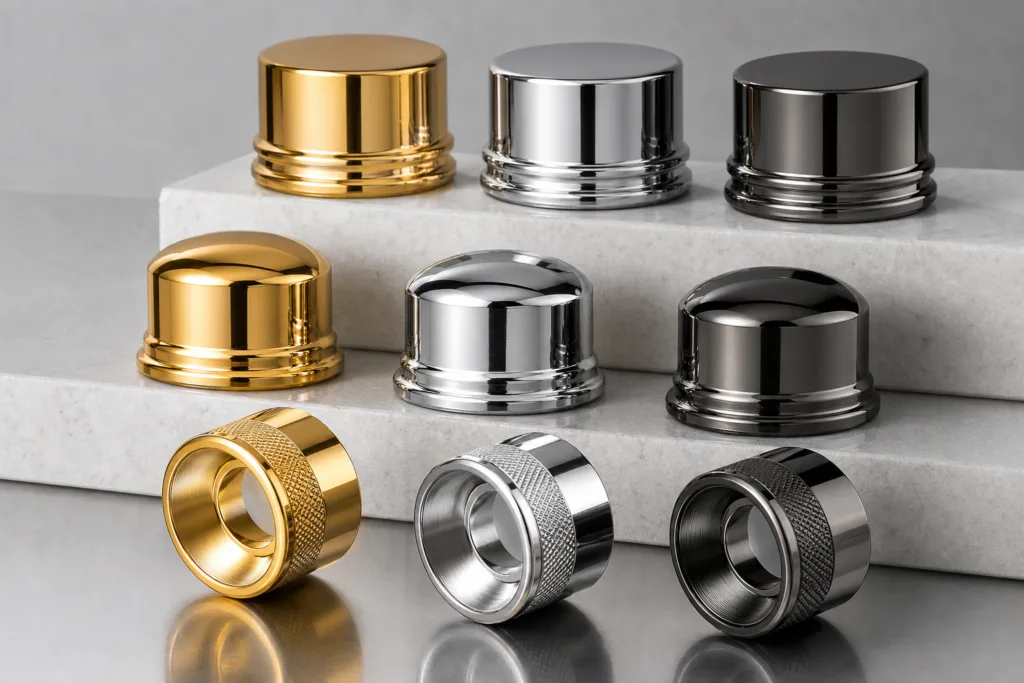
Common Electroplating Directions Buyers Request
- Bright silver tone
- Clean and reflective
- Popular for modern fragrance lines
- Works well with clear glass and minimalist branding
- Gold tone
- Warm and premium
- Often used for luxury and gift-oriented packaging
- Can be paired with engraving or polished surfaces
- Rose gold tone
- Softer metallic appearance
- Suitable for feminine, fashion-led, or limited edition concepts
- Needs careful sample approval because visual tone can vary by lighting and base polish
- Gunmetal or dark metallic tone
- Strong visual contrast
- Often selected for niche fragrance brands and masculine presentations
- Helps create a heavier, more architectural look
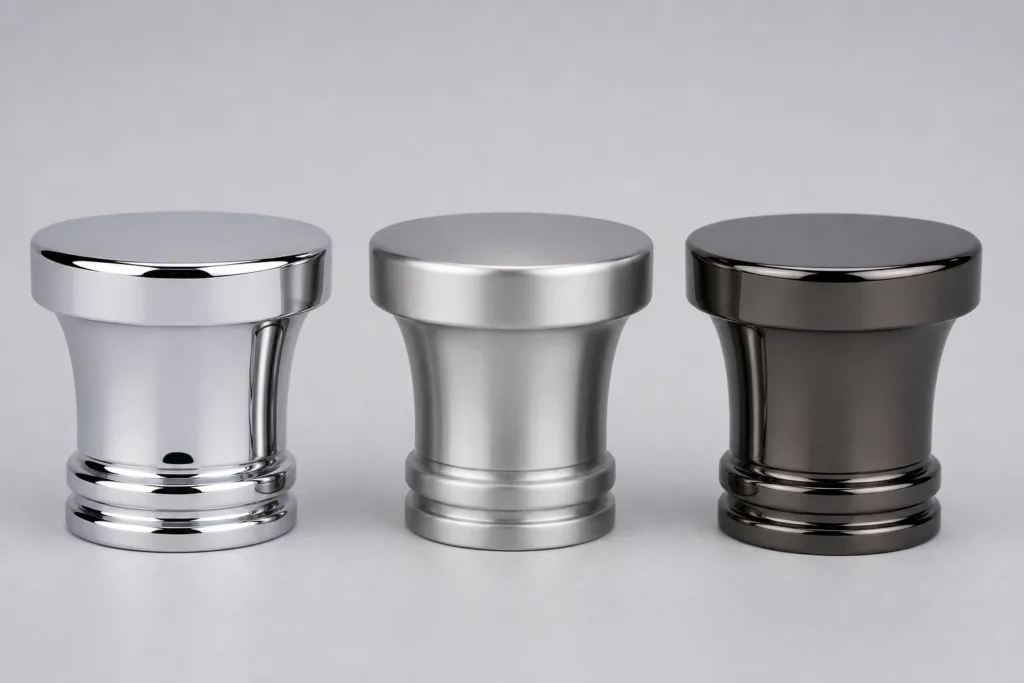
- Satin plated finish
- Less reflective than mirror-style plating
- Preferred when buyers want a refined but controlled appearance
- Useful when fingerprints or over-bright reflection are a concern
- Antique or aged metallic effect
- Decorative and character-led
- More common on special edition projects or statement packaging
- Should be reviewed carefully against the brand concept and carton design
What Affects the Final Plated Result
- Base material selection
- Die casting quality and surface stability
- Edge sharpness and corner design
- Polishing level before plating
- Logo depth and engraving detail
- Shape complexity and recessed areas
- Color target and gloss expectation
Choose the Finish Based on Brand Positioning and Bottle Design
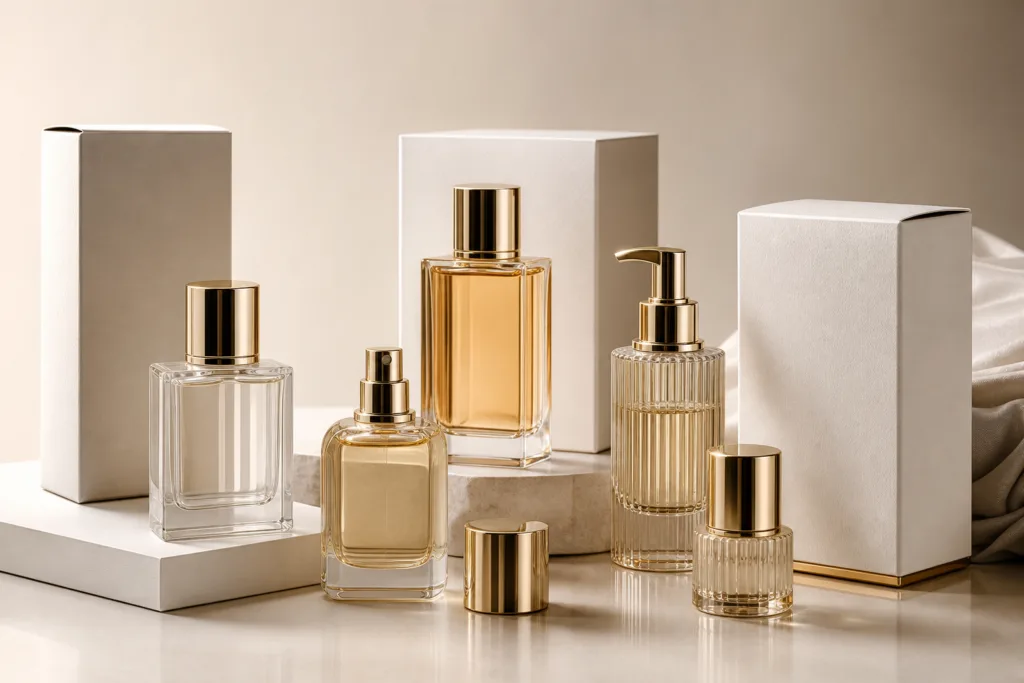
The right electroplating option depends on where the cap will be used.
If your cap must align with a premium bottle presentation, review caps for luxury perfume packaging and bottle fit engineering before moving to sample approval.
- Luxury perfume packaging: bright gold, polished silver, satin gold, logo engraving
- Niche fragrance brands: gunmetal, antique tones, brushed plated effects, strong geometry
- Private label perfume: commercially versatile silver and gold finishes with scalable repeatability
- Limited edition perfume: rose gold, darker metallic accents, special texture combinations
- Gift set packaging: coordinated finishes that match pumps, collars, and decorative hardware
From Artwork Review to Sample Approval
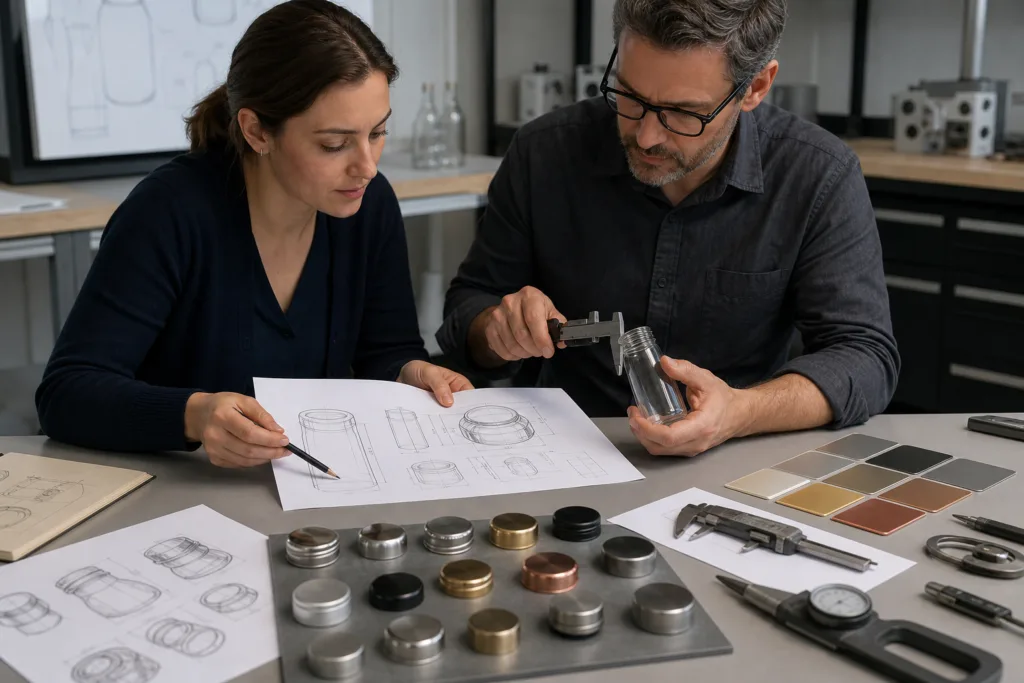
- Review cap design, dimensions, and bottle neck or insert structure
- Confirm target material, shape, logo method, and finish direction
- Compare reference images, physical samples, or plating targets
- Evaluate whether polishing, brushing, or paint combination is needed
- Develop sample for visual and fit approval
- Confirm inspection points for color, gloss, adhesion, and appearance before bulk production
Electroplating and Bottle Fit Must Work Together
- Bottle neck size and tolerance
- Collar and pump compatibility
- Cap weight and balance
- Insert structure and retention feel
- Decorative overhang or wall thickness that may affect fit
How Electroplating Influences Cost, Tooling, and Lead Time
- Complexity of cap shape
- Surface area and polishing requirement
- Number of finish trials during sampling
- Special tone matching requests
- Combined processes such as engraving plus plating or brushing plus plating
- Inspection standards for gloss, color, and appearance consistency
- Cap dimensions or drawing
- Bottle neck details
- Target finish reference photos
- Logo artwork
- Expected order quantity range
- Sampling priority and target launch timing
Controlling Finish Consistency from Sample to Bulk
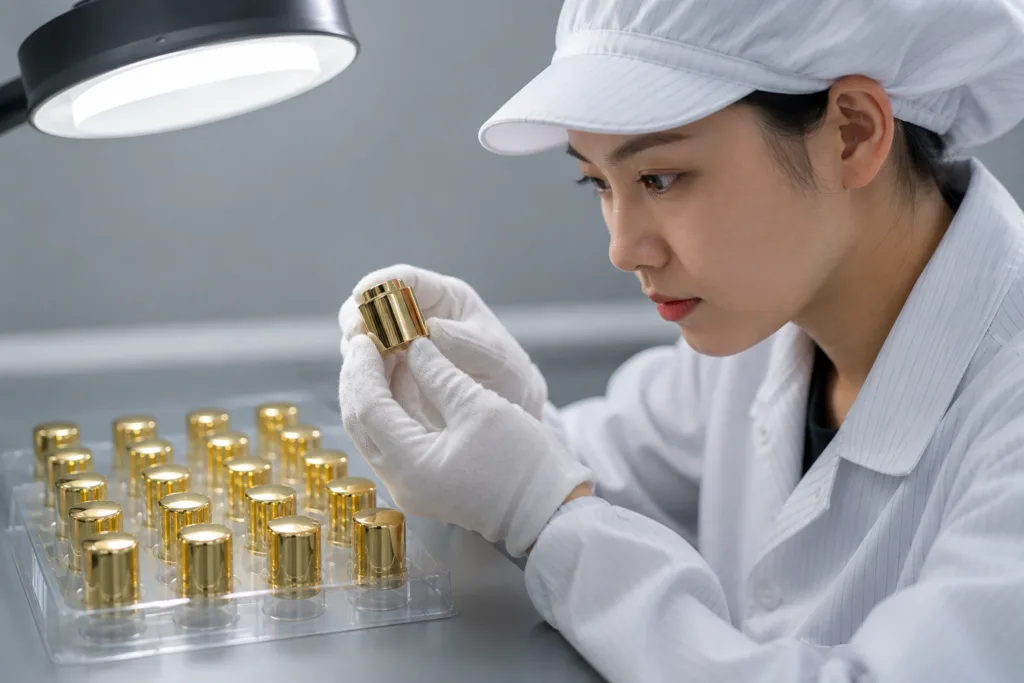
- Visual comparison with approved sample
- Surface cleanliness and appearance review
- Color tone consistency across production lots
- Coverage check on visible areas and edges
- Inspection of scratches, pitting, marks, or uneven gloss
- Review of logo area sharpness after finishing
Related Customization Paths to Compare
Electroplating is often selected together with other customization steps. Depending on your packaging target, you may also need:
These paths can be combined in one cap program depending on design intent and production feasibility.
- custom perfume bottle caps for full project development
- zinc alloy perfume caps for premium weight and metallic finishing
- logo and branding for engraving, embossing, or printed identity
- baked paint finishes for non-metallic or color-forward designs
- polishing and brushing for different gloss and texture levels
- perfume cap mold development for new custom structures
CTA
If you already know the finish direction, send your drawings, bottle details, or reference images for review.
We can review the finish direction, cap structure, and project requirements before sampling and bulk production.
Frequently Asked Questions
Electroplating gives perfume caps a premium metallic appearance and helps create visual effects such as bright silver, gold, rose gold, or darker tones that suit fragrance branding.
Yes. Electroplating can be used on many custom cap designs, but the final result depends on shape complexity, polishing quality, edge detail, and the cap’s base material.
Yes. Cost can change based on cap size, surface preparation, finish complexity, logo details, sample revisions, and inspection requirements.
Plated caps are usually chosen for metallic luxury effects, while painted caps are better when the brand needs solid color coverage or a non-metallic look. Some projects also combine both processes.
It is best to send cap dimensions, bottle neck details, target finish reference images, logo artwork, expected quantity range, and any sample timing requirements.
Buyers should approve a reference sample first, then confirm inspection points for color tone, gloss, surface defects, and overall appearance before bulk production starts.