
Perfume Cap Die Casting Process
Die Casting Control Starts the Quality of a Perfume Cap
The die casting process affects cap shape, weight, wall thickness, surface quality, and downstream finishing results. Caps Ltd supports fragrance packaging buyers with practical die casting control for zinc alloy perfume caps, from design review to sample approval and bulk production.
Why Die Casting Matters in Perfume Cap Manufacturing
For metal fragrance caps, die casting is the stage where the cap body is formed. A well-managed process helps reduce visible defects, keeps dimensions more stable, and gives later finishing steps a better base. This is especially important for projects that need premium weight, consistent surface appearance, and reliable bottle fit.
If you are developing custom perfume bottle caps for a new fragrance line, die casting decisions will influence tooling cost, finish quality, and production repeatability. Buyers comparing custom perfume bottle caps and zinc alloy perfume caps often focus on the final look, but process control at the casting stage is what helps protect that result in mass production.
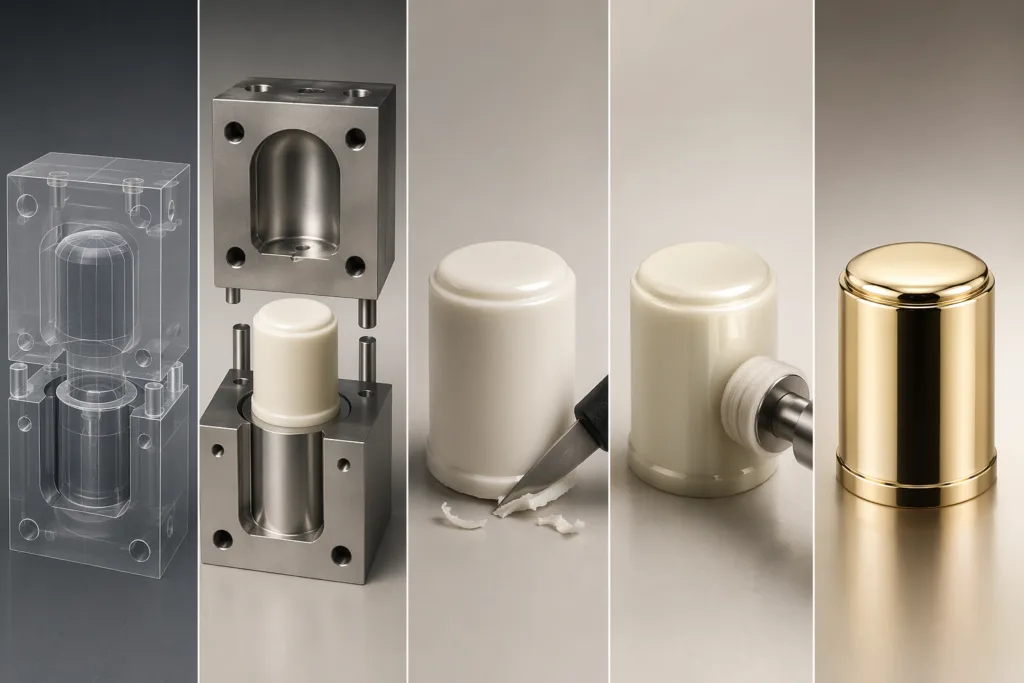
From Drawing Review to Cast Cap Body
- Design review based on cap shape, weight target, finish plan, and bottle closure structure
- Tooling assessment for draft angles, wall thickness, undercuts, logo depth, and structural feasibility
- Mold development for the approved cap concept
- Zinc alloy die casting to form the cap body
- Trimming and initial cleanup of cast parts
- Evaluation of critical dimensions and surface condition
- Transfer to polishing, electroplating, painting, engraving, or assembly steps
- Sample approval before bulk production
What Buyers Need to Control at the Die Casting Stage
- Shape complexity: Deep recesses, sharp corners, and unusual forms may affect mold design and casting stability
- Weight expectation: Heavy luxury caps often require careful balancing between appearance, feel, and production practicality
- Surface finish target: Mirror polish, electroplating, brushed texture, and painted surfaces all respond differently to the cast base
- Logo detail: Fine engraved or embossed branding must be designed with realistic depth and edge definition
- Insert and fit structure: The metal shell and internal fit system must work together with the bottle neck and closure system
- Bulk consistency: A cap that looks good as one sample still needs to be repeatable in larger production runs
Why Zinc Alloy Is Common for Cast Perfume Caps
- Supports substantial cap weight for a premium hand feel
- Allows more complex shapes than many simpler cap materials
- Works well with polishing, brushing, electroplating, and painted finishes
- Suitable for logo features such as engraving, embossing, and debossing
- Provides a stable metal shell for decorative cap programs
Design Factors That Affect Casting Quality
Good die casting results depend on more than the outer cap appearance. During project review, Caps Ltd checks design details that can affect mold construction, filling behavior, trimming, and later finishing.
When needed, buyers can submit technical drawings, sample bottles, closure dimensions, artwork files, and finish references through /upload-specs/.
- Overall cap geometry and whether the shape can release cleanly from the tool
- Wall thickness balance to support casting stability and reduce quality variation
- Edge design for both visual sharpness and manufacturability
- Logo placement and depth for readable branding after finishing
- Internal space for insert, magnet, weight component, or assembly structure if required
- Neck and pump compatibility when the cap must align with a specific bottle system
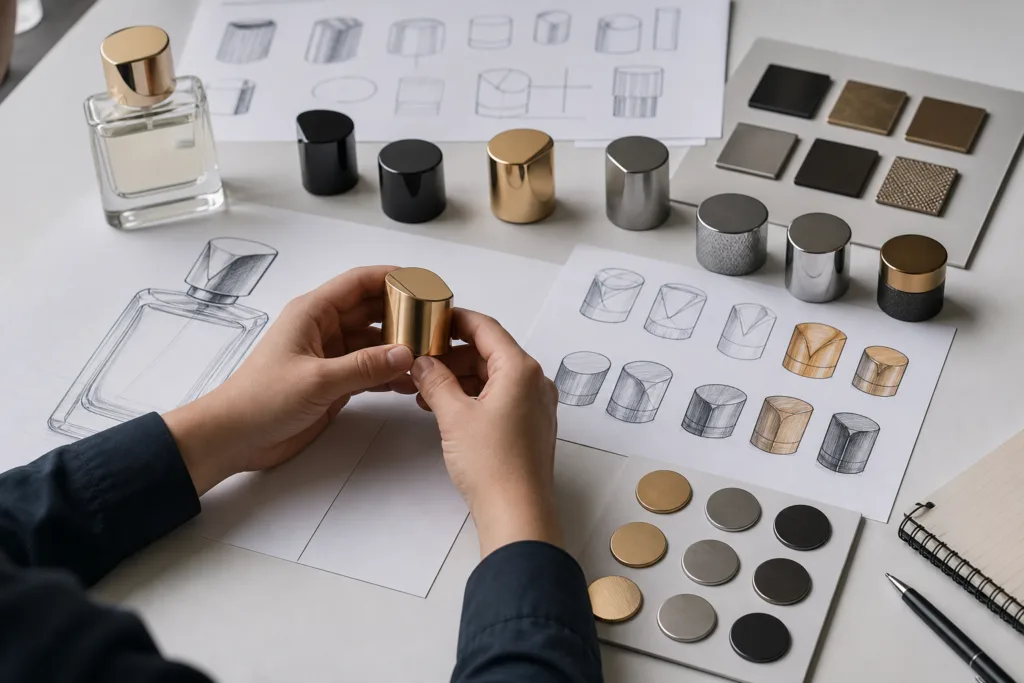
Casting Quality Directly Affects the Final Finish
- Electroplated perfume cap finishes that reflect light and reveal small surface imperfections
- Polished perfume caps where line definition and flatness matter
- Painted perfume caps that require stable surface preparation for consistent color coverage
- Logo engraved perfume caps that need clean branding details after coating or plating
How Die Casting Is Reviewed Before Parts Move Forward
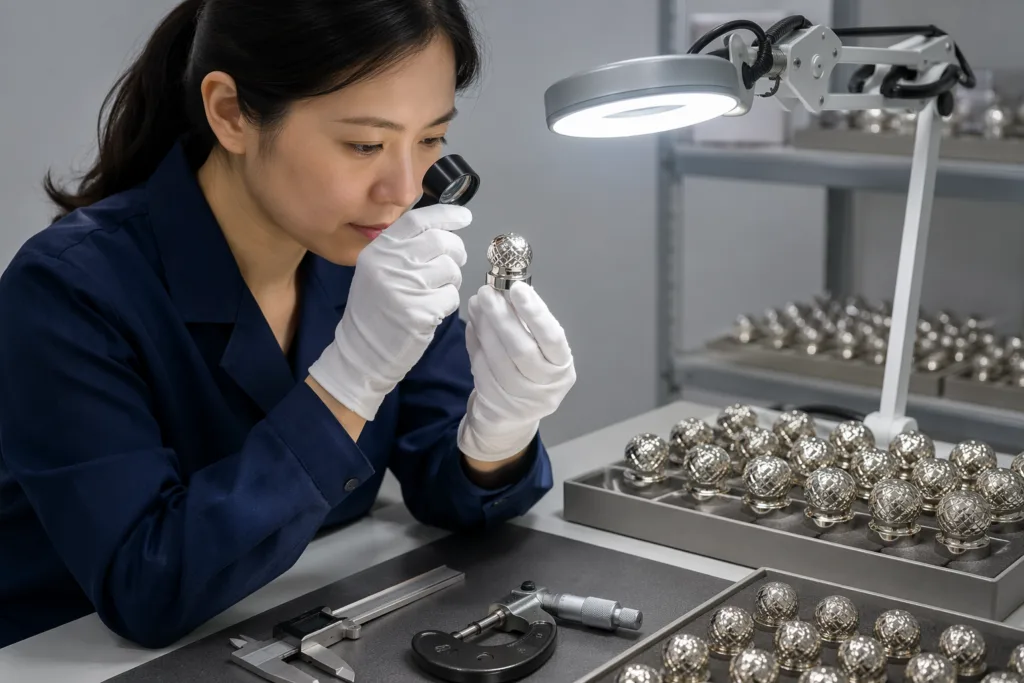
The goal at the die casting stage is not only to form the cap body, but to detect issues before they affect polishing, plating, painting, fitting, or packing.
These checks support broader quality systems used across production. Buyers evaluating supplier reliability can also review quality control, surface finish testing, and final inspection.
- Visual review of the cast part surface
- Check of key dimensions related to fit and assembly
- Review of edge definition and logo area condition
- Screening for obvious defects that may affect finishing quality
- Process feedback before moving to downstream operations
From Trial Parts to Bulk Production Confidence
- Outer shape and weight expectation
- Basic dimensional suitability
- Feasibility of surface finishing direction
- Logo visibility and artwork translation
- Cap alignment with bottle and insert structure
- Adjustments needed before bulk production
When Die Cast Perfume Caps Make the Most Sense
- Luxury perfume packaging with heavy decorative caps
- Niche fragrance brands developing signature cap shapes
- Private label perfume collections that need custom branding details
- Gift set packaging where visual consistency matters across multiple SKUs
- Limited edition perfume launches with special finishes or commemorative design features
- Refillable perfume bottles that need a more durable premium cap concept
What to Prepare Before Requesting a Die Cast Cap Quote
- Cap drawings, sketches, or reference photos
- Bottle neck dimensions or bottle samples
- Closure system details
- Weight target or heavy-feel requirement
- Preferred finish such as plating, paint, polish, or brushed texture
- Logo artwork and branding method preference
- Sample quantity and bulk order estimate
- Target launch timing
Start Your Die Cast Perfume Cap Project With Clear Technical Input
Whether you are developing a new heavy metal cap, comparing finish options, or checking if your design can be cast efficiently, Caps Ltd can review your concept and support the next step from tooling review to sample development.
Frequently Asked Questions
Die casting is the process of forming the metal cap body in a mold. It creates the base shape that will later be polished, plated, painted, engraved, or assembled with inserts.
The cast surface affects how well a cap can be polished and finished. Better casting control helps reduce visible defects and supports more consistent plating, painting, and branding results.
Zinc alloy is a common choice for premium perfume caps because it offers good weight, detailed shapes, and strong compatibility with decorative surface finishes.
Many custom shapes can be developed, but feasibility depends on wall thickness, draft angles, undercuts, logo details, and the internal structure needed for fit and assembly.
The outer metal shell and the internal fit structure must work together. Stable casting dimensions help support insert assembly and better compatibility with the bottle neck and closure system.
Send drawings, reference images, bottle neck dimensions, finish targets, logo artwork, quantity expectations, and any sample or launch timing requirements if available.