
Electroplating Process for Perfume Caps
The electroplating process has a major effect on how a perfume cap looks, feels, and performs in the market. Caps Ltd supports fragrance packaging projects with electroplated perfume cap development, finish planning, sample review, and production control for custom orders.
How Electroplating Changes the Look and Value of a Perfume Cap
Electroplating adds a metallic surface layer that helps create the visual effect required for many fragrance packaging projects. This is often used when brands want a cap that feels heavier, more refined, and more aligned with luxury positioning.
For projects where finish and weight matter most, buyers often start with zinc alloy perfume caps because the base material supports detailed shapes and premium surface treatment.
- Bright metallic appearance for premium shelf impact
- Better alignment with luxury fragrance packaging concepts
- Support for gold, silver, gunmetal, rose tone, black, and other finish directions
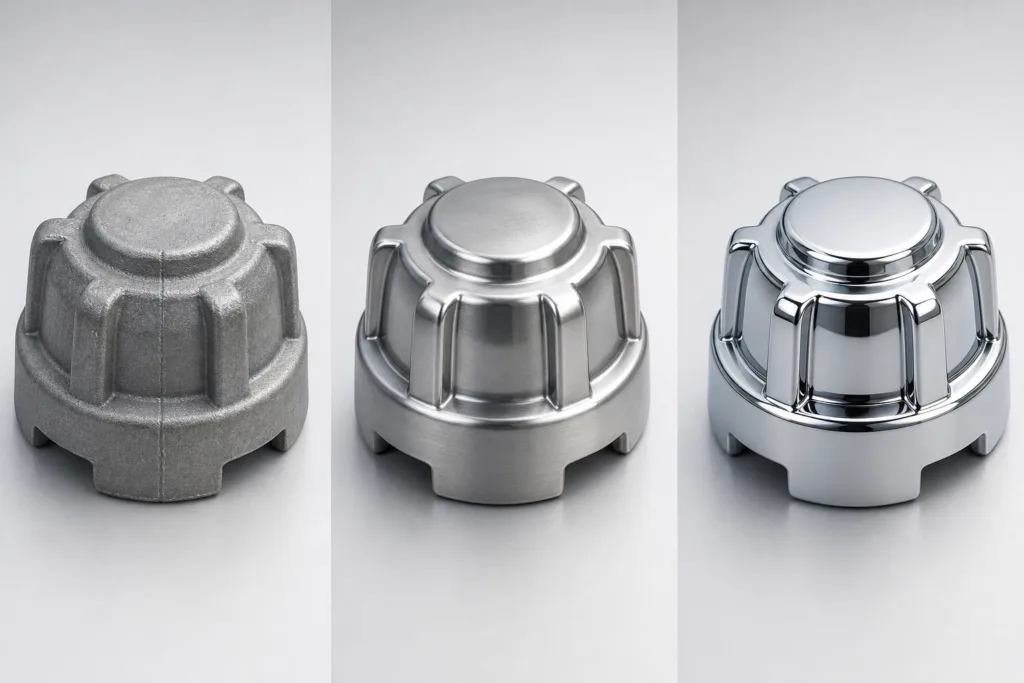
- Stronger visual definition after polishing and surface preparation
- Better match with engraved logos, raised details, and shaped cap profiles
Where Electroplating Fits in the Manufacturing Flow
- Confirm cap design, dimensions, bottle fit, and finish target
- Produce tooling or use approved production setup
- Die cast the zinc alloy cap body
- Trim and prepare the raw part
- Polish or brush the surface based on finish requirements
- Apply electroplating treatment according to the approved finish direction
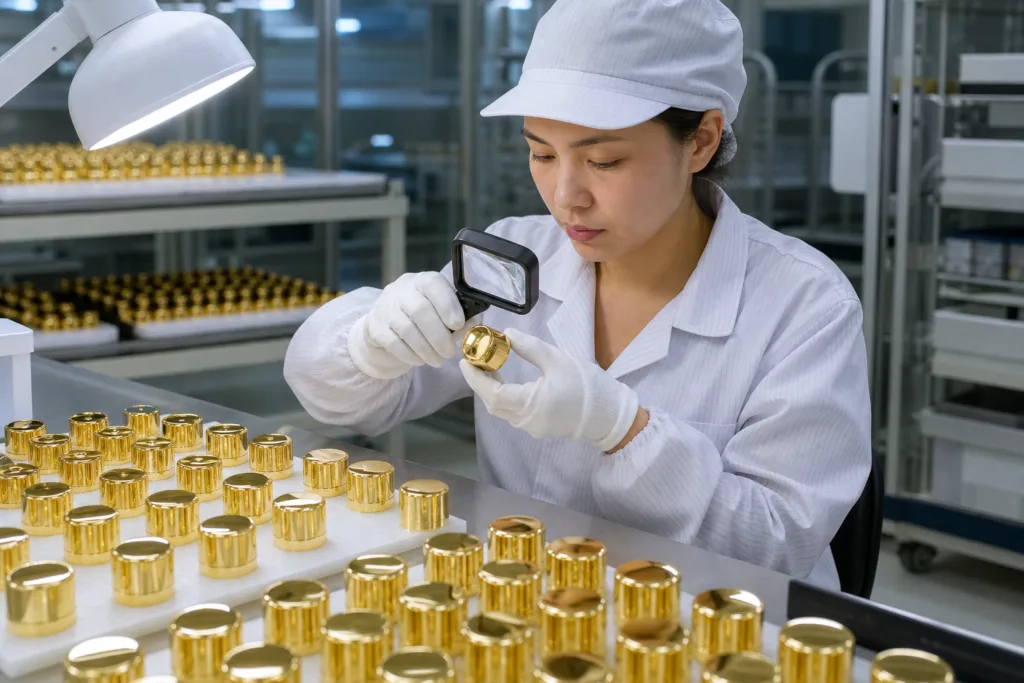
- Inspect color, gloss, adhesion, and visible surface quality
- Assemble inserts or fit components if needed
- Complete final inspection before packing
Finish Options Buyers Commonly Review Before Sampling
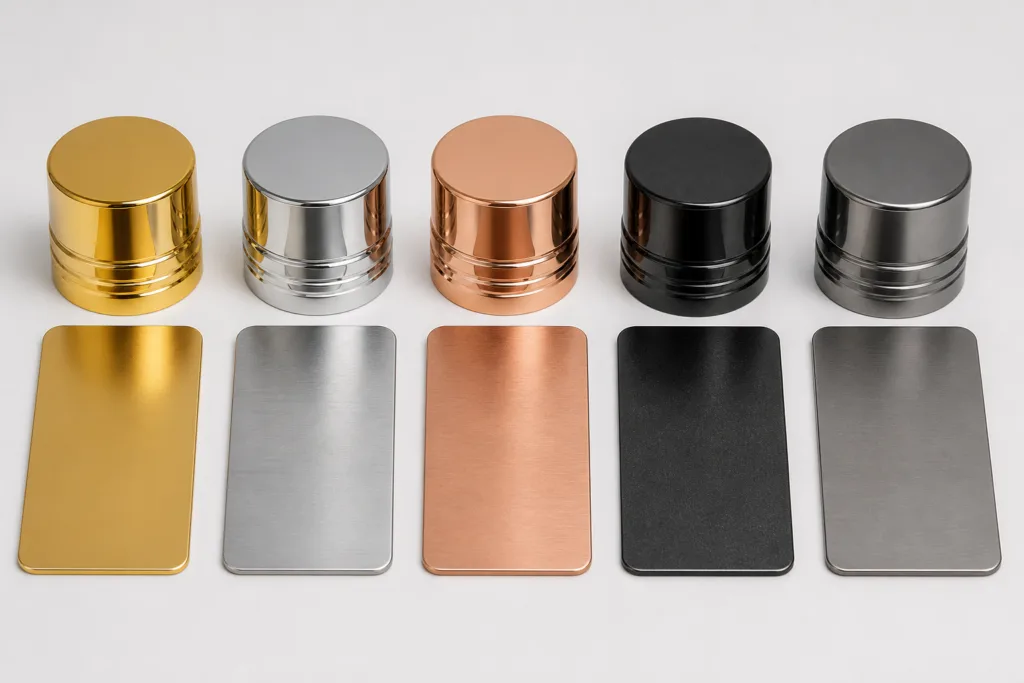
Different electroplated effects create very different market impressions. A bright mirror finish may suit a formal luxury launch, while a brushed darker tone may fit a modern niche fragrance brand.
If your team is still deciding between finish types, our perfume cap finish guide and finish color chart can help organize selection before RFQ.
- Bright gold tone
- Silver tone
- Rose tone
- Black metallic tone
- Gunmetal tone
- Satin or semi-bright metallic look when combined with surface preparation
- Target brand image
- Bottle color and decoration match
- Logo visibility after plating
- Surface texture and edge detail
- Expected consistency from sample to bulk production
- Cost effect of the selected finish route
Surface Preparation Affects Electroplating Results
A plating line can only deliver strong visual results when the part entering the process is properly prepared. That is why polishing, brushing, and defect control are important before plating begins.
For buyers evaluating finish risk, this is an important point: many plating issues are actually preparation issues. Reviewing pre-plating quality during sample development reduces surprises later in bulk production.
- Smooth parting line control after die casting
- Surface leveling before plating
- Edge cleanup around logos and shaped details
- Polishing quality for bright metallic finishes
- Controlled brushing direction for satin effects
- Clean handling before the plated layer is applied
What Buyers Should Confirm Before Approving an Electroplated Sample
- Confirm the cap fits the bottle neck, collar, and closure system
- Review metallic tone under practical lighting conditions
- Check gloss level and visible reflection
- Inspect logo clarity, engraving depth, and edge definition
- Check for pinholes, scratches, dust marks, or uneven tone
- Review the finish next to the bottle, pump, collar, and outer box
- Confirm insert fit and opening feel if assembly is included
- Align sample expectations with bulk inspection standards
Managing Consistency from Sample to Bulk Production
- Approved finish reference control
- n- Stable polishing and pre-treatment workflow
- Color and appearance comparison during production
- Coordination between cap body, insert, and assembly steps
- Inspection checkpoints before packing
- Communication on finish expectations during RFQ and sampling
Common Risks in Electroplated Perfume Cap Projects
- Finish tone on the sample does not match bulk output closely enough
- Surface defects become more visible after plating
- Engraved or embossed details lose clarity under the selected finish
- Cap and bottle styling feel mismatched after assembly
- Insert fit or internal structure affects usability even when finish looks good
- RFQ does not define the finish clearly enough for accurate pricing
Electroplating and Its Effect on Cost, MOQ, and Lead Time
- Complexity of cap geometry
- Surface area and shape detail
- Required plating tone and finish standard
- Pre-plating polishing workload
- Logo treatment and fine-detail retention
- Sample approval rounds
- Order quantity and packing method
Best-Fit Projects for Electroplated Perfume Caps
Related product and application pages that may help your sourcing team:
- Luxury perfume packaging
- Designer fragrance lines
- Limited edition perfume launches
- Heavy metal perfume caps
- Caps for luxury perfume packaging
- Private label perfume packaging projects
What to Send When Requesting an Electroplated Cap Quote
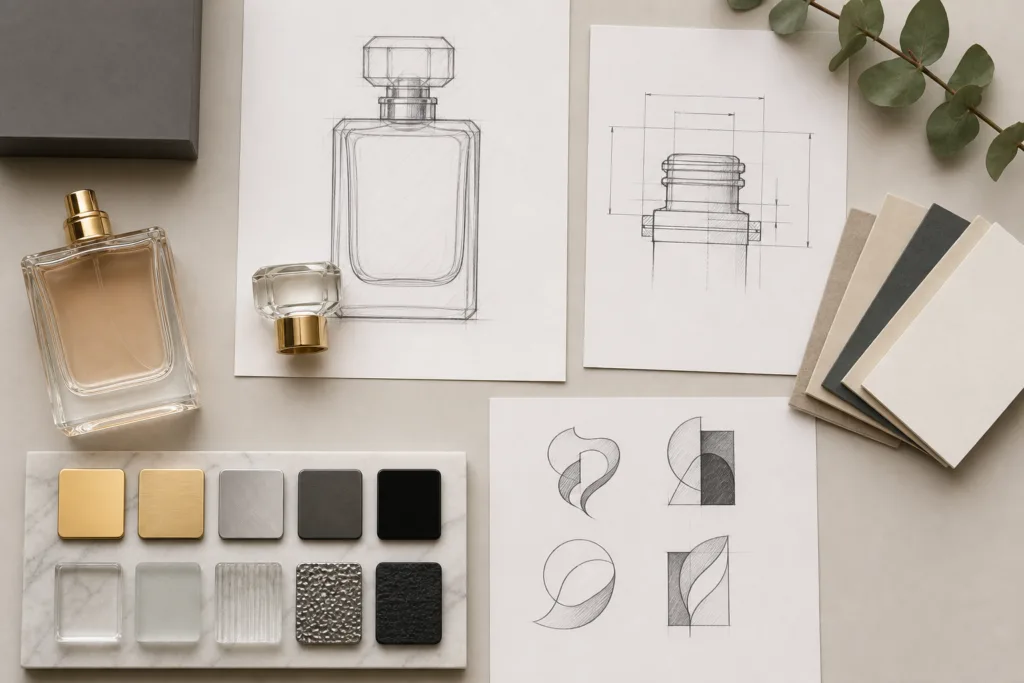
- Cap design drawing or reference photo
- Bottle neck and collar dimensions
- Target cap size and weight direction
- Preferred electroplated color or finish sample
- Logo artwork and branding position
- Insert or fit requirements
- Estimated order quantity
- Target sample timing and launch schedule
- Packing or export requirements
Need an electroplated finish for a perfume cap project?
Caps Ltd supports electroplated perfume cap development from finish planning and bottle-fit review to sample approval, QC, and bulk production coordination.
Frequently Asked Questions
Electroplating is commonly used for zinc alloy perfume caps and other metal-based cap concepts. Suitability depends on part shape, surface preparation, logo detail, and the final finish target.
Yes. Many projects test multiple finish directions such as gold tone, silver tone, gunmetal, or black metallic before final approval. Sample review is recommended before bulk production.
The most useful inputs are cap drawings or photos, bottle neck dimensions, target finish, logo artwork, fit requirements, estimated quantity, and sample timing goals.
Yes. Finish choice can affect preparation steps, inspection needs, sample approval time, and overall production planning. The impact depends on design complexity and finish standard.
Buyers usually compare production output against approved samples and review visual quality, tone consistency, surface defects, and inspection records. Surface finish testing and final inspection are important controls.
Yes. Caps Ltd supports sample development, finish review, bulk production coordination, and quality control for custom perfume cap projects.