
Perfume Cap Quality Control
Quality Control for Custom Perfume Bottle Caps
Reduce sourcing risk with practical quality control checks for fit, finish, color consistency, and bulk production reliability.
The defects buyers want to prevent before bulk shipment
- Poor fit between the cap and bottle neck or closure system
- Finish variation between approved sample and production lot
- Color mismatch across different batches
- Uneven polishing, plating marks, paint defects, or logo clarity issues
- Loose inserts, unstable assembly, or poor opening feel
- Packing damage during export handling
Quality planning begins with the project inputs
- Bottle neck and collar dimensions
- Closure structure and insert requirements
- Cap material and target weight
- Surface finish expectations
- Logo artwork and branding details
- Appearance standards for visible surfaces
- Assembly and packaging requirements
From bottle neck size to opening feel and retention
- Cap body size and internal structure
- Insert dimensions and placement
- Neck compatibility and seating depth
- Pull force, retention, and opening feel
- Alignment between cap shape and bottle presentation
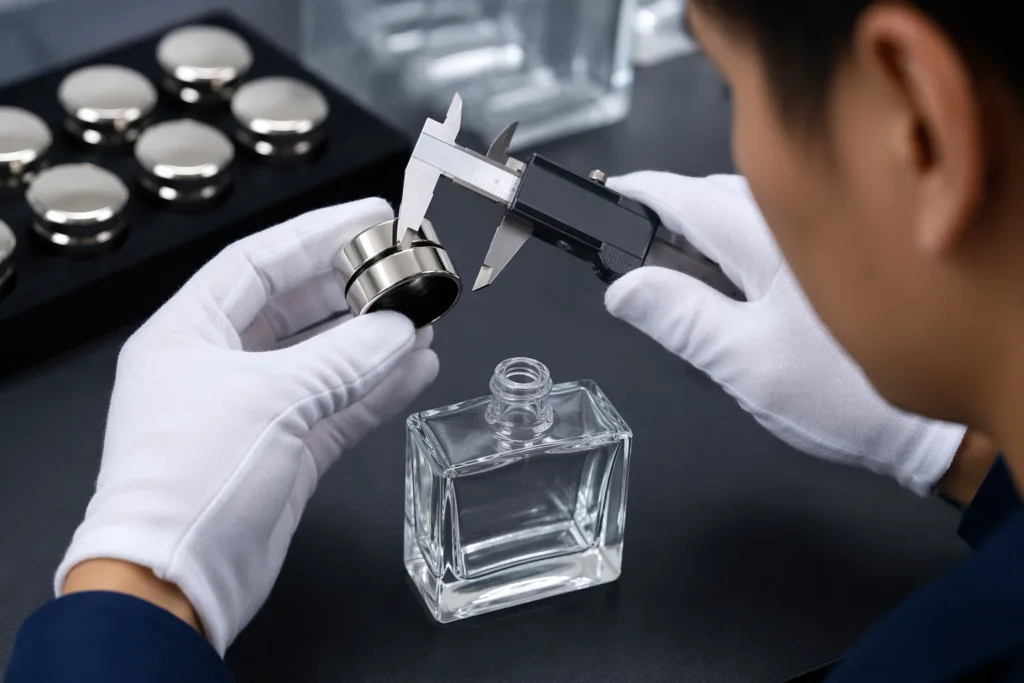
How finish quality is reviewed on visible cap surfaces
Luxury fragrance packaging buyers usually judge the cap first by sight and touch. That is why appearance checks are a major part of quality control. Depending on the project, review points may include:
For appearance-led cap programs, related pages such as electroplated perfume caps, painted perfume caps, polished perfume caps, and the perfume cap finish guide help buyers compare finish expectations before sample approval.
- Surface smoothness after die casting and polishing
- Edge definition and shape uniformity
- Electroplating coverage and reflectivity
- Paint adhesion, color accuracy, and coating consistency
- Brushed or polished texture direction
- Engraved, embossed, debossed, or printed logo clarity
- Defect screening for scratches, pits, marks, dust, bubbles, and uneven tone
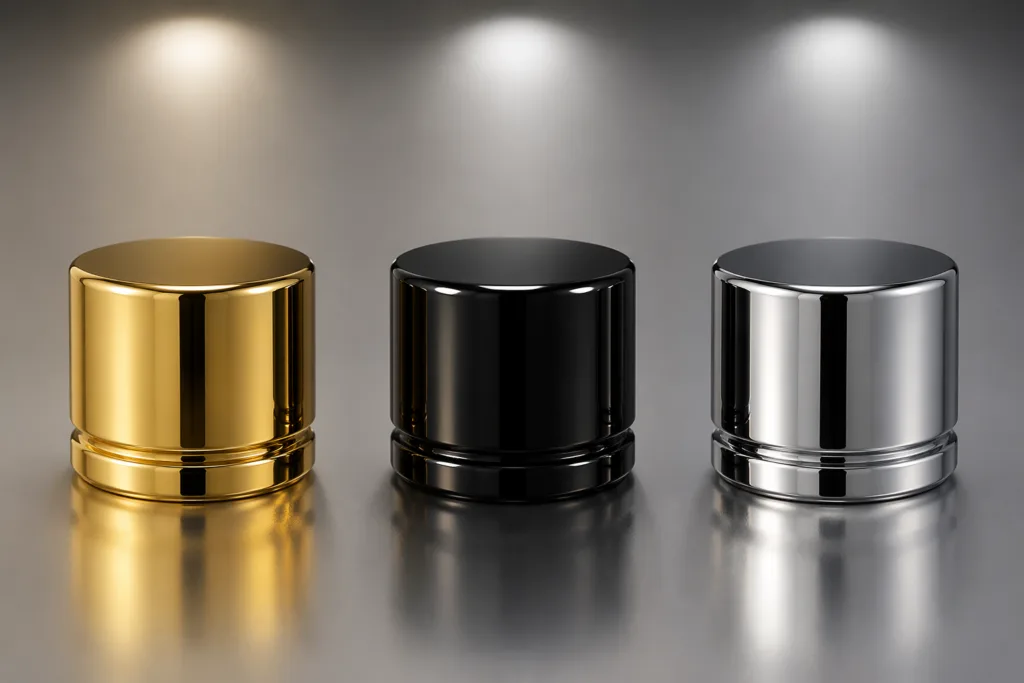
Stable cap construction supports stable bulk quality
A premium cap can still fail if the internal structure is unstable. Quality control also covers the practical build of the cap, not only the visible shell. Typical checkpoints may include:
For metal-focused projects, our zinc alloy perfume caps and zinc alloy cap manufacturing pages provide more detail about structure and processing considerations.
- Zinc alloy body integrity
- Insert compatibility with the selected closure system
- Adhesion and assembly security where multiple parts are used
- Weight consistency across a lot
- Logo component alignment where decorative parts are added
- Protection of finished surfaces during handling and packing
Quality is monitored through each production stage
Consistent perfume cap production depends on checking key points during manufacturing, not only at the end. In-process control may cover:
Buyers who want a clearer view of production flow can review the manufacturing overview, die casting process, electroplating process, baked paint process, and polishing process pages.
- Die cast part review before finishing
- Surface preparation checks before plating or painting
- Polishing consistency checks on visible areas
- Color and finish confirmation against approved reference
- Logo and branding verification
- Assembly checks before packed goods move forward
The approved sample becomes the reference for bulk production
- Shape and proportions
- Weight and material feel
- Finish tone and gloss level
- Logo execution
- Bottle fit and opening experience
- Packaging protection requirements
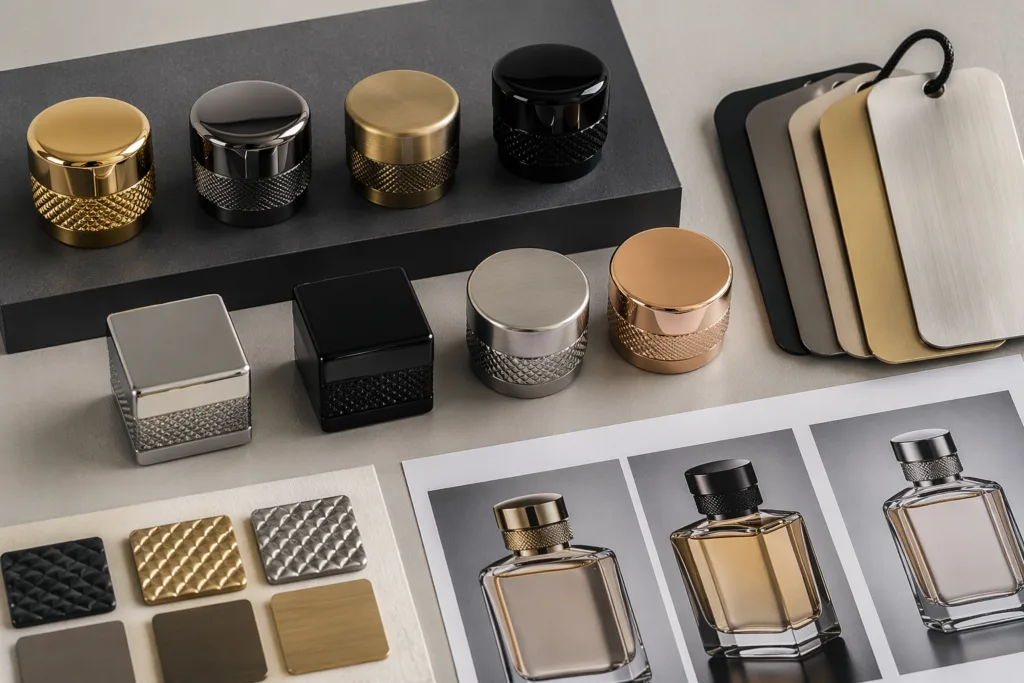
Bulk goods should be reviewed before export release
Final inspection helps confirm that production matches the approved standard before shipment. Depending on the project, this may include:
This final stage is especially important for distributor orders, launch schedules, and private label perfume projects where replacement timelines are tight. Buyers who need a broader view can review final inspection and export packaging support.
- Visual checks by lot or batch
- Dimensional spot checks
- Assembly review
- Finish and color consistency confirmation
- Packaging and labeling verification
- Carton condition and export packing review
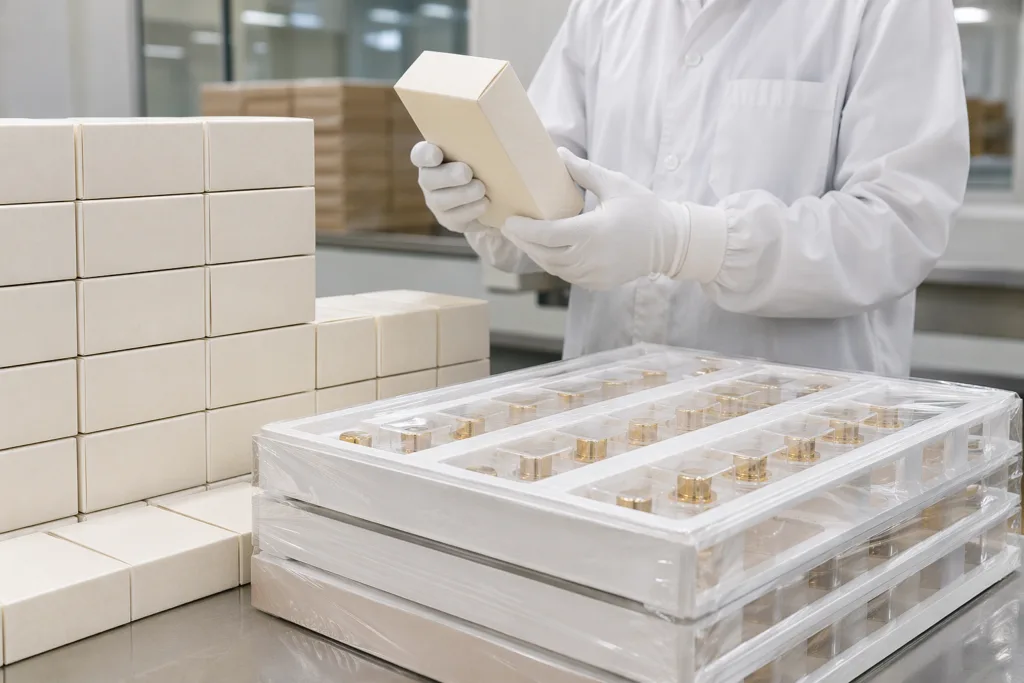
Better inputs lead to better cap quality outcomes
Quality control is strongest when the project requirements are specific. Buyers can improve outcomes by preparing:
If you are still at the planning stage, the perfume cap buyer guide, perfume cap cost guide, and how to choose a cap resources can help define the right inputs before requesting a quote.
- Bottle drawings or physical bottle samples
- Neck finish measurements
- Desired cap dimensions or reference style
- Finish target photos or color references
- Logo artwork files
- Approved appearance standards for visible defects
- Packing method requirements
- Target order quantity and launch timing
What procurement teams should ask during supplier review
When evaluating a perfume cap supplier, practical QC questions are often more useful than broad claims. Ask how the supplier manages:
Caps Ltd supports custom perfume cap projects with development, production coordination, and quality-focused review paths built around real packaging needs.
- Fit validation with your bottle system
- Sample-to-bulk finish consistency
- Surface defect screening
- Color matching and repeat orders
- Inspection checkpoints before shipment
- Communication when issues are found
- Packing protection for export transit
Send your cap project for fit and finish review
If you are sourcing a custom perfume cap and want to reduce bulk production risk, send your drawings, bottle details, finish targets, or existing samples for review.
Frequently Asked Questions
It typically covers dimensions, bottle fit, finish appearance, color consistency, logo quality, assembly stability, and packing condition before shipment.
Fit control starts with bottle neck data, insert structure, and sample testing. Buyers should provide drawings or physical bottle samples whenever possible.
Yes. Approved samples are used as the visual and technical reference for production review, especially for plating, paint, polish, and logo details.
Sample approval aligns shape, weight, fit, finish, and branding expectations before bulk production starts, which reduces the risk of disputes later.
Yes. Clear logo files, color references, and finish photos help define the quality standard and improve production accuracy.
The most useful inputs are bottle dimensions, closure details, cap size targets, finish references, logo artwork, estimated quantity, and timing requirements.