
Bottle Fit Engineering for Perfume Caps
Bottle Fit Engineering for Reliable Perfume Cap Performance
Caps Ltd helps fragrance packaging buyers develop perfume bottle caps that fit the bottle neck, collar, pump, and closure system correctly before sampling and bulk production.
Why Bottle Fit Engineering Matters Early
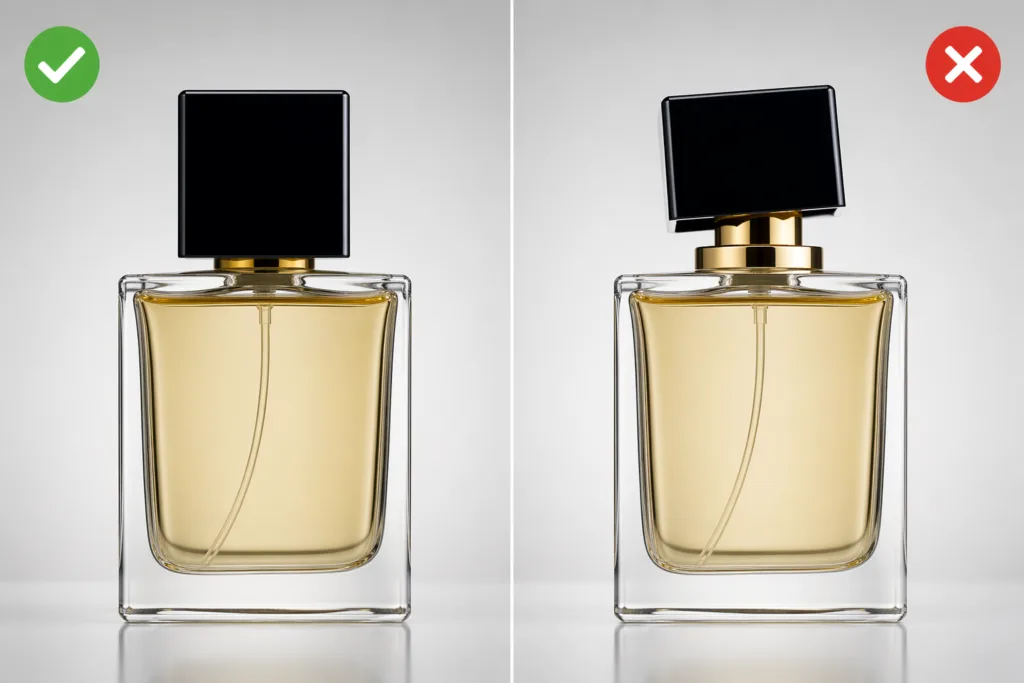
Fit Problems Buyers Want to Avoid
Common fit risks in perfume packaging projects include:
When buyers involve bottle fit engineering early, these issues can be checked before tooling changes become expensive.
- Cap inner size does not match the bottle neck or pump collar
- Insert structure creates too much or too little holding force
- Metal shell shape looks correct but interferes with bottle shoulder geometry
- Decorative cap weight changes the opening and closing feel
- Surface finishing adds thickness that affects final assembly tolerance
- Bottle supplier and cap supplier work from different drawings
- Approved appearance sample does not match production fit performance
From Bottle Neck Size to Closure Compatibility
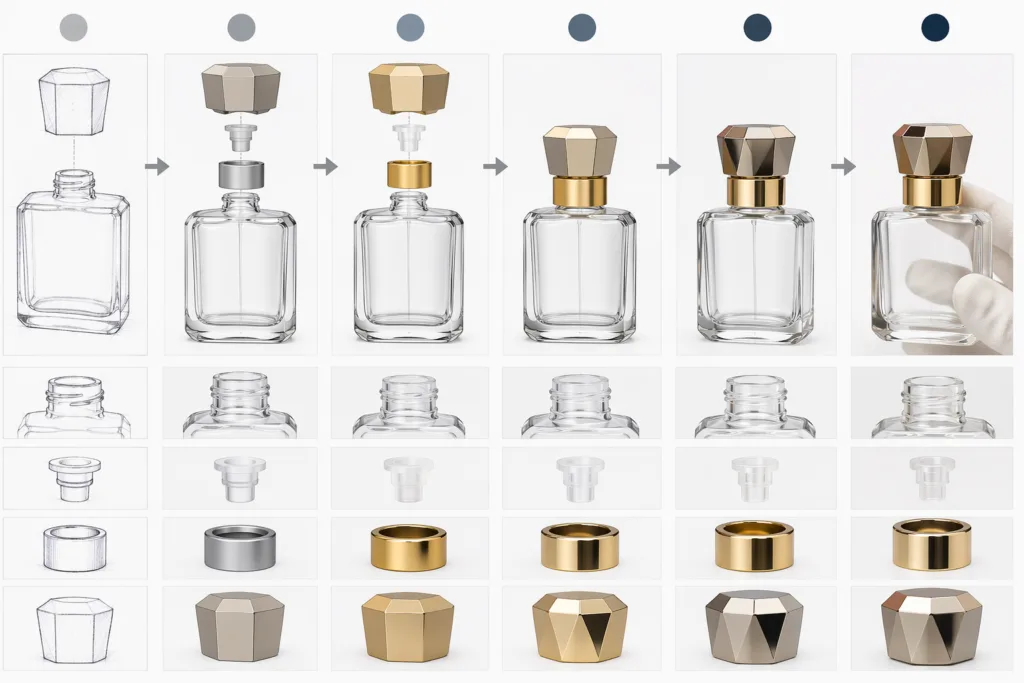
Caps Ltd reviews the key fit points that affect cap performance and assembly:
This work often connects with bottle fit engineering decisions across electroplated perfume cap finishes, baked paint layers, and polishing details because visual finishing can affect dimensions and assembly behavior.
- Bottle neck outer dimensions
- Pump and crimp profile
- Collar diameter and visible height
- Cap inner cavity size
- Insert material and retention design
- Pull-off force expectations
- Cap weight and balance
- Alignment between bottle, collar, and cap silhouette
- Surface finish build-up that may influence tolerance
- Packing protection for fitted caps during shipment
What to Prepare Before Engineering Review
- Bottle drawing with neck and shoulder dimensions
- Pump or collar drawing
- Existing cap sample, if available
- Target cap material and estimated weight
- 2D artwork or 3D cap concept
- Desired opening feel, such as tighter or smoother pull
- Finish direction, such as electroplated, painted, polished, or brushed
- Assembly method and whether the cap uses an insert
- Target market use, such as luxury fragrance, gift set, or refillable format
- Required project timeline for sample and bulk production
How Bottle Fit Engineering Moves from Concept to Sample
- Step 1: Technical file review
- Step 2: Structure proposal
- Step 3: Tolerance evaluation
- Step 4: Sample development planning
- Step 5: Fit testing and revision
- Step 6: Production release review
Common Bottle Fit Situations We Help Solve
- Scenario: New custom bottle with no existing cap
The bottle and cap must be engineered together from the beginning. This usually requires close drawing review and early sample planning. - Scenario: Existing bottle needs a premium metal cap upgrade
A buyer may switch from plastic to zinc alloy for a heavier luxury feel. In this case, cap weight, insert structure, and bottle balance need careful review. See zinc alloy perfume caps. - Scenario: Decorative shape changes internal fit space
A square, tall, or sculptural cap can reduce internal room around the pump and collar. Shape styling must stay compatible with bottle fit. - Scenario: Refillable bottle system needs stable cap performance
Refillable formats often need extra attention to repeated opening cycles and fit consistency. Related application reference: Refillable perfume bottles - Scenario: Luxury finish may affect tolerance
Electroplating, painted layers, and polished edges can change how parts assemble, especially when dimensions are already tight. Related finish references include electroplating options and baked paint finishes.
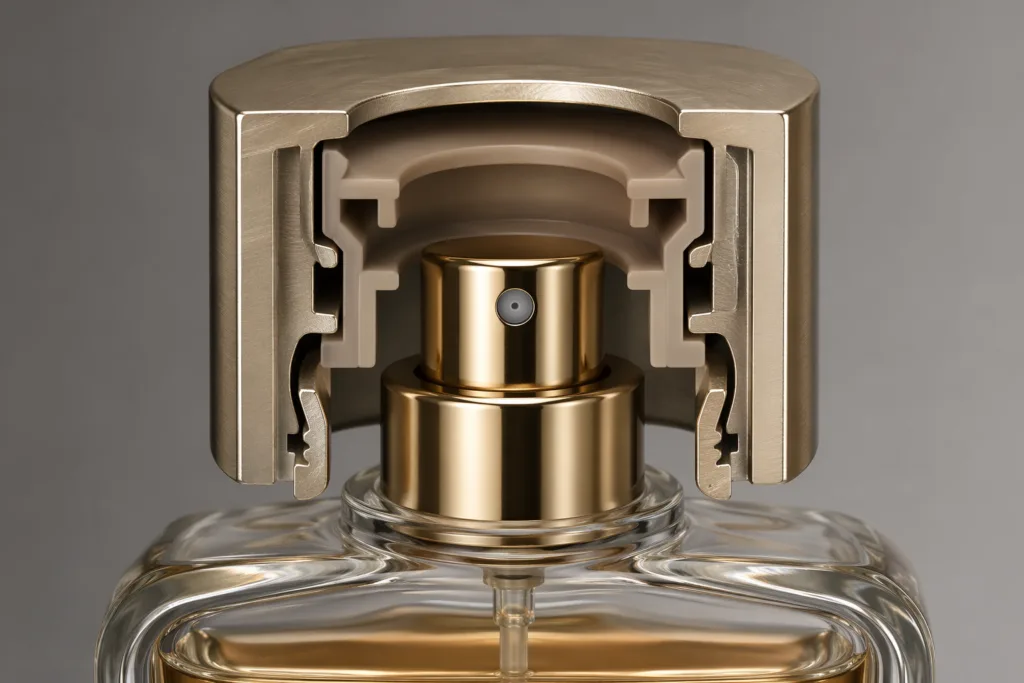
How Material, Weight, and Insert Design Affect Fit
What Can Change Cost, Tooling, and Timing
- Mold complexity
- Sample revision count
- Insert development needs
- Surface finish selection
- Assembly method
- QC inspection points
- Packaging protection requirements
- Overall lead time planning
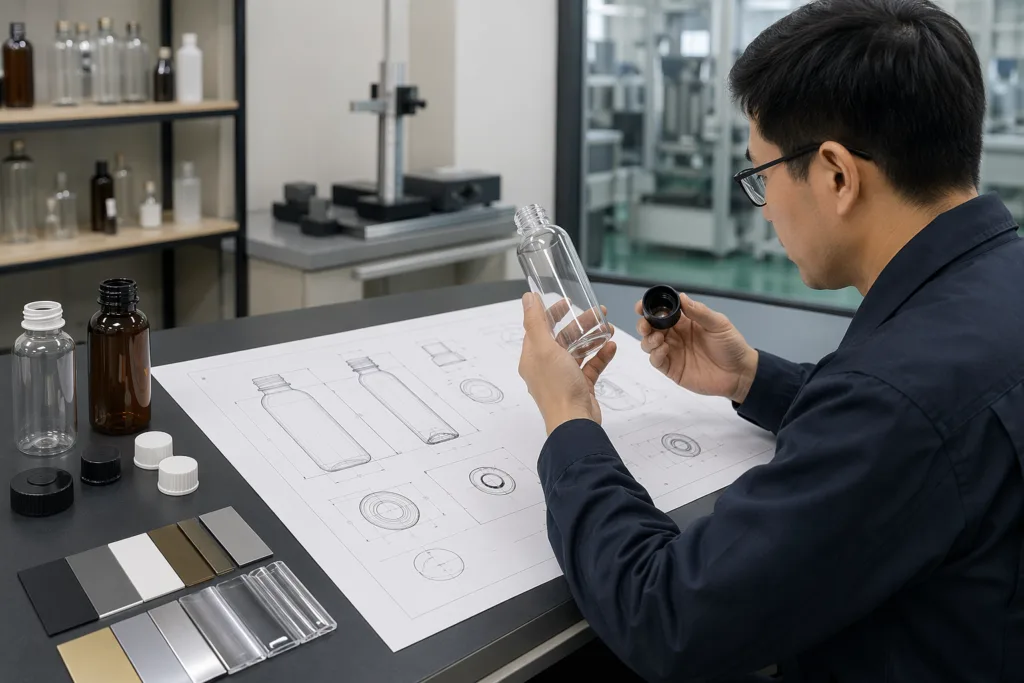
How Fit Reliability Is Checked Before Bulk Production
- Dimensional review against drawings
- Trial fitting with bottle and pump components
- Pull feel assessment
- Visual alignment check
- Surface-to-surface interference review
- Packaging stability review
- Final inspection checkpoints for approved fit standard
When to Request Bottle Fit Engineering Support
- New perfume bottle launch projects
- Luxury fragrance lines with heavy metal caps
- Private label perfume packaging programs
- Bottle and cap supplier coordination projects
- Refillable perfume bottle concepts
- Limited edition cap shapes
- Projects moving from sketch to tooling
- Buyers replacing an existing cap with a new finish or material
What to Send for a Faster Technical Review
- Page title or project name
- Bottle drawing or bottle sample details
- Pump or collar specs
- Target cap style and dimensions
- Preferred material
- Finish request
- Logo requirement
- Required sample timing
- Estimated order quantity range
- Any known fit issue from previous suppliers
Build a Cap That Looks Right and Fits Right
Send your bottle drawing, collar details, and cap concept. Caps Ltd will review the fit requirements, flag risk points, and help move your project toward a workable sample and production plan.
Frequently Asked Questions
It is the technical review of how a perfume cap fits the bottle neck, pump, collar, insert, and closure system so the cap performs correctly in sampling and production.
The best inputs are bottle drawings, pump or collar drawings, cap concepts, target dimensions, finish requirements, and any existing samples or fit issues.
Yes. A physical sample can still help start the review, although complete drawings usually improve accuracy and speed.
Yes. Electroplating, paint, polishing, and other finishing steps can affect tolerance, assembly feel, and consistency, especially on tighter-fit structures.
No. It is also useful when upgrading an existing bottle with a different cap material, heavier design, new finish, or revised insert structure.
It should start as early as possible, ideally before tooling and before final sample approval, so fit risks can be identified before revisions become costly.