
Perfume cap manufacturing is a complete development process, not a simple purchase decision. For fragrance brands, packaging distributors, and sourcing teams, the real work starts before production begins: confirming the bottle fit, choosing the right structure, deciding the finish, and aligning the design with the target cost and MOQ.
This matters because a perfume cap is both a functional closure and a visible brand cue. A good cap must feel balanced in hand, fit the bottle neck correctly, keep the finish consistent across bulk production, and survive packing and shipping without obvious damage.
Review perfume cap manufacturing steps to see how a custom project moves from design intent to production reality. At Caps Ltd, that workflow typically includes requirement review, mold development, material selection, surface finishing, logo treatment, sample approval, quality checks, and export packing support for fragrance packaging projects.
Why Custom Perfume Cap Manufacturing Is a Development Project
A custom cap project usually involves several technical decisions that affect cost, timing, and final appearance. The cap may need a particular weight, a luxury hand feel, a precise bottle neck fit, or a specific plating or paint finish that matches the bottle and outer packaging.
Off-the-shelf buying only works when the bottle, closure, and finish requirements are already standardized. In most fragrance packaging projects, the cap needs at least some customization, which means the supplier must validate structure, tooling, assembly, and surface treatment before bulk production starts.
Key takeaway: The earlier the buyer clarifies fit, finish, and branding needs, the fewer the surprises in sampling and mass production.
Typical Buyers and Project Scenarios
We usually see custom perfume cap projects from a few buyer types. Each one approaches the project with a slightly different priority, but the manufacturing logic is the same.
- Fragrance brands often focus on premium appearance, bottle compatibility, and brand identity.
- Private label teams usually need a workable design, predictable MOQ, and stable lead time.
- Packaging distributors often compare several cap styles and finishes for different clients.
- Sourcing managers look closely at engineering support, QC consistency, and production risk.
In practice, the best project outcomes come when the buyer shares enough detail early. A clear brief helps the factory determine whether a design is ready for mold development or whether the structure needs revision first.
What Buyers Should Prepare Before Development Starts
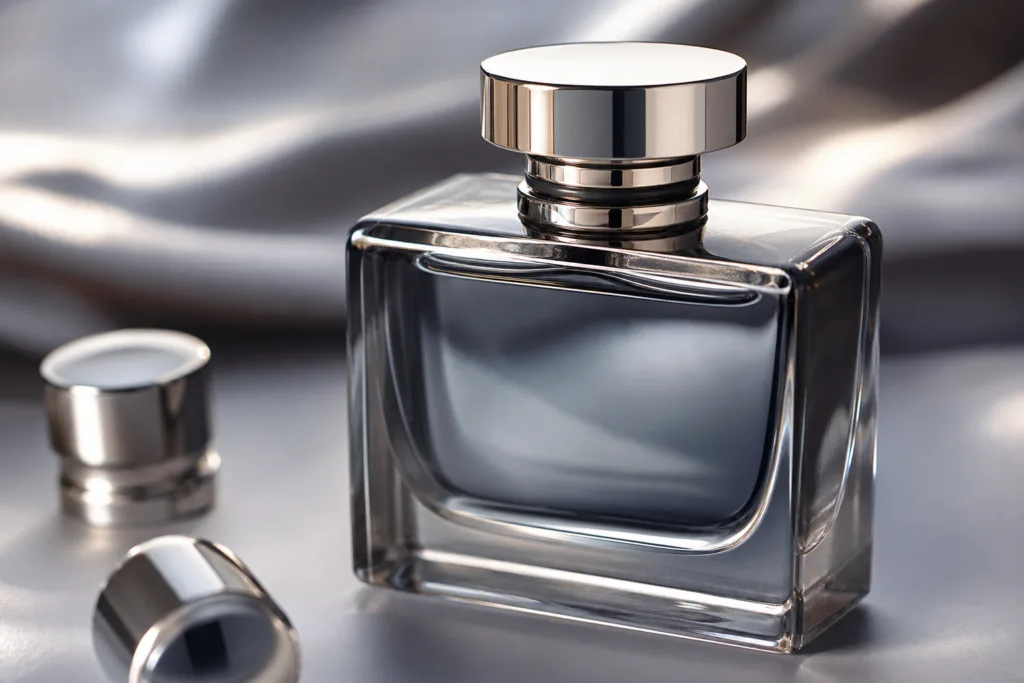
The project brief is the foundation of perfume cap manufacturing. It should capture not only the style you want, but also the bottle, assembly, and production constraints that shape the final result.
At minimum, we recommend collecting the following items before sampling begins:
- Bottle drawings or a physical bottle sample
- Target cap style, shape, and size range
- Desired finish such as plated, painted, polished, matte, or mixed
- Logo artwork files and branding placement instructions
- Target order quantity and expected MOQ tolerance
- Preferred lead time and launch schedule
- Packaging and packing requirements for shipping
When these details are clear, the manufacturer can evaluate structure and process feasibility faster. It also reduces avoidable changes later, especially when the project includes a luxury finish or a tight bottle neck tolerance.
How Drawing Review and Engineering Confirmation Reduce Risk
Before mold work starts, the technical drawing should be checked against the bottle, insert, and closure method. This is where many issues are prevented, because a cap that looks correct on screen may still fail during assembly.
We confirm the main technical points early: outer dimensions, internal cavity, insert fit, bottle neck compatibility, opening and closing feel, and whether the cap weight is practical for the packaging structure. If the cap is too loose, it can feel unstable. If it is too tight, assembly and repeated use can become difficult.
Engineering review also affects the visual result. A heavier zinc alloy cap can create a premium feel, but the shape must still be balanced so the cap does not feel top-heavy or awkward on the bottle. That balance is part of the design, not just the material choice.
mold development paths for custom perfume caps become much more efficient when the drawing review is complete. Good tooling starts with accurate dimensions, confirmed bottle fit, and a realistic understanding of how the part will be finished and assembled.
How to Choose the Right Structure and Shape for a Custom Cap
The design stage should make the cap attractive, but also manufacturable. The most successful perfume caps usually combine a distinctive silhouette with a structure that can be polished, plated, painted, and assembled without excessive defect risk.
In custom perfume cap manufacturing, we often guide buyers to think in terms of three things: appearance, function, and production stability. A sculpted or complex shape may look luxurious, but it can be harder to polish evenly and may create more visible finish variation.
Useful design questions include:
- Does the shape support the brand image and bottle style?
- Can the part be demolded cleanly and finished consistently?
- Will the structure support the chosen logo treatment?
- Does the cap have enough wall thickness and internal space for stable assembly?
Key takeaway: The best custom design is not only attractive; it is also realistic to cast, finish, assemble, and inspect in bulk.
Why Zinc Alloy Is Common in Luxury Perfume Caps
Zinc alloy is widely used in luxury perfume caps because it supports weight, detail, and premium surface finishing better than many lightweight alternatives. It is especially useful when the project needs a decorative metal cap with a substantial hand feel and precise geometry.
That said, zinc alloy is not automatically the right answer for every project. It adds weight, which buyers often want for luxury perception, but the cap and bottle must still be matched so the final package remains stable and practical to handle.
Zinc alloy die casting process for perfume caps is important because the casting step influences surface quality, dimensional stability, and how much later polishing work is needed. If the casting is inconsistent, finish defects become harder to hide in plating or paint.
| Material | Main Strengths | Trade-Offs | Typical Use |
|---|---|---|---|
| Zinc alloy | Weight, detail, premium feel, good finishing base | Heavier, requires careful tooling and finishing control | Luxury perfume caps, decorative metal caps |
| Plastic | Lightweight, lower material cost, easier handling | Lower premium feel, limited metal-like appearance | Mass-market or lightweight projects |
| Hybrid structure | Balanced weight and design flexibility | More assembly complexity | Projects needing cost and feel balance |
For many fragrance brands, the decision is not simply metal versus plastic. It is whether the desired hand feel, finish quality, and budget can be balanced in a structure that will still run reliably in production.
What Happens During Mold Development and Tooling Preparation
Mold development turns the approved design into a part that can be produced repeatedly. This stage is where the project becomes real, because the mold determines the geometry, release behavior, and consistency of the cap.
Tooling usually includes a series of steps: mold design, machining, test casting, dimension checks, and adjustments if the part is not forming correctly. The first sample from a mold is rarely the final version, especially on custom luxury caps with complex lines or deep logo details.
We pay close attention to draft angles, wall thickness, internal space, and the points where the cap may trap air or create surface issues. Small decisions in tooling can affect whether the cap finishes cleanly after polishing and coating.
The most efficient projects are the ones where the buyer accepts that tool refinement is part of the process. A well-controlled mold stage usually saves time later by reducing rework in finishing and assembly.
Why Polishing Determines the Quality of the Final Finish
Polishing is not just a cosmetic step. It prepares the surface for plating or paint, and it strongly affects how defects, texture, and shine appear in the final cap.
A rough or uneven surface will remain visible after coating, especially on reflective metal finishes. Even when the color looks correct, poor polishing can lead to dull spots, uneven reflection, or visible tool marks.
polishing process for decorative metal caps is therefore one of the most important quality stages in perfume cap manufacturing. As surface quality guidance from NIST surface finish metrology shows, surface finish must be measured and controlled because it directly affects appearance and inspection consistency on premium parts.
From a buyer perspective, the practical question is simple: does the surface support the intended finish? A glossy plated cap needs a smoother base than a matte cap, while certain painted finishes may hide minor texture but still require consistent preparation to avoid visual inconsistency.
What Good Surface Preparation Should Achieve
- Remove casting marks, pits, and visible roughness
- Create a stable base for plating or paint adhesion
- Improve gloss and reflection on polished finishes
- Reduce visible defects after coating
- Support consistent appearance across the production lot
Key takeaway: Surface preparation affects both beauty and durability, so polishing quality should be checked before finishing starts, not after bulk production is complete.
How Electroplating Choices Affect Appearance and Durability
Electroplating is one of the most common finishing routes for luxury perfume caps because it creates a metal-like decorative appearance. Buyers often request gold, silver, chrome-like, or custom metallic tones depending on the bottle and brand image.
The finish choice should not be based on color alone. Plating must also bond well, remain visually consistent, and withstand handling during assembly, packing, and shipping. If the surface preparation is weak, even a visually attractive finish may fail inspection.
electroplating process for perfume cap finishes is worth understanding because plating quality depends on the full chain: polishing, cleaning, coating control, and inspection. Buyers should ask how the factory manages adhesion, color consistency, and finish protection during production.
| Finish Type | Visual Effect | Buyer Priority | Key Risk |
|---|---|---|---|
| Gold plating | Warm, premium, classic luxury | Color tone and uniformity | Tone variation across batches |
| Silver or chrome-like plating | Bright, modern, reflective | Mirror consistency | Surface defects become easier to see |
| Dark metallic plating | Bold, niche, high contrast | Depth and finish stability | Inconsistent shade or haze |
For sourcing teams, plating inspection should include both appearance and process control. Ask how the supplier checks adhesion, scratches, edge coverage, and whether sample approval will be used as the production reference.
When Painted Finishes Make More Sense Than Plating
Paint is often the better choice when the design needs a specific solid color, a soft matte feel, or a finish that is difficult to achieve consistently through plating. It can also help brands create a more distinctive visual identity without relying on metallic reflection.
Painted caps are usually evaluated differently from plated caps. Buyers should focus on color matching, gloss level, surface coverage, scratch resistance, and how the coating behaves around edges, grooves, and logo areas.
Unlike plating, paint can support more custom color freedom, but it also brings different risks. Color shift, orange peel texture, and uneven edge coverage are common issues if the coating process is not tightly controlled.
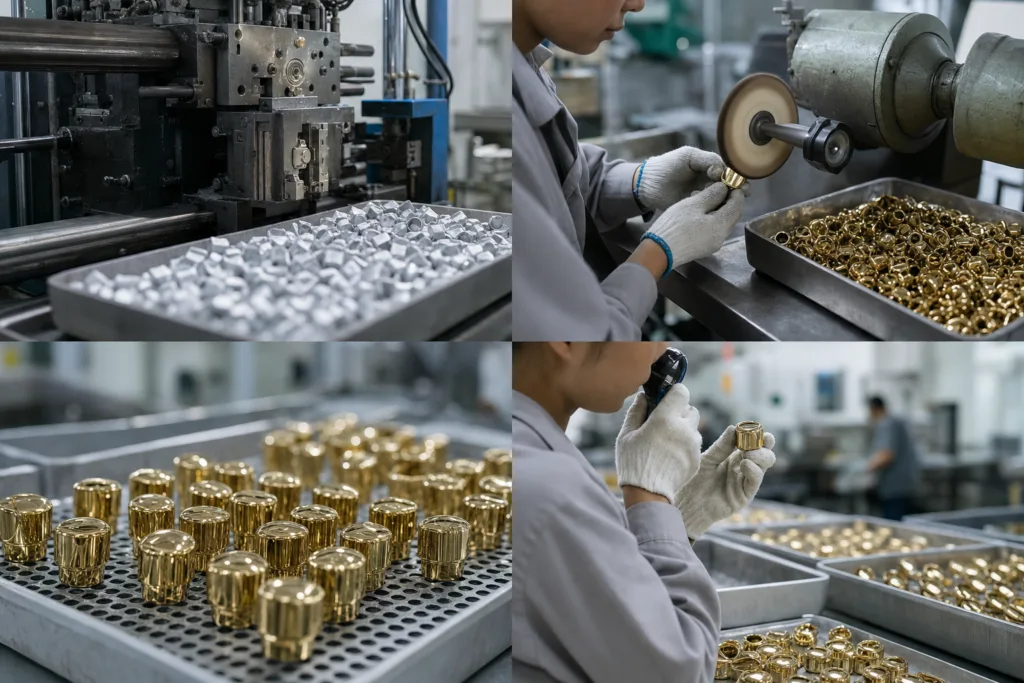
Electroplated or Painted: How to Decide
| Question | Electroplated Finish | Painted Finish |
|---|---|---|
| Need a metal look? | Usually better | Possible, but less authentic |
| Need a custom brand color? | More limited | Usually stronger option |
| Want a reflective luxury effect? | Strong advantage | Usually not the first choice |
| Need softer matte appearance? | Possible but less flexible | Often easier to achieve |
The right answer depends on the design intent and cost-performance target. For some projects, a combined approach can also work, such as a plated main body with painted accent details.
How Logo Treatment Changes Brand Perception
Logo treatment is not a small detail. It often determines whether the cap looks generic or truly branded, especially in fragrance packaging where the cap is one of the most visible touchpoints on the bottle.
Common logo treatments include engraving, embossing, debossing, printing, and mixed surface effects. Each one creates a different visual and tactile result, and each one must be matched to the finish type and logo size.
Shallow artwork can disappear after plating or paint, while overly deep artwork may distort the surrounding surface. That is why artwork review should happen together with tooling confirmation, not after the mold is already closed.
For buyers comparing options, the key question is whether the logo will remain clear after finishing and repeated handling. A decorative cap can look impressive, but if the branding is weak or blurred, the premium perception drops quickly.
How Insert Assembly Supports Bottle Compatibility
The insert is what helps the cap fit securely to the bottle and maintain stable closure. In many projects, the insert is just as important as the outer metal shell because it controls the actual bottle contact.
We confirm the insert type based on the bottle neck and the intended assembly method. This helps prevent looseness, rattling, and inconsistent closing feel. If the insert and bottle are not matched correctly, the cap may seem acceptable in a sample but fail in repeated use or shipping tests.
Assembly checks should include how the cap sits on the bottle, whether it can be removed and replaced smoothly, and whether the final friction feels appropriate for the brand positioning. For luxury packaging, this tactile feedback matters as much as visual design.
At Caps Ltd, we treat fit review as a core part of custom development because the cap cannot be considered finished until structure, insert, and bottle all work together.
What to Check During Sample Development and Approval
Sampling is where the project becomes measurable. A good sample should show whether the design, finish, logo, and fit can move forward into bulk production without major risk.
Buyers should review samples against a clear approval list rather than relying only on general impression. This is especially important when the project includes custom mold development or a new surface finish.
Sample Approval Checklist
- Visual appearance under normal and bright light
- Cap weight and hand feel
- Bottle neck fit and insert stability
- Logo clarity and artwork position
- Finish consistency and color match
- Surface defects such as pits, scratches, or uneven coating
- Assembly behavior and opening/closing feel
Key takeaway: Sample approval should be specific and documented, because the approved sample becomes the reference for bulk production control.
How Production QC Prevents Sample-to-Bulk Differences
One of the most common problems in custom perfume cap manufacturing is sample-to-bulk drift. The sample looks excellent, but the production run shows variation in finish, color, fit, or logo clarity.
This usually happens when the factory does not lock down critical details before production starts or when the process is not inspected at the right stages. QC should not be limited to a final check; it needs to happen through the manufacturing flow.
Typical checkpoints include incoming material inspection, in-process dimensional checks, surface checks after polishing, finish checks after plating or painting, assembly checks, and final visual inspection before packing. The goal is to detect problems early enough to correct them without delaying the whole order.
quality control checkpoints for cap production are especially important when the buyer needs consistent appearance across multiple cartons or repeated replenishment orders. For luxury projects, small inconsistencies are often easy for end customers to notice.
What Final Inspection and Packing Should Protect
Final inspection confirms that the caps are ready to ship. This is where the supplier checks appearance, quantity, packaging, and whether the goods can survive transport without surface damage.
Because decorative metal caps are sensitive to scratching and rubbing, export packing should reduce contact between parts as much as possible. Bulk packing method matters, especially when the finish is highly reflective or the logo area is exposed.
Final inspection should confirm the correct quantity, acceptable appearance, secure packaging, and that no obvious assembly or finish defects remain in the lot. When the project is time-sensitive, packing readiness should also be checked against the shipping schedule.
final inspection standards for perfume caps help buyers understand how the last gate before shipment should be handled. For bulk orders, this stage is the final opportunity to catch problems before the goods leave the factory.
What Bulk Production Planning Should Cover Before Approval
Bulk production should not begin until the buyer and manufacturer agree on the approved sample, expected quantity, finish standard, and packing method. This is especially true when the project involves tooling, custom color matching, or multiple finish layers.
Lead time is often driven by several steps: tooling readiness, sample approval speed, finishing complexity, and production capacity. Buyers can reduce delays by confirming artwork, bottle samples, and packaging requirements before the first sample is made.
It also helps to plan the order in production-friendly terms. If the MOQ is high, the buyer should confirm demand timing early. If the launch is uncertain, a staged planning discussion may be better than rushing into a large order with unclear requirements.
bulk production planning for perfume cap projects is most effective when the customer and supplier agree on what must be locked before scale-up. That includes drawings, finish reference, QC standard, packing format, and delivery target.
Common Manufacturing Risks Buyers Should Watch For
Most perfume cap manufacturing problems are preventable if the buyer knows where the weak points usually are. The most common issues are not dramatic failures; they are smaller problems that add up in the final appearance or fit.
- Sample-to-bulk differences in plating color or paint shade
- Loose fit caused by incomplete bottle or insert confirmation
- Visible casting marks that were not polished out properly
- Logo distortion after tooling or finishing
- Scratches caused by poor packing or part-to-part friction
- Delayed tooling because design files were not complete
When these risks are discussed early, the production plan becomes much easier to manage. A manufacturer can only control what has been clearly specified and approved.
How to Evaluate a Perfume Cap Manufacturer Before You Commit
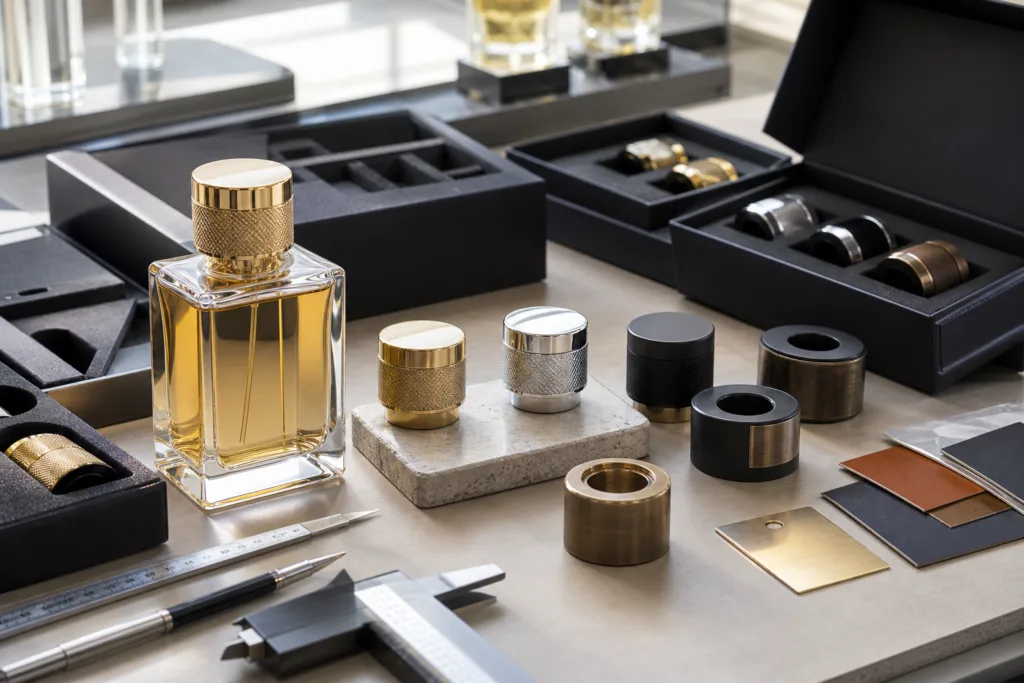
A good supplier should understand more than decoration. They should be able to review structure, recommend materials, guide finish selection, and explain where the project may need adjustment before production.
We suggest evaluating the factory on practical criteria rather than only on samples or price. For custom cap projects, process support often matters as much as unit cost.
| Evaluation Point | What Good Looks Like | Why It Matters |
|---|---|---|
| Engineering support | Clear drawing and fit review | Reduces structural risk |
| Finish knowledge | Can explain plating and paint differences | Improves visual consistency |
| Sample discipline | Uses approved sample as production reference | Limits bulk variation |
| QC process | Checks dimensions, appearance, and fit | Protects final quality |
| Communication | Responds clearly to artwork, bottle, and packing questions | Speeds up project decisions |
Packaging buyers should also ask whether the supplier can support private label development, because a simple cap purchase often turns into a broader packaging coordination task. That includes logo execution, insert design, finish matching, and production timing across the full packaging set.
What Makes a High-End Cap Successful in Real Projects
A successful perfume cap is not defined by one feature alone. It is the result of fit accuracy, material choice, surface preparation, finish control, logo clarity, and packing discipline working together.
For fragrance brands, the cap should support the story of the bottle without creating manufacturing problems. For sourcing teams, the cap should be stable enough to repeat across bulk orders without unexpected deviations.
If you approach perfume cap manufacturing as a structured development process, the result is usually stronger and easier to control. That approach gives buyers more confidence in sampling, protects quality in bulk production, and helps the final fragrance package look finished rather than improvised.
The most reliable projects are the ones where design intent and manufacturing logic are aligned from the start. When that happens, the cap is not just decorative; it becomes a dependable part of the product experience.
FAQs
What is the first step in perfume cap manufacturing?
The first step is collecting the project brief, including bottle information, desired cap style, finish target, logo needs, MOQ, and lead time. This lets the manufacturer check whether the design is feasible before mold work begins.
Why is zinc alloy commonly used for perfume caps?
Zinc alloy is commonly used because it supports a premium weight, sharp detail, and strong decorative finishing. It is a practical material for luxury perfume caps when the project needs a solid hand feel and a high-end visual result.
How do buyers choose between electroplated and painted finishes?
Buyers choose based on the visual goal and branding need. Electroplating is usually better for a reflective metal look, while painted finishes are often better for custom colors, matte effects, or brand-specific solid tones.
What should be checked before approving a sample?
Before approval, check appearance, bottle fit, cap weight, logo clarity, finish consistency, and assembly feel. The sample should represent the exact quality standard expected in bulk production.
Why do sample and bulk orders sometimes look different?
Sample and bulk orders can look different when process settings, surface preparation, or finishing control are not locked down well enough. Clear sample approval, production references, and QC checkpoints reduce that risk.
How long does custom perfume cap development usually take?
Development time depends on design complexity, tooling work, finish type, and how quickly the buyer approves samples. A straightforward project moves faster, while custom shapes, plating, and new inserts usually require more iteration.