
Perfume bottle cap design is not only about shape. For most fragrance packaging projects, the finish is what decides whether a cap feels understated, modern, bold, technical, or truly premium in the customer’s hand. Matte, glossy, metallic, painted, and plated finishes can all work well, but they behave differently in production, affect cost in different ways, and require different quality standards if you want a cap that looks good both in approved samples and in bulk delivery.
If your team is comparing finish direction early in development, it helps to review custom perfume cap design support before artwork, tooling, and sample approval move too far ahead. At Caps Ltd, we typically help buyers connect finish choice with zinc alloy cap structure, bottle fit, logo treatment, polishing level, insert design, and batch approval standards so the final cap is not only attractive on a mood board but also realistic for production and repeat ordering.
The main decision is simple: choose a finish that matches your brand image, survives expected handling, and can be controlled consistently within your budget and lead time. The more decorative and reflective the surface, the more important surface preparation, polishing, and inspection become. The more color-specific the project, the more important approval references and batch control become.
What buyers should decide first in perfume bottle cap design
Before comparing matte against gloss or plating against paint, confirm the cap’s role in the full pack. A heavy zinc alloy cap for a niche fragrance launch has different finish priorities than a private label cap for broad retail distribution. Weight, hand feel, logo visibility, bottle style, and target price all influence the right finish choice.
We usually recommend that buyers confirm five points first:
- Target brand position: luxury, niche, masstige, or private label
- Cap material and expected weight
- Bottle neck dimensions, insert structure, and assembly method
- Preferred visual direction: soft, bright, mirror-like, satin, or color-led
- Production realities such as MOQ, lead time, and repeat order expectations
Key takeaway: The best finish is not the most eye-catching one in isolation. It is the one that fits the brand, the cap structure, and the production control level your project actually needs.
Popular finishing options for perfume caps
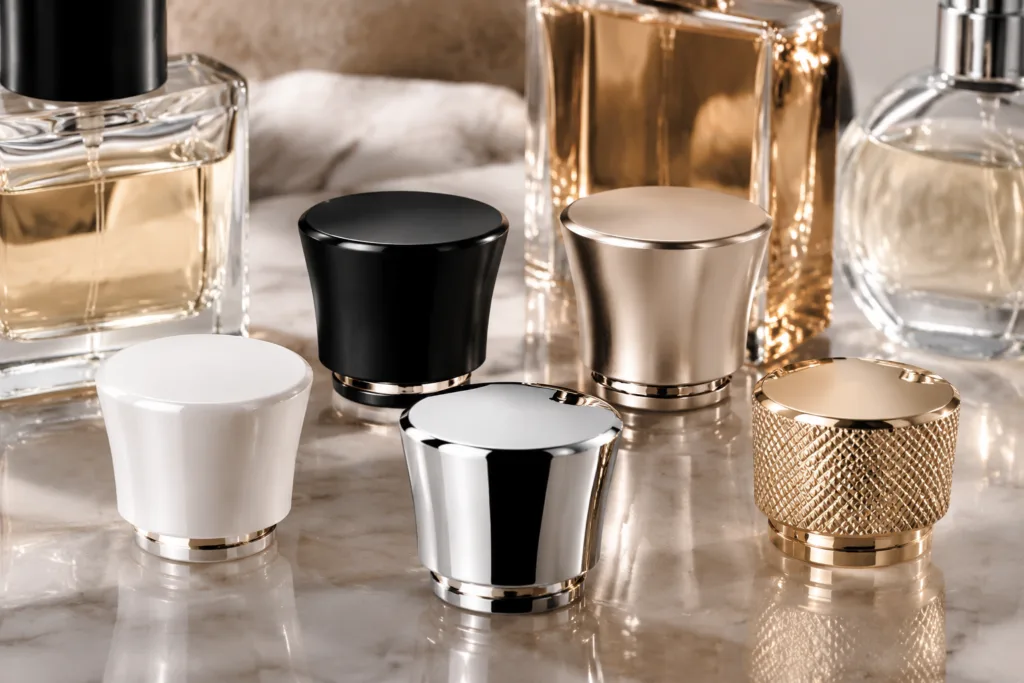
Most decorative metal cap projects fall into four broad finish families: matte, glossy, metallic plated, and painted color effects. In practice, buyers often compare them side by side because each creates a different packaging signal and introduces different quality risks.
Matte and glossy finishes
Matte finishes create a softer and often more modern appearance. They reduce glare, make fingerprints less obvious on some colors, and pair well with minimalist fragrance branding. On zinc alloy caps, a matte effect may come from paint, satin polishing, or a controlled topcoat that reduces surface shine.
Glossy finishes look sharper and more reflective. They can make colors appear richer and are often used when the brand wants stronger shelf visibility. However, gloss also reveals more of the underlying surface condition, so minor sanding marks, waviness, dust contamination, or paint flow issues may become easier to see.
| Finish style | Visual effect | Main strengths | Typical watch-outs |
|---|---|---|---|
| Matte | Soft, low-reflection, refined | Modern look, lower glare, forgiving on some handling marks | Color can appear flatter if approval standard is unclear |
| Satin | Balanced, semi-reflective | Good middle ground between elegance and practicality | Needs consistent surface preparation to stay uniform |
| Glossy | Bright, rich, high-clarity | Strong color presentation, more visual impact | Shows dust, surface defects, and flow variation more easily |
For fragrance brands that want quiet premium packaging, matte or satin often works better than full gloss. For colorful, youthful, or high-contrast branding, gloss can be a stronger fit if the supplier has stable finish control.
Metallic coatings, plating, and painted effects
Metallic-looking caps can be achieved through different processes, and buyers should not assume they all perform or cost the same. Some projects need a true plated metal appearance. Others only need a metallic visual effect with a more flexible color direction.
Electroplating creates a bright decorative metal surface and is often selected for gold-tone, silver-tone, gunmetal, rose-tone, or other reflective finishes. Buyers comparing electroplated perfume cap finish options usually prioritize premium visual impact, crisp reflection, and strong luxury perception. The trade-off is that plating quality depends heavily on substrate quality, polishing level, and process stability.
Painted metallic effects can also deliver attractive results, especially when the project needs a controlled color family, softer metallic texture, or lower-cost visual variation. Teams exploring painted perfume cap finish options often find them useful for branded colors, custom shades, and less mirror-like surfaces that still feel decorative.
When a project is color-led rather than mirror-led, we often discuss baked paint finishes for color-driven cap projects. Baked paint systems can support matte, satin, and gloss directions while giving more room for color matching than classic bright plating. That makes them practical for fragrance lines where the cap must align closely with carton artwork, bottle coating, or an established brand palette.
| Option | Best for | Advantages | Trade-offs |
|---|---|---|---|
| Electroplating | Luxury metallic appearance | Premium reflection, strong metal impression, elegant contrast with logos | More sensitive to polishing quality and adhesion control |
| Metallic paint | Color flexibility with metallic feel | Broader aesthetic range, easier custom tone development | Usually less mirror-like than plating |
| Solid color paint | Brand-color packaging | Strong identity matching, matte or gloss options | Color approval must be tightly managed |
Key takeaway: If the visual goal is mirror-like metal, plating is usually the better path. If the goal is controlled brand color, softer texture, or wider effect flexibility, painted finishes are often more practical.
How finish selection affects cost and production
Finish choice changes more than appearance. It affects tooling discussion, polishing time, rejection risk, inspection workload, packaging protection, and the likelihood of rework during sampling. Buyers who compare only sample aesthetics often miss this production side.
From our decorative metal cap manufacturing perspective, the real cost question is not only process price per piece. It is the total cost of achieving acceptable consistency at your required quality level. A simple painted matte cap may be more economical than a mirror-plated cap not only because of process steps, but because it can be less demanding in visible defect control.
Durability and defect risk
The more decorative the finish, the more important durability checkpoints become. Perfume caps are handled during filling, assembly, transport, retail display, and consumer use. Edges, corners, logo recesses, and contact points are common risk zones for wear, scratches, or appearance loss.
For plated caps, adhesion is a core quality concern. Poor surface cleaning, residue from polishing compounds, or unstable pretreatment can increase the risk of peeling, blistering, or weak bonding, which is why experienced buyers often ask suppliers about adhesion testing for metallic coatings on decorative components when evaluating finish reliability. Even a visually strong sample is not enough if the finish system is not supported by disciplined process control.
Painted finishes have their own risks. Dust inclusion, orange peel texture, uneven film build, exposed base metal at edges, and color shift between sample rounds can all appear if the process window is loose. Matte systems can hide some surface issues but may show rubbing marks on dark colors. Gloss systems may look impressive but can reveal tiny imperfections more clearly.
Buyers should ask practical durability questions such as:
- What surface preparation is used before plating or painting?
- How are edges and sharp logo areas checked for coverage?
- What inspection standard is used for scratches and pinholes?
- How are approved samples protected during bulk packing and export?
- What conditions would trigger rework or rejection during final QC?
Consistency across batch production
Batch consistency matters most when the brand has repeat orders, multiple SKUs, or global distribution. A finish that looks correct on one sample but drifts in tone, gloss, or reflectivity in later production quickly becomes a packaging problem. This is especially true when the cap sits next to a fixed-color bottle, label, or carton.
For painted and metallic-effect caps, visual approval alone is not always enough. Suppliers should align on master samples, viewing conditions, allowable tolerance, and process records because objective color and appearance measurement in production quality control helps explain why perceived color can shift with lighting, angle, and surface texture. In real manufacturing, appearance control is both visual and procedural.

That is why we encourage buyers to discuss color consistency control for batch production before mass production begins, not after the first variance appears. This is particularly important for white, black, nude, pastel, metallic-painted, and custom brand-matched caps, where even small deviations are easier to notice.
| Production factor | Why it matters | Buyer action |
|---|---|---|
| Master sample retention | Keeps future batches aligned to an approved reference | Approve and store a signed standard sample |
| Viewing conditions | Lighting changes perceived color and gloss | Confirm how finish approval is evaluated |
| Polishing consistency | Affects final plating brightness and smoothness | Ask how substrate quality is controlled |
| Film or plating uniformity | Impacts visual evenness and durability | Review QC checkpoints for edges and recesses |
| Packing method | Protects finish during shipment | Confirm tray, bag, separator, or carton protection |
How zinc alloy cap structure changes finish results
Zinc alloy is popular for decorative perfume caps because it supports weight, shape freedom, and a premium hand feel. It is also well suited to die-cast cap bodies, detailed geometry, and branded top surfaces. But its finish result depends heavily on what happens after casting.
A zinc alloy cap with excellent design can still disappoint if polishing is inconsistent or if fine surface porosity is not managed well before plating or paint. Mirror-like metallic finishes especially depend on a clean, stable, and well-prepared substrate. Matte painted finishes may be more forgiving visually, but they still need controlled surface preparation for reliable coating performance.
At Caps Ltd, we usually explain finish decisions together with cap geometry. Deep recesses, sharp steps, thin edges, embossed logos, debossed logos, and curved top surfaces all influence how evenly a finish appears. That is why finish selection should never be treated as a late cosmetic decision separate from engineering and mold review.
Key takeaway: The same finish can look very different depending on cap geometry, metal quality, polishing quality, and logo depth. Finish planning works best when structure and decoration are reviewed together.
What finish works best for different fragrance brand positions
The right answer depends on the commercial position of the fragrance line. A niche perfume brand, a gift-market launch, and a private label retail project may all choose different finishes for good reasons.
Luxury and niche fragrance packaging
Luxury and niche fragrance brands often prioritize tactile value, visual depth, and precise logo presentation. Heavy zinc alloy caps with electroplated gold, silver, dark chrome, or satin metallic effects are common because they reinforce weight and perceived permanence.
For this segment, buyers should pay close attention to:
- Reflection quality and surface smoothness
- Logo sharpness after finishing
- Finger mark visibility on bright surfaces
- Color harmony with bottle decoration and collar parts
- Premium fit feeling during cap removal and replacement
Matte black, satin champagne, brushed-looking metallic, and deep gloss custom colors can also work well in niche fragrance packaging when the design language is more minimal or contemporary. In these cases, consistency across all visible components matters more than choosing the flashiest process.
Mass-market and private label packaging
Mass-market and private label perfume packaging usually needs a different balance. Appearance still matters, but the finish must also be practical for MOQ planning, repeated color matching, lead time control, and broader cost targets. Painted matte, satin, or gloss caps often make sense here because they can deliver strong brand identity without requiring a highly reflective plated surface.
For private label projects, the best finish is often the one that can be repeated across several bottle variants with manageable approval standards. If multiple SKUs share one cap shape but different colors, painted systems can simplify visual differentiation. If the line needs one hero metallic SKU, plating can still work, but the quality standard and budget should match that choice.
| Brand position | Common finish direction | Why it works | Main caution |
|---|---|---|---|
| Luxury fragrance | Electroplated bright or satin metallic | Strong premium signal and heavier visual value | Higher sensitivity to substrate defects |
| Niche fragrance | Matte black, satin metallic, custom deep colors | Distinct identity and refined presentation | Approval should cover texture and tone clearly |
| Private label | Painted matte, satin, or gloss | Flexible branding and practical cost control | Color consistency must be managed batch to batch |
| Promotional or broad retail | Simplified painted finishes | Efficient scaling and easier SKU variation | Do not overlook fit and packing protection |
Common mistakes that cause finish disappointment
Most finish problems can be traced back to early assumptions. Buyers often approve appearance without locking technical standards, or they compare processes without checking whether the same cap geometry supports both options equally well.
Common mistakes include:
- Choosing plating because it looks premium, without confirming polishing expectations
- Approving a custom color visually, without defining tolerance or reference sample storage
- Ignoring insert fit and assembly pressure, which can damage finished cap interiors
- Using sharp logo edges that make paint coverage or plating appearance harder to stabilize
- Reviewing samples under one lighting condition only
- Underestimating how bulk packing can mark glossy or metallic surfaces
Another frequent issue is separating design approval from production approval. A beautiful prototype is not yet a production standard. Buyers should ask whether the supplier has confirmed mold repeatability, insert assembly stability, finish inspection criteria, and packing method for bulk shipment.
What to confirm before approving samples and placing production
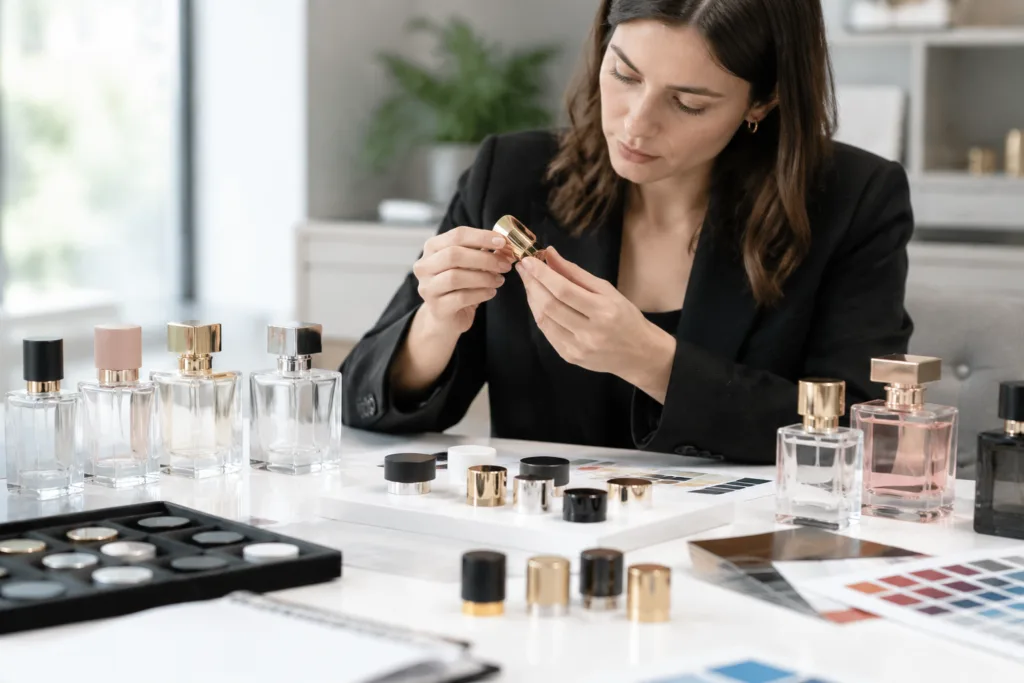
Sample approval should be practical and documented. It is the stage where visual preference must become measurable acceptance criteria. This reduces confusion later, especially when procurement, brand, and packaging teams are in different locations.
| Approval checkpoint | What to review | Why it matters |
|---|---|---|
| Color and gloss | Compare under agreed lighting | Prevents subjective approval disputes |
| Surface defects | Check dust, pits, scratches, pinholes, flow marks | Sets realistic cosmetic standard |
| Logo treatment | Review depth, clarity, contrast, and position | Branding can soften after finishing if not designed well |
| Bottle fit | Test opening force, seating, alignment, and stability | Good finish means little if assembly is poor |
| Packing protection | Review tray or separator method | Protects approved finish during export and warehousing |
| Bulk reference retention | Keep signed sample and production notes | Improves repeat order consistency |
We also recommend that buyers send clear bottle samples, neck drawings if available, vector logo files, finish references, and target quantity ranges at the start. This shortens the path to a reliable sample and helps the supplier guide whether a plated, painted, matte, or gloss solution is realistic for the project.
Conclusion: choose finish direction with both brand image and production reality in mind
The best perfume bottle cap design finish is the one that delivers the right brand signal without creating avoidable production risk. Matte finishes can feel modern and controlled. Gloss can create stronger color impact. Metallic plating can elevate premium perception. Painted systems can offer broader color flexibility and practical cost control.
For fragrance brands, private label teams, packaging designers, and procurement buyers, the smartest approach is to compare finish options against cap material, geometry, bottle fit, logo treatment, durability needs, and repeat-order consistency. When those factors are reviewed together, finish selection becomes much more predictable and much easier to scale from sample to bulk production.
Frequently Asked Questions
Which finish is usually best for a premium perfume cap?
A plated metallic finish is often the strongest option for a premium perfume cap when the goal is a bright metal look and heavier luxury perception. That said, a satin metallic or deep matte painted finish can also feel premium if the cap weight, logo treatment, and surface quality are controlled well.
Is matte finish more durable than glossy finish on perfume caps?
Not always, because durability depends more on the coating system, surface preparation, and handling conditions than on shine level alone. Matte finishes can hide small marks better, while glossy finishes may show scratches or dust more clearly, so buyers should judge both durability and visible wear behavior.
When should buyers choose plating instead of painted finish?
Buyers should choose plating when the project needs a true metallic surface with strong reflection and a clear luxury packaging signal. Painted finishes are often a better choice when brand color matching, lower glare, softer texture, or broader cost flexibility matter more than mirror-like metal appearance.
How important is polishing before plating or painting?
Polishing is extremely important because the final finish can only look as good as the underlying surface preparation allows. On plated caps especially, poor polishing can make waviness, pits, and surface imperfections much more visible, while painted caps may still suffer from uneven appearance if preparation is inconsistent.
What should be included in a perfume cap sample approval standard?
A strong sample approval standard should include color or plating tone, gloss level, acceptable surface defects, logo clarity, bottle fit, insert stability, and packing protection method. Keeping a signed reference sample and written notes helps reduce disagreement when bulk production starts or repeat orders are placed later.
How can buyers reduce finish inconsistency in bulk orders?
Buyers can reduce inconsistency by locking an approved master sample, confirming viewing conditions, sharing clear finish references, and reviewing the supplier’s batch control process before production. It also helps to align on QC checkpoints for color, surface defects, assembly fit, and protective export packaging rather than evaluating appearance only at the end.