
Perfume bottle cap fitting is one of the earliest details buyers should confirm, because a cap that looks right on a drawing can still fail once it meets the real bottle, insert, and production tolerance. In fragrance packaging, fit is not just about opening and closing the cap; it affects alignment, hand feel, branding consistency, and how safely the cap travels through sampling and mass production.
For projects that need bottle fit review before tooling, our bottle fit engineering support is built around the same practical questions procurement teams ask: what bottle neck finish is being used, how much dimensional variation is acceptable, what insertion depth is required, and whether the cap structure can be validated before bulk production. At Caps Ltd, we treat fit as a manufacturing issue first, then a styling issue, because stable closure performance depends on material selection, tolerances, and sample verification working together.
When buyers compare custom perfume caps, the safest approach is to define fit requirements before surface finish or logo details are finalized. That order helps avoid rework, because a beautiful cap with the wrong inner diameter, insert specification, or neck match can still become a production risk.
What determines perfume bottle cap fit
The fit of a fragrance cap depends on three connected factors: the bottle neck finish, the cap’s internal geometry, and the tolerance window allowed in both parts. If any one of these is off, the cap may feel loose, sit unevenly, scratch the bottle shoulder, or create inconsistent assembly results from sample to bulk.
For buyers reviewing Perfume bottle cap fitting early in development, the key is to treat the bottle and the cap as a matched system. We usually start with the bottle drawing or physical sample, then confirm how the closure structure will engage with the neck finish and any insert or lining element inside the cap.
Neck finish and bottle geometry
The neck finish is the top geometry of the bottle where the cap meets the glass. It includes the neck diameter, height, shoulder transition, and the shape that supports the closure system. If the bottle neck geometry changes even slightly between suppliers or glass lots, the cap can shift from secure to unstable.
Glass perfume bottles are especially sensitive to this because appearance buyers often focus on silhouette, while production teams need the exact finish dimensions. Official standards such as glass bottle dimensional tolerances for cosmetic and perfumery packaging show why dimensional variation matters: small shifts in height, verticality, or diameter can change how the cap lands, seats, and aligns during assembly.
In practical terms, neck finish review should answer these questions:
- Is the bottle neck intended for friction fit, insert fit, or another closure structure?
- Does the cap need to stop at a fixed insertion depth or sit with a visible reveal line?
- Will the bottle come from one glass source or multiple suppliers?
- Does the shoulder shape create a visual alignment risk when the cap is installed?
Key takeaway: A cap cannot be evaluated in isolation. The neck finish and bottle geometry define the actual fit window, so the bottle must be confirmed before final cap tooling or production approval.
Inner dimensions, tolerances, and insertion depth
Once the bottle is known, the cap’s internal dimensions determine whether the fit will be stable or unpredictable. This includes the inner diameter, insert size, wall thickness, and the depth to which the bottle neck enters the cap. Even a small tolerance shift can affect retention force, alignment, and the feel of the closure.
Insertion depth matters because it controls how much contact area exists between cap and bottle. If the depth is too shallow, the cap may wobble or lift too easily. If it is too deep, the cap may scrape the bottle shoulder, pinch the finish, or become difficult to remove during repeated use.
From a manufacturing perspective, tolerance control is the point where design intent becomes production reality. A pilot sample may fit well, but if the bottle supplier changes glass dimensions or the cap mold allows wider variation than expected, the bulk order can behave differently from the approved sample.
| Fit factor | Why it matters | What buyers should confirm |
|---|---|---|
| Neck finish | Defines the closure interface | Bottle neck drawing or physical sample |
| Cap inner diameter | Affects retention and alignment | Target dimension and tolerance band |
| Insertion depth | Influences stability and hand feel | Required seating position and reveal line |
| Insert structure | Helps secure the bottle neck | Insert type, hardness, and fit method |
| Glass variation | Can shift results between lots | Allowed dimensional drift from bottle supplier |
Why compatibility changes with material, structure, and finish
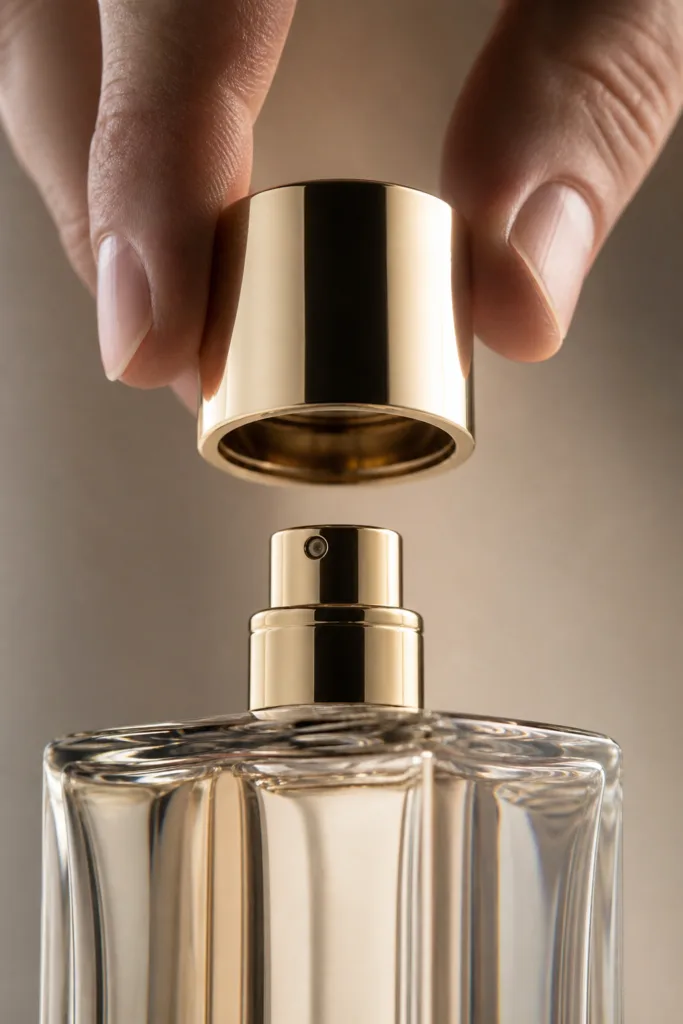
Compatibility is not only a sizing issue. Cap material, weight, and internal construction all influence how the closure performs on the bottle. A heavy metal cap may feel premium and sit more confidently, but it also needs stronger dimensional consistency than a lightweight cap because the added mass can make small fit problems more noticeable.
At Caps Ltd, we usually separate the evaluation into structure, finish, and assembly. Structure determines the physical match. Finish affects surface friction, visibility of marks, and the final appearance. Assembly tells us whether the cap behaves reliably when installed by hand or during automated or semi-automated packing.
For custom perfume bottle caps, zinc alloy is often chosen because it supports detailed shapes and a solid hand feel. However, the buyer still needs to confirm whether the inner structure is compatible with the bottle neck finish and whether the planned finish process will change the effective size after plating or painting.
| Cap type | Fit behavior | Best use case | Buyer caution |
|---|---|---|---|
| Zinc alloy cap | Stable, weighty, precise when molded well | Luxury and niche fragrance projects | Check insert design and weight balance |
| Lightweight cap | Easier to handle, less closure force | Cost-sensitive or simpler packaging | May feel less premium and reveal wobble more easily |
| Electroplated cap | Very dependent on surface prep and thickness control | Premium metallic appearance | Plating buildup can affect tight tolerances |
| Painted cap | Color flexibility with controlled build | Brand-led color matching | Coating thickness must not interfere with fit |
How electroplating and paint can affect fit
Surface finishing can change fit more than buyers expect. Electroplating adds a thin metal layer, while painted finishes add a coating layer that may slightly increase wall build or alter contact feel. If the tolerance window is already tight, those added layers can affect assembly depth or closing smoothness.
That is why finish decisions should not be made after fit has been frozen. A polished substrate, plating specification, and coating plan all need to be evaluated together, because the same cap structure can behave differently once the surface treatment is applied. For projects where appearance and fit are both critical, finish testing should happen on a real bottle rather than only on the cap itself.
Key takeaway: Finish choice can change the effective fit. A cap that passes as an unfinished sample may need rechecking after electroplating or painting because surface build can shift the closure behavior.
Common fit problems in perfume packaging projects
Most perfume cap failures are not dramatic. They are usually small defects that become expensive at scale: a slightly loose cap, a cap that tilts on the neck, a scratch mark where the cap rubs the bottle, or a closure that feels different from one sample batch to another. These issues reduce packaging consistency and can slow down launch approval.
In our production experience, the root cause is often a mismatch between drawing assumptions and physical samples. Buyers may approve a cap shape based on appearance, while the actual problem is inside the cap where the neck finish must seat correctly. This is why fit review should happen before design is locked.
Loose caps and unstable closure
A loose cap usually means the retention force is too low, the inner diameter is oversized, the insert is not gripping properly, or the bottle neck is smaller than expected. In some projects, the sample holds well on one bottle lot but becomes unstable on another because the bottle supplier’s tolerance range is wider than the cap design can absorb.
Loose closure does more than create a mechanical issue. It changes perceived quality. A cap that shifts when the bottle is handled can make even a luxury fragrance package feel unfinished. Buyers should therefore test the cap on multiple bottles, not only the best-fitting one.
- Check retention on multiple bottle samples from the same lot.
- Confirm whether the insert material has enough grip and resilience.
- Ask whether the bottle supplier maintains a stable neck finish tolerance.
- Measure closure repeatability after repeated opening and closing.
Scratching, misalignment, and assembly issues
Scratches usually appear when the cap enters the bottle at the wrong angle or the inner edge is too sharp. Misalignment can happen when the neck finish is slightly off-center, the cap inner cavity is too tight on one side, or the weight distribution pulls the cap to one side during seating.
Assembly issues often become visible in packing operations before they are obvious in hand. If operators need extra force to install the cap, or if the cap must be twisted to find the right position, the design may need adjustment. A good fit should feel smooth, repeatable, and tolerant of normal handling variation.
| Problem | Likely cause | Production risk | Typical check |
|---|---|---|---|
| Loose cap | Oversized cavity or weak insert grip | Poor closure stability | Retention test across bottle samples |
| Tilting cap | Neck off-center or uneven inner geometry | Visual quality complaint | Alignment check from multiple angles |
| Scratching | Sharp edge or poor entry angle | Surface damage and rejects | Contact-point inspection |
| Hard assembly | Tight tolerance or coating buildup | Slower packing and possible breakage | Insertion force and seating check |
For packaging distributors and sourcing teams, these are not cosmetic issues only. They affect packing speed, claim rates, and how easy it is to standardize a product across different production runs.
How manufacturers verify compatibility before mass production
The safest way to verify compatibility is to test the cap against the actual bottle sample, not only the drawing. We recommend checking dimensional data, assembly behavior, and finish condition together so that the approval reflects real production conditions. This is especially important for private label perfume packaging, where bottle source, artwork, and cap structure may all be changing during development.
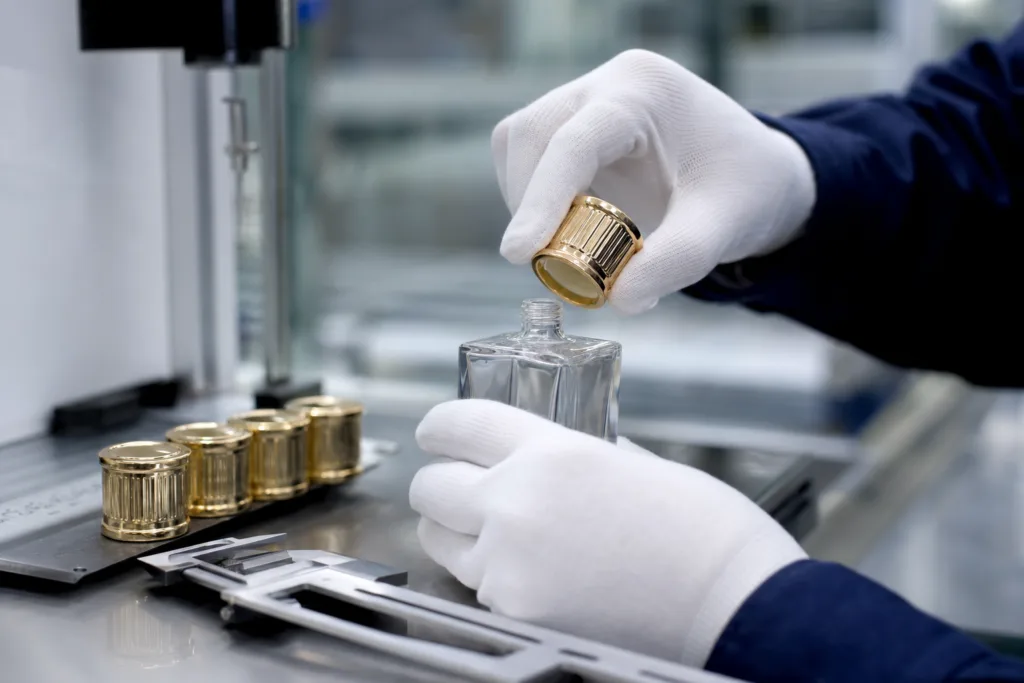
Our own perfume cap size guide for neck compatibility is useful when teams need a practical reference for common sizing questions. It helps buyers translate bottle-neck terms into real cap decisions, which is often where communication gaps begin.
Sample testing and dimensional checks
Sample testing should answer a simple question: does the cap fit consistently across the intended bottle range? To answer that properly, the team needs a physical bottle sample, the cap sample, and a basic inspection method that checks both numbers and feel. If one of those is missing, approval becomes too subjective.
Dimensional checks should focus on the points that control fit most directly. That usually includes the internal diameter, seating depth, critical outer dimensions if the cap must clear decorative shoulders, and the bottle neck dimensions that affect entry and alignment.
We also recommend documenting the sample stage clearly. A cap may be approved visually but still need a small geometry change after the first fit test. That is normal in custom development and is often the fastest way to avoid later production trouble.
- Measure the bottle neck and compare it with the cap cavity.
- Test the cap on more than one bottle sample.
- Check whether plating, paint, or polishing changed the effective size.
- Record the approved sample condition before moving to bulk tooling.
If a project uses multiple finish options, the team should compare them on the same bottle sample. A coated version and a raw sample may not behave the same, even if the outer design is identical. This is why sample development and dimensional validation should be treated as part of the fit process, not as a separate decoration step.
Bottle-cap pair validation for production
Production validation is more than approval of one perfect sample. It is the process of proving that the bottle-cap pair still works when normal manufacturing variation is added. That means checking the cap against actual bottles from the intended supply chain, then reviewing whether the closure stays consistent after repeated handling.
The best validation plan asks whether the product will still assemble correctly when the bottle lot changes, the coating thickness varies slightly, or the insert batch behaves differently. If those questions are not addressed before mass production, the risk moves downstream into packing and customer complaints.
From a procurement perspective, this stage is where communication matters most. Buyers should share bottle samples, logo files, finish references, target quantity, and expected lead time together so the manufacturer can evaluate fit and capacity in one process. A practical custom perfume cap checklist for fit review helps teams confirm those details before tooling starts.
| Validation step | What it confirms | Why it matters |
|---|---|---|
| Single-sample fit test | Basic bottle compatibility | Shows whether the design can work at all |
| Multiple-bottle test | Variation tolerance | Reduces risk from bottle lot changes |
| Finish-on-fit test | Surface buildup effect | Prevents hidden interference after coating |
| Repeat assembly test | Operational stability | Shows whether packing can stay consistent |
Key takeaway: A successful bulk launch depends on bottle-cap pair validation, not sample appearance alone. If the pair is not tested under realistic production conditions, fit problems often appear after the order is already moving.
What buyers should prepare before requesting a sample
The fastest way to improve sampling accuracy is to give the manufacturer the right inputs. For perfume bottle cap fitting, the most useful starting point is a physical bottle sample, not only a drawing or a dimension guess. If the bottle is not final yet, the team should say so clearly so the cap can be designed with the correct tolerance strategy.
Buyers should also prepare information about the packaging direction. Luxury metal caps, painted finishes, and logo treatments all influence fit decisions because surface build, weight, and assembly feel can shift the result. If these are discussed early, the sample process is usually shorter and more accurate.
- Send a physical bottle sample whenever possible.
- Share neck finish dimensions and any available technical drawing.
- Provide logo artwork and finish references early.
- Confirm expected MOQ and the intended production timeline.
- State whether the cap must fit one bottle source or several.
For projects that need a clear inspection method, we often recommend using a shared checklist during sample review. Our quality inspection template for cap fit checks supports that process by keeping fit, finish, and assembly questions in one place before mass production.
At Caps Ltd, we find that the most efficient projects are the ones where design, bottle fit, and sampling are reviewed together. That approach reduces confusion later, especially when a fragrance brand is comparing several cap styles or preparing for a private label launch.
How to choose the right fit strategy for your project
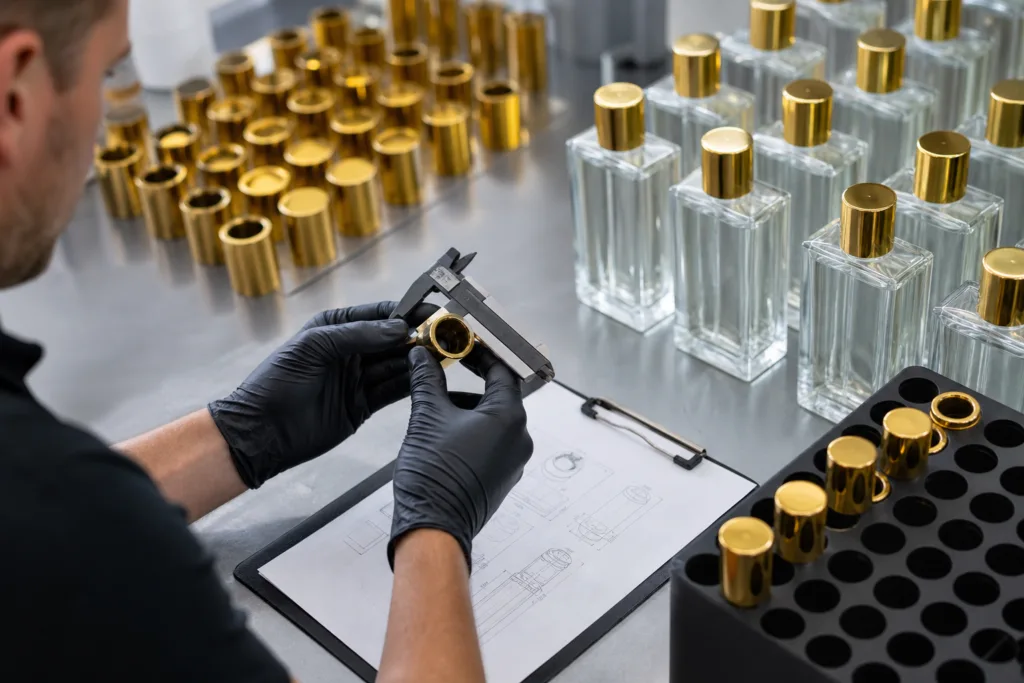
The right fit strategy depends on where the project sits on the cost-performance scale. A luxury launch may justify tighter development control, more sample rounds, and a heavier zinc alloy cap. A simpler retail project may prioritize ease of assembly and tolerance to bottle variation over a highly complex decorative structure.
Instead of asking only whether a cap fits, buyers should ask how much variation the package can tolerate without creating field problems. That question is especially relevant when one cap design will be used across several scents, sizes, or export markets. The broader the application, the more important consistency becomes.
For teams sourcing from multiple suppliers, it can help to compare cap options against the bottle finish used in the project. A useful decision usually depends on the clarity of the neck dimensions, the finish build, and whether the supplier can maintain production consistency after approval.
| Decision point | What to ask | Why it helps |
|---|---|---|
| Bottle source | Single supplier or multiple suppliers? | Determines how wide the tolerance window must be |
| Cap material | Zinc alloy or lighter construction? | Impacts weight, feel, and dimensional stability |
| Finish plan | Plated or painted? | Changes surface build and approval method |
| Validation level | Visual only or tested on real bottles? | Defines production risk before launch |
If the project is still at the evaluation stage, the best next step is usually to confirm bottle dimensions, expected finish, and acceptable tolerance range before ordering bulk tooling. That sequence helps the cap work with the bottle instead of forcing the bottle to adapt to the cap.
Conclusion
Perfume bottle cap fitting is a technical decision that affects the entire packaging project, from sampling to final packing. The most reliable results come from matching the neck finish, controlling tolerance, confirming insertion depth, and testing the bottle-cap pair before mass production.
When buyers treat fit as part of development rather than a last-minute check, they reduce the chance of loose caps, misalignment, surface damage, and production delays. For fragrance brands, distributors, and procurement teams, that discipline is often the difference between a smooth launch and repeated rework.
Key takeaway: Strong fit control is built on real bottle samples, clear tolerance targets, and validated assembly behavior. If those three points are confirmed early, custom perfume caps are far easier to scale with confidence.
FAQs
Why does perfume bottle cap fitting vary between samples and mass production?
Perfume bottle cap fitting varies because samples are often made and tested under controlled conditions, while mass production must absorb normal variation in bottle dimensions, coating thickness, and assembly handling. If the bottle supplier, finish process, or insert batch changes, the fit can shift even when the design stays the same. That is why sample approval should always be followed by production validation on real bottles.
What should buyers confirm before approving a custom perfume cap?
Buyers should confirm the bottle neck finish, cap inner dimensions, insertion depth, finish type, and expected tolerance range before approving a custom perfume cap. They should also test the cap on the real bottle sample, not just on a drawing or a loose prototype. This helps prevent fit issues that only appear after tooling or bulk production begins.
Can electroplated or painted finishes affect the fit of a perfume cap?
Yes, electroplated and painted finishes can affect fit because both add material to the cap surface. Even if the buildup is small, it can matter when the tolerance window is tight or the insert needs precise seating. For this reason, the final fit should be checked after the surface finish is applied, not only before finishing.
How do bottle tolerances influence closure compatibility?
Bottle tolerances influence closure compatibility because a cap that fits one bottle sample may fit differently on another bottle from the same production run. Small changes in neck diameter, verticality, or shoulder geometry can affect seating and alignment. Buyers who source glass bottles should ask how consistent the bottle supplier’s dimensions are before finalizing the cap design.
What is the most common cause of loose perfume caps?
The most common cause of loose perfume caps is a mismatch between the bottle neck and the cap’s internal structure or insert fit. Oversized inner dimensions, weak retention, or wider-than-expected bottle variation can all reduce closure stability. The safest fix is to review both the bottle sample and the cap sample together before mass production.
How can procurement teams reduce fit risk before placing a bulk order?
Procurement teams can reduce fit risk by sending a physical bottle sample, confirming the neck finish, requesting sample development, and checking assembly on multiple bottles before approval. It also helps to use a fit checklist and document the approved sample condition for future reference. This makes communication clearer between the buyer and the manufacturer during production planning.