
A well-planned custom perfume bottle cap does more than close a bottle. It shapes the first tactile impression, supports the brand story, and helps the packaging team avoid fit problems that become expensive later in sampling or production. For fragrance brands, the most successful projects usually begin with clear decisions on shape, weight, finish, and bottle compatibility rather than starting with decoration alone.
If your project already has a bottle concept or a luxury packaging target, our custom perfume cap design support page is a useful starting point because it connects the visual idea with manufacturable structure. At Caps Ltd, we use that early stage to review cap proportion, mold feasibility, bottle neck fit, finish options, and sampling requirements so the OEM or ODM process starts with practical constraints already in view.
Why custom perfume bottle cap design matters for fragrance packaging
The cap is one of the few parts of fragrance packaging that consumers touch directly, so design decisions influence both perception and usability. A cap that looks beautiful but feels unstable, scratches too easily, or sits poorly on the bottle can weaken the entire product presentation. For procurement teams, that means the design brief should cover appearance, fit, and production risk together.
In manufacturing terms, a cap also affects tooling, plating quality, assembly method, and packaging efficiency. A simple shape may be easier to produce consistently, while a more complex form can create stronger shelf impact if the mold, polishing, and surface finishing are well controlled. The right balance depends on the brand position, the bottle architecture, and the order volume.
Brand positioning and shelf impact
A fragrance cap often communicates the brand level before the bottle is even picked up. Heavy metal caps, sharply defined surfaces, and refined logo treatment usually suggest a premium or niche fragrance position, while lighter forms may suit simpler mass-market packaging. The key is not to make the cap as complex as possible, but to make sure the shape, finish, and weight match the intended price and customer expectation.
When brands ask for a luxury look, we usually advise them to define what luxury means in that context. For some projects, it is a high-gloss plated surface with precise geometry. For others, it is a matte painted finish, restrained branding, and a solid hand feel that does not look overly decorative.
Matching cap design to bottle shape and neck finish
Cap design should always start with the bottle, not the other way around. Neck finish dimensions, shoulder curvature, insert depth, and the visual proportion between bottle and cap all influence how the final package feels in the hand. A cap that looks well proportioned in a sketch may appear too tall, too narrow, or too heavy once placed on the actual glass bottle.
That is why we recommend confirming the bottle sample or engineering drawing early, then developing the cap around the real neck and collar conditions. If the project involves tight tolerances or multiple bottle SKUs, bottle fit engineering for fragrance caps becomes just as important as the decorative concept.
Key takeaway: The most successful custom perfume bottle cap projects combine visual impact with fit engineering from the start, rather than treating decoration and assembly as separate decisions.
What buyers should decide before requesting OEM/ODM development
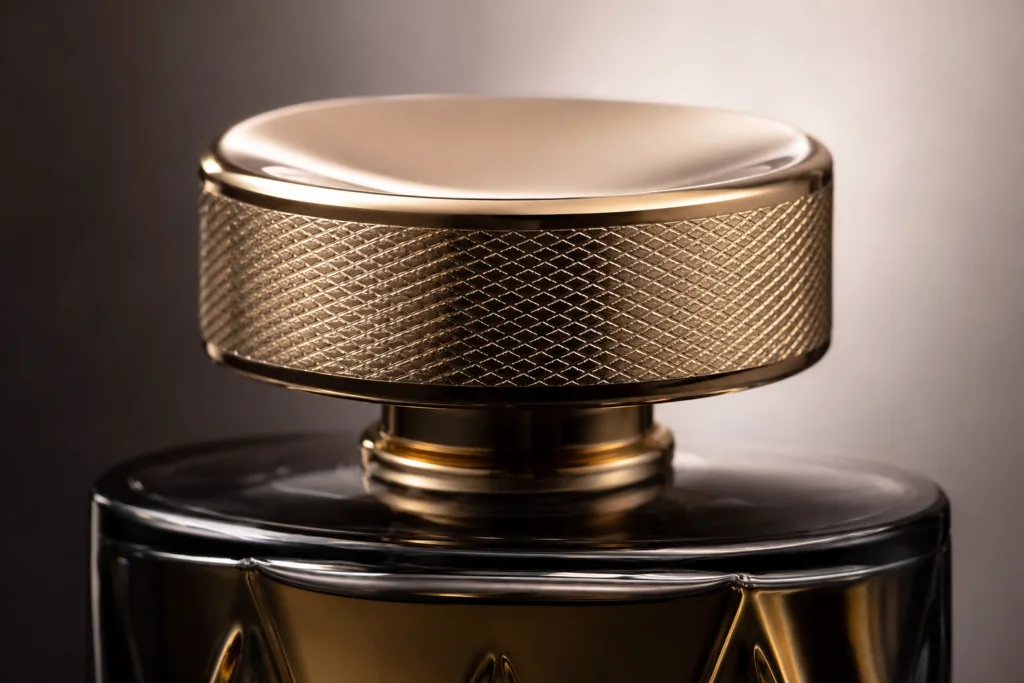
Before asking a manufacturer for sampling, buyers should define the cap’s function as clearly as its appearance. This includes the target bottle, the desired hand feel, the finish family, the logo treatment, and the expected production quantity. The more precise the brief, the fewer sample revisions are usually needed later.
For OEM/ODM development, we find that brands move faster when they can answer a few practical questions: what bottle are we fitting, what visual style are we aiming for, what finish must be matched, and what production constraints matter most. These answers help the manufacturer choose the right structure, tooling path, and process sequence.
Provide bottle drawings, target look, and sample references
A manufacturer can work more efficiently when the brief includes the bottle drawing, neck finish data, reference images, and any physical sample that resembles the desired result. Drawings help with dimensional planning, while samples help with visual interpretation, especially when the project needs a specific luxury cue or a particular type of metal sheen.
If the brand already has a cap that feels close to the target, it is useful to explain what should be kept and what should change. For example, the shape may be right but the weight may be too low, or the finish may be correct but the logo treatment may not feel premium enough.
Define tolerance, finish, and production requirements
Tolerance matters because perfume cap fit is a functional issue, not only a cosmetic one. Small differences in insert size, inner diameter, or neck engagement can affect whether the cap feels secure, centers properly, or removes cleanly during use. Even a beautiful cap can become a quality problem if the assembly repeatability is weak.
Finish requirements should also be written clearly. Plated surfaces, painted surfaces, brushed effects, and mixed-finish concepts all need different control points. If the design requires electroplating, the surface preparation and finishing sequence should be discussed early, and buyers can review electroplating choices for decorative metal caps when deciding which decorative route is appropriate.
| Project decision | Why it matters | What to confirm early |
|---|---|---|
| Bottle fit | Prevents loose or overly tight assembly | Neck finish, insert type, sample bottle |
| Cap weight | Affects perceived quality and balance | Target hand feel, material choice, size limit |
| Finish type | Determines appearance and process control | Plating, paint, matte, gloss, brushed |
| Logo treatment | Shapes brand clarity and readability | Engraved, embossed, debossed, printed |
| MOQ and lead time | Impacts tooling and production planning | Forecast quantity, launch timing, sample stages |
Common customization options for perfume bottle caps
Most perfume caps are customized through a combination of structure, material, finish, and branding. Buyers do not need to request every possible feature; instead, they should choose the details that best support the product positioning and production budget. A good manufacturer will help separate essential requirements from optional decoration.
In practice, the strongest projects use a limited number of carefully selected custom elements. This keeps tooling manageable, improves finish consistency, and reduces the risk of mismatched visual effects between samples and bulk production.
Shape, size, weight, and proportions
Shape is usually the first visible customization point, but it should be planned together with size and weight. A tall cap can create a stronger visual statement, while a wider cap may look more stable and premium on a rounded bottle. The wrong proportion, however, can make the bottle appear top-heavy or awkward.
Weight is especially important in luxury fragrance packaging. A heavier cap often feels more substantial in the hand, but the added mass must be balanced against shipping cost, mold complexity, and neck fit stability. We often suggest evaluating the cap on the actual bottle instead of judging weight in isolation.
For brands exploring geometry beyond standard round or square styles, custom cap shape development options can help explain how complex silhouettes affect tooling, appearance, and assembly risk.
Materials, colors, logos, and surface finishes
Material choice changes the entire performance profile of the cap. Zinc alloy is often selected for decorative metal caps because it supports solid feel, clean geometry, and high-end finishing, while lighter structures may suit different price points or logistics goals. The right material depends on the desired visual impact, production volume, and compatibility with the chosen finish.
Colors and surface finishes should support the fragrance concept, not compete with it. Gloss plating can create a polished, reflective presentation, while matte paint may communicate restraint and modern luxury. Logo treatment should be chosen with equal care, because fine branding details can be lost if the surface texture or contrast is not handled correctly.
When branding is a central part of the design, logo and branding treatment for perfume caps is worth reviewing early so the logo depth, placement, and contrast work with the cap material and finish.
| Option | Strengths | Trade-offs |
|---|---|---|
| Zinc alloy | Premium weight, strong shape definition, decorative flexibility | Requires surface prep, tooling, and finish control |
| Painted finish | Wide color choice, softer visual effect, easier color direction | Needs strong coating consistency and scratch control |
| Electroplated finish | High-end shine, metallic depth, strong luxury feel | Surface preparation and adhesion must be controlled carefully |
| Logo engraving or embossing | Durable branding, integrated with the structure | Needs clear artwork and die details |
Key takeaway: Buyers should choose the few customization elements that carry the strongest brand value, then make sure those choices are practical to produce consistently.
How to brief a manufacturer for OEM/ODM cap development
A clear brief shortens the development cycle and lowers the chance of misunderstanding during sampling. For OEM/ODM projects, the manufacturer is not only making a part; it is translating a design intent into something that fits a bottle, survives finishing, and can be produced repeatedly. That translation becomes much easier when the buyer provides usable technical inputs.
At Caps Ltd, we usually organize development around three questions: what the cap should look like, how it should fit, and how it should be finished in production. This keeps the discussion practical and helps the project move from concept to sample without avoidable rework.
Provide bottle drawings, target look, and sample references
The most helpful inputs are often straightforward. A bottle drawing shows the neck and shoulder relationship, a reference image shows the target style, and a physical sample provides tactile direction. If the brand wants to match an existing perfume cap or bottle family, the sample is especially useful for understanding proportion and surface feel.
Buyers should also explain which features are non-negotiable. For example, the project may require a particular cap height, a specific metallic tone, or a logo that must be visible from multiple angles. Clear priorities reduce back-and-forth later in sample development.
Define tolerance, finish, and production requirements
Development should include the tolerance range for bottle fit, the expected finish quality, and any packaging or transport constraints. If a finish must remain stable through export handling, that should be noted before sampling starts. If a brand needs a precise color match, the reference standard and acceptable variation should be described in writing.
It also helps to define the inspection standard for appearance. A plated cap may be acceptable only if the surface is smooth and uniform, while a painted cap may need strict color consistency across multiple lots. electroplating choices for decorative metal caps are best evaluated in this context, because plating decisions affect both beauty and durability.
When projects become more process-sensitive, we encourage buyers to think like a production team rather than only a design team. That means confirming the number of samples needed, expected approval turnaround, packing method, and the target MOQ before the mold is opened.
| Brief element | What to include | Why it helps |
|---|---|---|
| Visual direction | Reference images, finish examples, brand positioning | Reduces style interpretation gaps |
| Technical fit | Bottle drawings, neck data, insert requirements | Supports accurate tooling and assembly |
| Finish control | Color target, plating tone, paint gloss or matte level | Improves sample agreement and mass consistency |
| Production target | MOQ, lead time, packaging needs, inspection expectations | Supports realistic planning |
What buyers should verify before sampling and production
Sampling is where design intent becomes measurable. The sample should not be judged only by appearance; it should also be tested for fit, opening feel, surface quality, and repeatability. A good sample reduces uncertainty, but only if the buyer uses it to check the right details.
In our experience, many problems that appear in bulk production can be prevented by asking the right questions at sample stage. That includes how the cap closes on multiple bottles, whether the finish is consistent across pieces, and whether the branding remains sharp after handling.
Fit testing and closure consistency
Fit testing should be done on the actual bottle whenever possible. The cap needs to sit straight, engage securely, and release without excessive force. If the project uses an insert or a collar structure, the fit should be checked from several angles to make sure the cap does not wobble or tilt.
Buyers should also test repeated opening and closing. A cap that fits once may still reveal problems after repeated handling, especially if the internal structure is too loose or the insert geometry is not stable. For projects where fit risk is high, bottle fit engineering for fragrance caps should be treated as a core development step rather than a late correction.
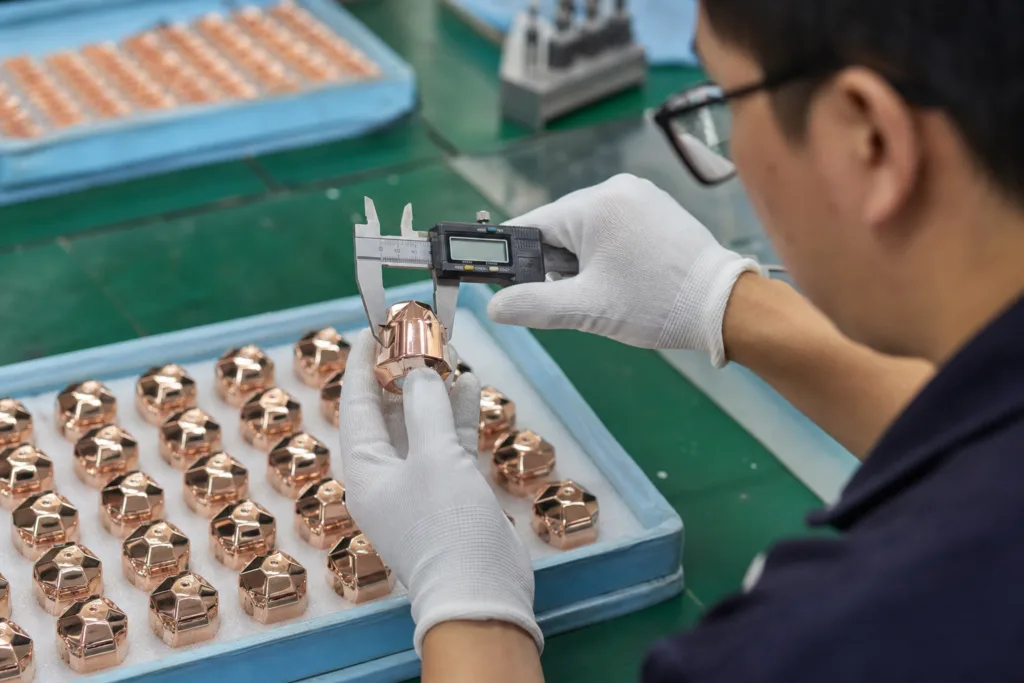
From a supplier perspective, fit testing is not just a sample approval step. It is also a forecasting tool. If the sample already shows variation, bulk production will usually magnify that variation unless the root cause is corrected before release.
Appearance approval and mass production consistency
Appearance approval should cover the full visual package: shape accuracy, polish level, plating color, paint coverage, logo clarity, and surface cleanliness. It is not enough for one sample to look good if the production process cannot reproduce the same result across a larger batch. The buyer should ask which features are most likely to vary and what controls are in place to prevent that drift.
For plated or coated caps, adhesion and surface preparation are critical. Proper cleaning, pretreatment, and quality checks help the finish stay durable rather than flaking or dulling after use. Standards guidance on Zinc Alloy Die Casting Preparation for Plating is relevant here because it explains why the condition of the zinc alloy surface matters before decorative plating is applied.
Where coating integrity is a concern, the sample approval process should also include qualitative checks for coating adhesion. ASTM’s guidance on coating adhesion testing for metallic finishes is useful to understand why finish validation should happen before full production release.
| Sample checkpoint | What to inspect | Why it matters |
|---|---|---|
| Fit | Straightness, tightness, release force | Prevents assembly complaints |
| Finish | Color, gloss, plating uniformity, coating feel | Affects shelf consistency |
| Branding | Logo sharpness, depth, contrast, placement | Protects brand clarity |
| Durability | Surface integrity after handling | Reduces risk in shipping and use |
| Batch repeatability | Variation between sample pieces | Predicts mass production performance |
Material choice, surface preparation, and finish control in real production
Manufacturing performance often depends on what happens before the final decorative layer is applied. A zinc alloy cap can deliver an excellent premium feel, but the visible result still depends on casting quality, polishing, cleaning, and whether the surface is ready for the chosen coating system. The same is true for painted finishes, where color consistency and coating build must be managed carefully.
This is why finish planning should not be treated as a purely aesthetic decision. A beautiful plated result is the outcome of multiple controlled steps, and each step influences the next one. If one stage is weak, the final cap may still look acceptable in a photo but fail when inspected in bulk.
Why surface preparation affects plating and coating quality
Surface preparation removes defects that would otherwise show through the finish. In decorative metal caps, small imperfections in polishing or cleaning can become very visible after electroplating because reflective finishes highlight every mark. Even matte or painted surfaces can show variation if the base surface is not consistent.
This is the main reason manufacturers pay close attention to pretreatment, polishing sequence, and inspection before finishing. If the surface condition is uneven, the final cap may show dull spots, edge buildup, or poor visual clarity. For buyers, this means asking not only what finish is used, but how the finish is supported by the earlier process steps.
When to choose electroplated versus painted finishes
Electroplating is often preferred when the project needs metallic depth, brightness, or a premium reflective look. Painted finishes are often better when the brand wants color control, a softer look, or a non-metallic visual language. Neither option is universally better; the right choice depends on the bottle, the brand story, and the production risk tolerance.
We usually guide buyers to compare the two options based on how the product will be handled and where it will be sold. If the cap will be touched often, packed tightly, or shipped globally, finish durability and consistency become especially important. For this reason, a decorative finish should always be selected together with the quality plan, not after it.
| Topic | Electroplated finish | Painted finish |
|---|---|---|
| Visual effect | Metallic shine and depth | Solid color and design flexibility |
| Risk focus | Adhesion and surface prep | Color uniformity and coating durability |
| Brand use | Luxury and decorative metal cues | Custom color stories and matte concepts |
| Approval emphasis | Reflection, edge quality, bonding | Coverage, shade match, and texture |
In our manufacturing workflow, the question is not whether plating or paint looks better in isolation. The question is which finish can be repeated reliably on the target cap structure, at the target quantity, with the target bottle fit.
How Caps Ltd approaches custom development for fragrance brands
From a development standpoint, the best perfume cap projects are built around predictable steps: confirm the bottle, clarify the design, check the fit, agree on the finish, then validate the sample before mass production. That process reduces costly changes after tooling and gives fragrance brands a better path to consistent packaging.
At Caps Ltd, our role is to support that process as a custom development partner, not just to produce a decorative part. The practical value comes from aligning design intent with mold structure, surface finish, branding treatment, and repeatable inspection so the final cap can move from sample stage into stable production.
What a practical OEM/ODM workflow should include
A solid workflow usually includes design review, feasibility feedback, mold development if needed, sampling, approval, and bulk production planning. If the project is timing-sensitive, the buyer should confirm how many sample rounds are realistic and whether the timeline allows for adjustments after fit or appearance review.
It also helps to define who approves what. Some teams want the packaging designer to approve appearance, while procurement approves lead time and MOQ, and the brand owner signs off on the final presentation. Clear ownership avoids delay and confusion during development.
Quality control checkpoints that matter most
Quality control should focus on the points that actually affect consumer experience and shipment reliability. That includes dimensional checks, surface inspection, logo clarity, finish consistency, and packaging condition before export. A cap that passes visual inspection but fails fit control is still a production risk.
Cosmetic packaging development also benefits from GMP-style thinking around cleanliness, inspection, and rejection control. The FDA’s GMP guidance for cosmetics is useful background for buyers who want a structured approach to packaging materials, inspection, and contamination prevention.
| QC checkpoint | What the buyer should ask | Typical risk if missed |
|---|---|---|
| Dimensional check | Does the cap match the drawing and bottle? | Loose fit, tilting, or assembly failure |
| Surface check | Are there marks, bubbles, scratches, or dull spots? | Rejects in appearance inspection |
| Logo inspection | Is branding centered, clear, and consistent? | Weak product presentation |
| Finish stability | Does the coating stay intact after handling? | Premature wear or customer complaints |
| Packing check | Are caps protected for shipping and storage? | Scratches, contamination, or mix-ups |
Common mistakes that create avoidable cap development problems
Most cap issues are not caused by one large error. They usually come from small decisions made too late, such as choosing a finish before the structure is confirmed or approving a sample without testing on the actual bottle. These mistakes are easy to avoid when the project is organized around the real manufacturing sequence.
Buyers should be especially careful when switching from a concept rendering to a production-ready part. Rendering software can make a cap look elegant even when the wall thickness, weight, or insert design would be difficult to mass produce. The answer is not to simplify every design, but to validate the design in engineering terms before tooling.
- Choosing the cap shape before confirming bottle neck dimensions.
- Approving plating color without checking surface preparation quality.
- Ignoring weight balance and then finding the bottle feels top-heavy.
- Requesting a detailed logo without confirming the available space on the cap.
- Skipping sample fit tests on the actual bottle.
- Failing to define acceptable finish variation before bulk production.
For teams building a private label or premium fragrance line, a short internal checklist can save more time than a long creative discussion. The right preparation leads to faster sampling, cleaner approvals, and fewer surprises during mass production.
Key takeaway: The biggest cap development risks usually come from missing technical details early, not from the finish choice alone.
When buyers should ask for samples, revisions, or a new mold
Buyers do not always need a new mold for every project, but they do need to know when a design change affects tooling. Minor changes in color or logo depth may be manageable in finishing or artwork adjustment, while changes in shape, neck interface, or structure often require a revised mold plan. Understanding this difference helps keep budgets realistic.
Sampling is the right moment to decide whether the concept is production-ready. If the cap does not fit the bottle correctly, looks disproportionate in hand, or produces inconsistent finish results, the project should be adjusted before mass production starts. That is usually much cheaper than correcting a large order later.
Brands that want to reduce development risk can ask for a structured sample review, with one section for fit, one for finish, one for logo presentation, and one for packaging suitability. This makes approvals more objective and easier to communicate across design, sourcing, and procurement teams.
How to plan MOQ, lead time, and export packaging without creating pressure later
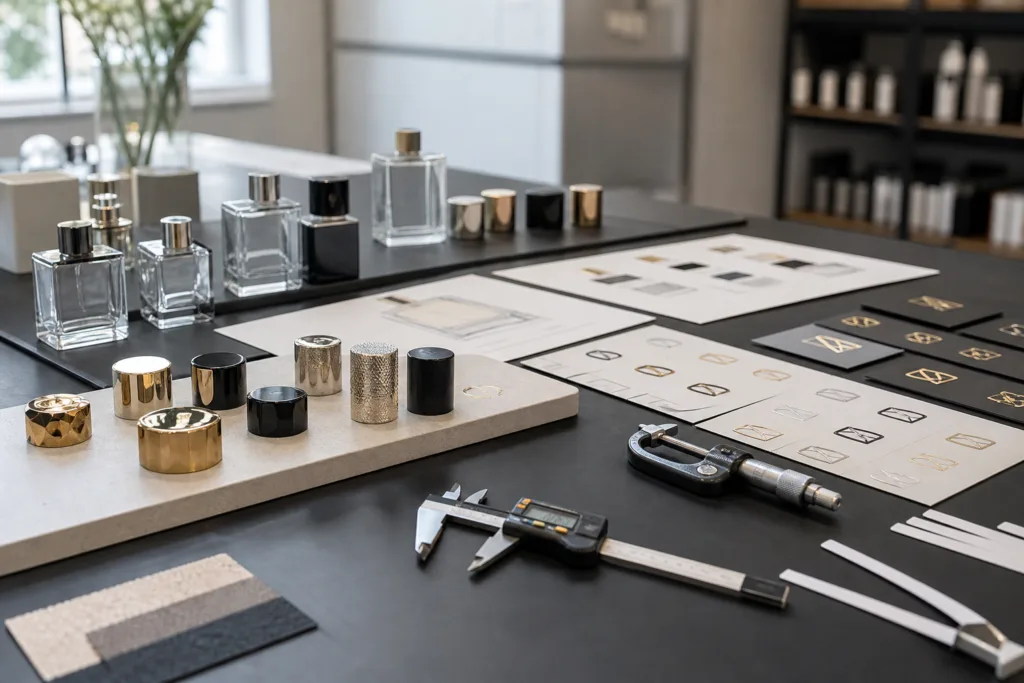
MOQ and lead time should be planned together because the cap structure, finish complexity, and tooling path all influence the production schedule. A highly decorative cap may need more process steps than a simpler one, which can lengthen sampling and bulk production timing. If the launch date is fixed, the team should build enough buffer into the plan.
Export packaging matters as much as the cap itself because scratches, contamination, or deformation can occur after production if the pack-out method is weak. Buyers should specify how caps should be protected, counted, separated, and boxed so the product reaches the filling line in the same condition it left the factory.
For development teams that want a practical starting point, the custom perfume cap briefing checklist and the sample development and approval support page can help organize the inputs needed before sampling begins.
Conclusion: what a good custom perfume bottle cap brief should accomplish
A strong brief should help the manufacturer understand the bottle, the brand direction, the finish target, the fit requirement, and the production constraints in one clear package. When those elements are defined early, the sample stage becomes a confirmation process instead of a guessing process. That is the difference between a cap that merely looks attractive and a cap that works reliably in production.
For fragrance brands, packaging teams, and procurement buyers, the best custom perfume bottle cap projects are the ones that treat design, engineering, and quality control as one workflow. If the cap is built around the real bottle, the intended finish, and a repeatable production plan, the result is far more likely to perform well in both sampling and mass production.
If your next project involves a luxury line, a private label launch, or a bottle family that needs precise fit and decorative control, the most useful next step is usually to lock the technical brief before sample development begins.
FAQ
What should be included in a custom perfume bottle cap brief?
A strong brief should include the bottle drawing or sample, target cap shape, finish preference, logo artwork, expected quantity, and any special fit or packaging requirements. This gives the manufacturer enough information to evaluate feasibility before sampling and reduces the chance of redesign later.
How do I choose between a plated and painted cap finish?
Choose plating when you want metallic depth, brightness, and a more decorative metal feel. Choose paint when color control, matte effects, or a softer visual style matter more. The best choice depends on the brand position, handling conditions, and how consistently the finish can be reproduced in bulk.
Why is bottle fit engineering important for perfume caps?
Bottle fit engineering is important because the cap must sit securely, align properly, and open smoothly on the actual bottle. Even a visually strong design can fail if the insert size, neck fit, or internal structure is not matched to the bottle dimensions.
Do I need a new mold for every custom perfume bottle cap design?
No, not every project needs a fully new mold, but any change in shape, structure, or bottle interface usually needs tooling review. If the adjustment is only in color or branding detail, the change may be handled during finishing or artwork preparation instead.
What sample checks should I request before bulk production?
You should request fit testing, finish inspection, logo review, and a repeatability check across multiple sample pieces. It is also wise to test the sample on the actual bottle and confirm that the cap remains consistent after repeated opening and closing.
How can I reduce risk when ordering OEM or ODM perfume caps?
You can reduce risk by giving the manufacturer complete technical information, approving the sample on the real bottle, and confirming quality checkpoints before production starts. Clear expectations for MOQ, lead time, finish standard, and export packaging also help prevent avoidable delays and defects.