
Custom perfume caps are not just decorative parts; they affect how a fragrance bottle feels in the hand, how it fits on the neck, and how well the final pack communicates brand value. For fragrance brands, distributors, and procurement teams, the real challenge is choosing a cap that balances appearance, structure, finish quality, and production reliability.
For projects that need a specific shape, weight, or decoration target, our custom perfume bottle cap manufacturing support can help connect the design brief to a workable production plan. At Caps Ltd, we approach each custom cap as part of the full bottle system, with attention to material selection, bottle fit review, mold development, finishing, sampling, and bulk production control.
What custom perfume caps are and why B2B buyers source them
Custom perfume caps are closures developed for a specific fragrance project rather than chosen from a standard stock range. Buyers usually source them when they need stronger shelf presence, better brand alignment, or a cap structure that matches a specific glass bottle and neck finish.
For B2B projects, the cap is rarely an isolated component. It influences the way the entire bottle looks, how premium the product feels, and how easy the pack is to assemble during filling and packing. That is why buyers often evaluate custom perfume caps alongside the bottle, collar, insert, decoration, and carton presentation.
Custom perfume caps vs. standard stock caps
Stock caps are faster to source and usually simpler to price, but they limit shape, color, and branding control. Custom caps take more planning, yet they allow the buyer to design around the fragrance identity instead of adapting the identity to an existing part.
In many launch projects, the extra development work is justified because the cap becomes part of the product story. A heavier, better-finished cap can make an otherwise simple bottle look more deliberate and more premium.
Why brands choose custom metal caps for fragrance packaging
Metal caps are popular because they support sharper detailing, stronger visual weight, and a more substantial hand feel. They also give buyers more options for plating, painting, logo treatment, and mixed-surface effects.
When a brand wants a luxury position, a metal cap can do more than decorate the bottle. It can help create the impression of density, precision, and durability, which are important cues in fragrance packaging.
Common buyer use cases for custom projects
- New fragrance launches that need a distinctive bottle-and-cap identity
- Private label perfume projects that require custom branding and controlled cost
- Packaging upgrades where the bottle remains the same but the cap needs a better premium effect
- Distributor-led projects that require a flexible supplier for repeated orders across multiple markets
Key takeaway: Buyers source custom perfume caps when appearance, fit, and brand differentiation matter enough to justify development work rather than relying on a standard closure.
Which materials and cap structures are most common?
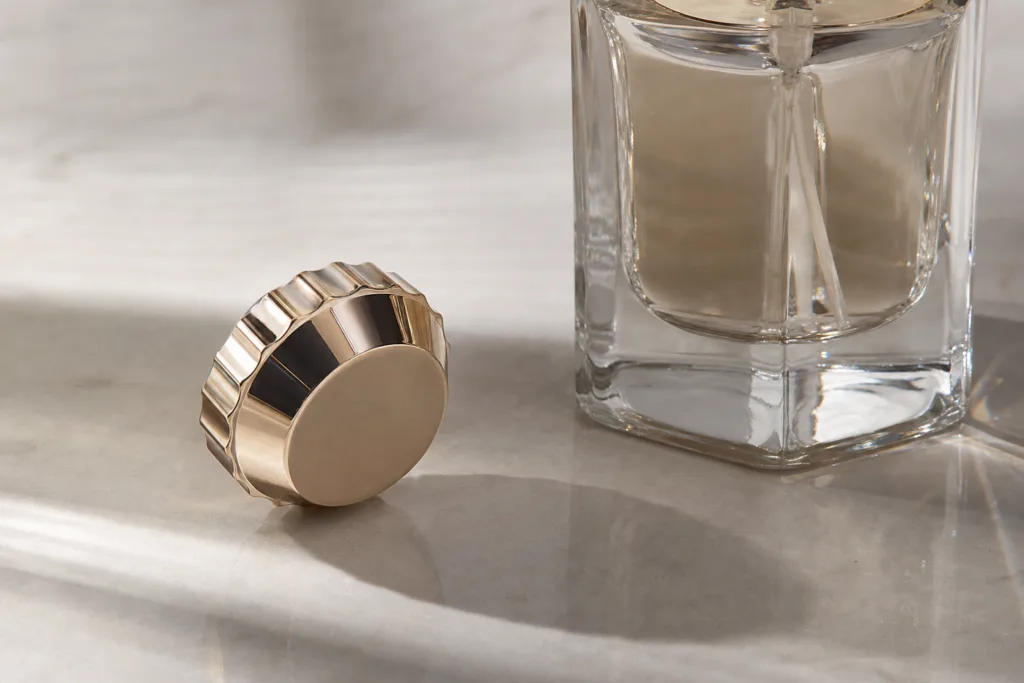
The most practical material choice depends on the project’s target look, required weight, and tooling budget. For decorative fragrance packaging, zinc alloy is one of the most common structural choices because it can support detailed shapes and a solid premium feel.
At Caps Ltd, projects often start with the question of structure first and decoration second. That order matters because the material will affect mold design, polishing effort, surface treatment, and the final dimensional control.
For buyers comparing structural options, our zinc alloy perfume cap options are a useful reference point because zinc alloy often supports the balance of detail, weight, and finish quality that fragrance brands expect from a custom metal cap.
| Material or structure | Main advantage | Main trade-off | Best fit for |
|---|---|---|---|
| Zinc alloy | Detailed shapes, premium weight, good surface finishing potential | Higher tooling and production complexity than simple plastics | Luxury and niche fragrance packaging |
| Heavy metal structure | Strong hand feel and stable visual presence | May raise cost and require careful fit control | Premium launch bottles and hero SKUs |
| Magnetic closure | Distinct user experience and secure feel | Needs accurate alignment and added structural planning | Projects where opening and closing feel is part of the brand experience |
| Lightweight structure | Lower material load and easier handling | Can feel less premium if not designed well | Cost-sensitive or high-volume programs |
Why zinc alloy is often the default discussion point
Zinc alloy is attractive to buyers because it can carry surface detail well and usually gives a stronger perceived value than lightweight alternatives. It also allows more freedom in decorative geometry, which is useful when the cap needs distinctive curves, ridges, or branding features.
The trade-off is that zinc alloy projects need disciplined development. Weight, shrinkage behavior, polishing quality, and fit tolerances all need to be considered early so the final cap does not look good in concept but become difficult in mass production.
When magnetic perfume caps make sense
Magnetic perfume caps are worth considering when the opening and closing action is part of the product experience. They can improve the sense of alignment and security, but they also require precise dimensional planning so the magnet position, insert design, and bottle fit stay consistent.
If a project includes a magnetic closure, it is usually better to confirm the bottle sample and performance expectations before tooling begins. Small alignment errors can be more noticeable in magnetic assemblies than in simple push-on caps.
How finishes and decoration change the final result
Surface finishing shapes both the visual character and the production risk of custom perfume caps. The same cap body can look elegant, modern, or understated depending on whether it is electroplated, painted, brushed, matte, or gloss finished.
From a manufacturing perspective, finish selection should never happen after tooling is closed. It affects substrate preparation, polishing expectations, adhesion concerns, logo treatment, and the approval process for samples.
For buyers evaluating surface options, our electroplated perfume cap finish options show why plating is often chosen when a project needs a metallic appearance with stronger perceived value and clearer brand depth.
Coating and plating performance depend on substrate preparation and finish control, not appearance alone. Standards guidance such as the ASTM coating standards reinforces the importance of adhesion, surface preparation, and durability testing when decorative finishes are expected to hold up during handling and transport.
| Finish option | Visual effect | Production note | Best use case |
|---|---|---|---|
| Electroplated | Metallic, reflective, premium | Needs careful polishing and adhesion control | Luxury fragrance packaging |
| Painted | Color-focused, flexible, brandable | Color matching and coating consistency are critical | Brand collections and colored systems |
| Matte | Soft, understated, modern | Can show surface defects if preparation is weak | Minimalist or contemporary brands |
| Gloss | Bright, clean, eye-catching | May highlight dust or polish marks more easily | Premium retail presentation |
| Brushed | Textured, refined, technical | Requires controlled brushing direction and consistency | Design-led or industrial-luxury concepts |
Why polish quality matters before plating
Polishing is often underestimated by buyers because it happens before the finish becomes visible. In reality, polishing quality can affect how a plated cap reflects light, whether the surface appears even, and whether defects become obvious after coating.
A smoother base surface usually makes it easier to achieve a more consistent visual result, but over-polishing can also soften fine details. The goal is not maximum shine before plating; it is the right balance of detail retention and surface readiness.
Logo treatment should be defined early
Logo placement and treatment should be decided with the finish plan, not after sample approval. Debossing, embossing, engraving, printing, and filled color treatments each affect mold detail, production steps, and the way the logo reads at small scale.
When buyers want the logo to remain clear after plating or painting, the depth and edge definition need to be confirmed in development. A logo that looks sharp on a rendering may become visually weak if the surface texture or plating thickness is not accounted for.
How bottle fit engineering reduces compatibility risk
A cap can look excellent and still fail as a packaging component if it does not fit the bottle correctly. Bottle fit engineering is the process of aligning the cap structure, insert, collar, and neck dimensions so the assembly is stable, repeatable, and suitable for production.
This is especially important because bottle neck dimensions can vary across glass suppliers and production runs. Using nominal neck size alone is not enough; the buyer should confirm the actual bottle specification and sample fit before approving tooling. ISO’s guidance on glass packaging tolerances for flaconnage is a useful reminder that dimensional tolerance matters as much as nominal size when the goal is reliable cap compatibility.
Our bottle fit engineering for custom caps process focuses on the practical assembly questions buyers usually face: whether the cap seats evenly, whether the cap wobbles, whether the insert grip is stable, and whether repeated assembly remains consistent during bulk production.
What to check during fit development
- Neck diameter and tolerance range on the approved bottle sample
- Insert structure and how it grips the bottle neck
- Cap height relative to the bottle shoulder and collar
- Alignment of the cap axis with the bottle axis
- Ease of manual assembly in packing operations
- Stability after repeated handling and transport simulation
Key takeaway: Fit engineering is not a secondary detail. It is the step that protects the project from wobble, assembly friction, and compatibility issues during mass production.
What the custom perfume cap development process should look like
A well-run development process reduces risk because each step confirms one technical question before the next one begins. In custom perfume cap manufacturing, the most common workflow moves from brief, to mold, to sample, to approval, and then to production control.
When a buyer gives clear references and realistic expectations early, the process tends to move faster and with fewer revisions. That is true whether the project is a private label launch or a packaging upgrade for an existing fragrance line.
At Caps Ltd, our mold development paths for custom perfume caps are built around the fact that shape, finish, and fit all need to work together rather than be solved in isolation.
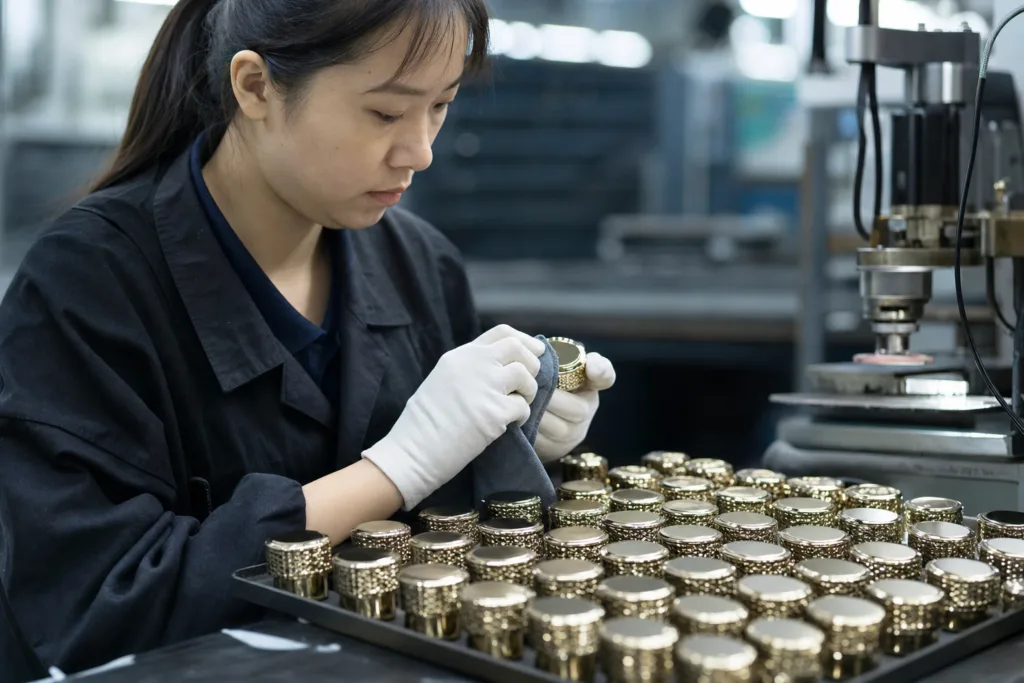
Project briefing and reference collection
The brief should define the bottle sample, target cap style, desired weight feel, finish reference, logo file, quantity target, and timeline. If the buyer already knows the intended closure style or collar requirement, that information should be shared at the start.
Photos alone are helpful, but they rarely replace technical inputs. A bottle sample, dimension drawing, or physical reference cap will usually improve communication and reduce unnecessary revisions.
Mold development and tooling logic
Mold development is where the concept becomes a manufacturable part. At this stage, we check whether the intended shape can support the requested finish, whether the wall thickness is practical, and whether the cap can be produced with stable dimensions across the expected order volume.
Tooling should be based on the approved bottle specification and artwork, not on assumptions. If the bottle is still changing, the cap development should usually pause until the fit target is stable.
Sample development and revision
Samples are where buyers confirm whether the project is truly ready for production. A good sample should be evaluated not only for appearance, but also for assembly, touch feel, logo clarity, and finish consistency under normal lighting.
For buyers who want a clearer view of the approval path, our sample development workflow for perfume caps explains how prototypes, revisions, and final sign-off usually fit into a custom project timeline.
Production approval and quality control
Bulk production should only start after the sample is approved against a clear standard. That standard should include finish reference, dimensional limits, logo position, and packaging expectations.
Quality control also needs to match the finish type. Plated caps and painted caps often fail in different ways, so inspection criteria should reflect the actual risk points of the project rather than using a generic checklist.
For buyers who want a deeper view of production checks, our quality control checkpoints for cap production outline the kinds of inspections that help protect finish consistency, dimensional accuracy, and final packing quality.
| Development stage | Buyer’s main question | What should be confirmed |
|---|---|---|
| Briefing | Can the project be clearly defined? | Bottle sample, finish target, logo file, quantity, timeline |
| Tooling | Can the part be made consistently? | Shape feasibility, wall thickness, dimensional logic |
| Sampling | Does the part work in real use? | Fit, feel, color, logo clarity, finish consistency |
| Approval | Is the production standard fixed? | Reference sample, tolerances, packing method, acceptance criteria |
| Bulk production | Will the order stay consistent? | In-process checks, final inspection, export packing control |
How to choose the right custom perfume cap supplier
The right supplier should be able to do more than quote a price. For custom perfume caps, buyers need a manufacturing partner that can interpret the brief, recommend workable materials, confirm bottle fit, manage finish risks, and keep the production plan realistic.
That is why supplier evaluation should start with capability rather than cost alone. A slightly lower quote can become expensive if it leads to revision cycles, poor fit, or inconsistent finishing in bulk.
At Caps Ltd, our role is to support custom cap development for fragrance packaging projects that need repeatable manufacturing, not just one attractive sample. More details on our packaging support are available through Caps Ltd.
Questions buyers should ask before requesting a quote
- Can the supplier support custom shape development and mold work?
- Does the supplier understand bottle fit and insert requirements?
- Can the supplier explain finish limitations for plating or paint?
- Will the quote clearly reflect tooling, structure, decoration, and quantity?
- What are the sample revision and approval steps?
- How are production checks handled before packing and shipment?
What to evaluate in a sample
A sample should be judged as a production reference, not a display object. Buyers should examine symmetry, weight balance, finish evenness, logo sharpness, edge quality, and how the cap feels when assembled on the approved bottle.
If the sample looks good only under one light source or one angle, that is a warning sign. A reliable sample should remain acceptable under normal commercial inspection conditions.
MOQ, lead time, and export support matter more than many buyers expect
MOQ and lead time are not just commercial terms; they shape the project timeline and risk profile. A custom cap with a complex structure, multiple finish steps, or revised mold work will usually require more time than a simpler shape.
Export support also matters when buyers are coordinating with overseas filling lines, packaging distributors, or multiple warehouse destinations. Clear packing methods, carton protection, and shipping documentation help reduce damage and delay risk.
If you are planning a program launch or seasonal refill order, it is smart to review lead time and MOQ planning for custom caps before committing to artwork deadlines or bottle purchasing.
When custom perfume caps are the right choice for your project
Custom perfume caps are the right choice when the packaging brief requires stronger branding, a specific fit, or a more premium presentation than a stock cap can realistically deliver. They are especially useful for new launches, niche fragrance lines, and private label ranges that need a recognizable shelf identity.
A stock cap may still be enough when speed and cost are the main priorities and the bottle format is already standardized. In those cases, the sourcing team may focus more on availability and simpler assembly than on deep customization.
How to prepare information for a supplier inquiry
- Approved bottle sample or bottle drawing
- Target cap style or visual reference images
- Desired material, finish, and logo treatment
- Estimated quantity and expected reorder pattern
- Target launch date and sample deadline
- Packing and export requirements
Key takeaway: The more complete the supplier brief, the faster a custom perfume cap project can move from concept to workable sample to controlled production.
Common mistakes that create sourcing and production risk
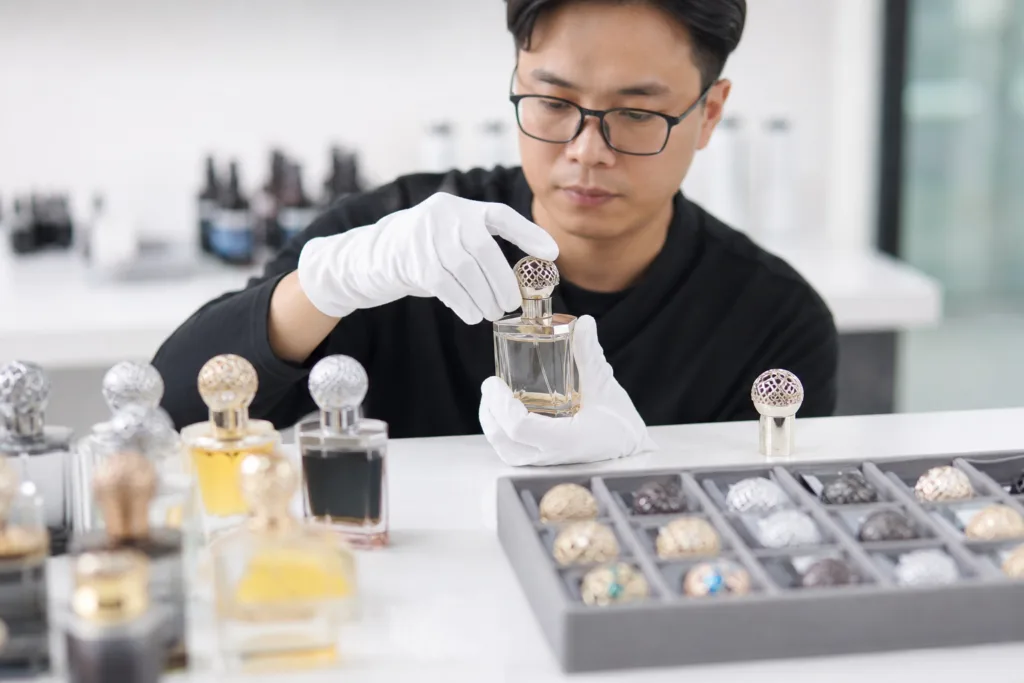
Most custom cap problems are preventable. They usually come from incomplete briefs, late changes, weak sample evaluation, or assuming that one approved sample automatically guarantees a flawless bulk run.
Buyers can reduce risk by treating the cap as a technical packaging component rather than a decorative accessory. The following table highlights the mistakes we see most often in fragrance packaging projects.
| Common mistake | Likely consequence | How to reduce the risk |
|---|---|---|
| Approving shape before bottle fit is confirmed | Wobble, loose assembly, or unexpected friction | Check bottle dimensions and fit early |
| Choosing finish before structure is final | Rework in polishing, plating, or coating | Confirm material and geometry first |
| Sending incomplete artwork or logo references | Weak logo definition or placement errors | Provide vector files and finish expectations |
| Ignoring sample differences under real light | Appearance issues after delivery | Review samples under production-like conditions |
| Not confirming MOQ and timeline before development | Delayed launch or budget stress | Align quantity and lead time early |
Key takeaway: Most sourcing risk comes from sequence errors, not from one single technical flaw. Good projects confirm fit, finish, and production logic in the right order.
Conclusion
Custom perfume caps are a strategic packaging decision, not a decorative afterthought. For fragrance brands and procurement teams, the best choice is the one that aligns material, finish, fit, and production planning with the commercial goals of the project.
If you are comparing custom perfume caps for a new launch, a private label program, or a packaging upgrade, start with the bottle sample, the finish target, the logo treatment, and the expected order volume. That simple sequence will make supplier discussions more productive and help you avoid costly revision cycles later.
Caps Ltd works as a custom development and manufacturing partner for decorative metal fragrance closures, with support across design, tooling, bottle fit, sampling, quality checks, and export preparation. When the project brief is ready, the next step is usually not a quote alone, but a structured development conversation.
FAQs
What should buyers confirm first when ordering custom perfume caps?
Buyers should confirm the bottle neck size, cap structure, finish target, logo treatment, and quantity before requesting tooling. These five points shape both the quote and the development path, and they reduce the chance of later revisions.
Is zinc alloy a good material for custom perfume caps?
Yes, zinc alloy is a strong choice when the project needs detailed shaping, a premium feel, and reliable decorative finishing. It does require careful tooling and finishing control, so it works best when the buyer is focused on performance as well as appearance.
Should finish selection happen before or after mold development?
Finish selection should happen before mold development is finalized because plating, paint, and texture requirements can affect geometry, polishing, and logo detail. Choosing the finish early helps the supplier build the right production plan.
Why is bottle fit engineering important for fragrance packaging?
Bottle fit engineering is important because a cap must assemble cleanly and remain stable on the approved bottle, not just look good in photos. It helps reduce wobble, leakage risk, and packing issues during mass production.
How many samples are usually needed before bulk production?
The number of samples depends on the complexity of the cap, but most projects need at least one working prototype and one approval sample if revisions are required. The key is not the count itself; it is whether the final sample matches the approved standard closely enough for production.
What should procurement teams compare between suppliers?
Procurement teams should compare development capability, finish control, bottle fit support, MOQ, lead time, communication quality, and export handling. Price matters, but consistency and technical support usually decide whether the project runs smoothly.