
Choosing perfume caps is rarely about the cap alone. For fragrance brands and packaging buyers, the real question is whether the cap supports the bottle, protects the finish, reflects the brand, and can be produced consistently at scale.
From a sourcing perspective, the right decision depends on material, weight, fit, surface finish, logo treatment, MOQ, and the supplier’s ability to control quality during sampling and bulk production. In this guide, we share the practical checks we use at Caps Ltd when developing custom perfume caps for fragrance packaging projects.
For teams comparing options early, perfume cap buyer guidance for sourcing teams is a useful starting point because it connects material selection with bottle fit, finishing, and order planning. If your project needs zinc alloy construction, custom branding, or premium hand feel, the same development logic applies whether you are building a private label range or a luxury collection.
What Buyers Mean When They Search for Perfume Caps
When buyers search for perfume caps, they are usually not looking for a single product type. They are comparing closure structure, decoration options, manufacturing capability, and supplier fit for a specific fragrance packaging project.
In practice, that search can mean any of the following:
- A custom metal cap for a new perfume bottle line
- A luxury finish that improves shelf presence and perceived value
- A cap that fits a specific bottle neck and insert system
- A supplier who can support sampling, artwork, and tooling
- A production partner who can keep plating, paint, and logo details consistent in bulk orders
Key takeaway: Buyers should define the project need first, because the right perfume cap for a niche fragrance launch may be very different from the right cap for a high-volume private label program.
Common Types of Perfume Caps for Fragrance Packaging
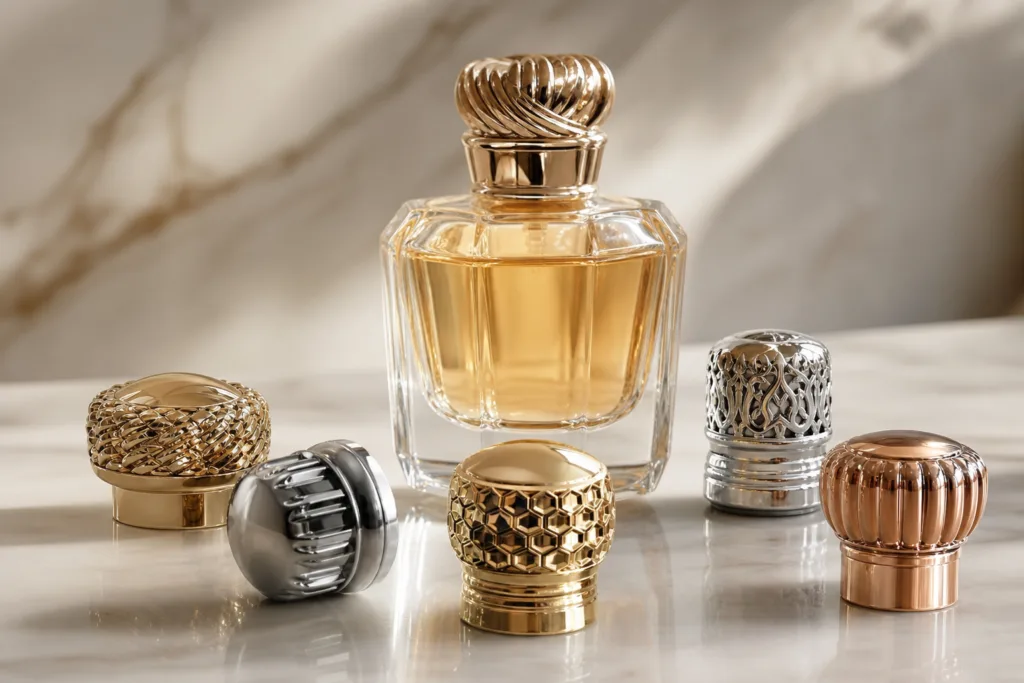
Different cap types create different weight, cost, and branding outcomes. The most common options for fragrance packaging include metal caps, zinc alloy caps, painted caps, electroplated caps, and magnetic caps.
For many premium projects, zinc alloy offers the strongest balance of design flexibility and solid hand feel. If you are exploring this route, our zinc alloy perfume cap options page shows the type of structure and customization that can be developed for decorative fragrance packaging.
| Cap Type | Main Advantage | Typical Trade-Off | Best Fit |
|---|---|---|---|
| Zinc alloy cap | Good weight, strong shape control, premium feel | Higher tooling and production cost than simple plastic | Luxury, niche, and branded collections |
| Plastic cap | Lower cost, lighter shipment weight | Less premium hand feel | Mass-market or price-sensitive lines |
| Electroplated metal cap | Bright metallic look and strong visual impact | Requires careful surface preparation and quality control | Luxury and decorative packaging |
| Painted cap | Wide color control and matte or glossy styling | Color matching and coating durability must be checked | Brand color-driven projects |
| Magnetic cap | Distinct opening experience and aligned closure feel | Needs careful fit testing and component coordination | Premium and gift-set packaging |
When a buyer asks for “luxury perfume caps,” the request usually includes more than appearance. It often includes a heavier structure, smoother edge finish, tighter fit, refined logo treatment, and a finish that remains stable through handling and transport.
How Material Choice Changes Look, Weight, and Cost
Material selection affects almost every buying decision. It changes the cap’s price, the visual impression, the perceived quality, and the amount of engineering required to make the closure work correctly.
Zinc alloy is widely used for decorative metal caps because it can hold details well and deliver the heavier hand feel many fragrance brands want. It also gives more freedom in shaping contours, embossing, debossing, and structural features than many lightweight alternatives. That said, buyers should still plan for tooling cost, finish processing, and dimensional control.
Lightweight caps can help reduce freight cost and unit cost, but they may not deliver the same premium perception. For private label programs where retail positioning matters, the difference in hand feel can affect how the finished perfume bottle is judged by distributors and customers.
Surface protection also matters. Metal caps are commonly plated or coated because decorative finishes do more than create a color effect; they also help protect the surface from wear, tarnish, and environmental exposure. The basic logic is consistent with protective coatings and corrosion resistance for metal perfume caps, where coating performance depends on preparation, adhesion, and the quality of the applied layer.
If the target is a high-end fragrance bottle, the buyer should evaluate material and finish together instead of separately. A technically good cap can still look low-grade if the surface is uneven, the weight is unbalanced, or the color does not harmonize with the bottle.
Bottle Neck Fit, Insert Compatibility, and Why Cap Structure Must Be Tested Early
Fit issues are one of the most common causes of delay in custom perfume cap projects. A cap may look correct in renderings but still wobble, sit too high, scratch the glass, or feel loose once it is assembled with the actual bottle.
That is why we recommend confirming bottle neck diameter, neck finish height, insert dimensions, and assembly method before mold development is finalized. The fit principle is the same as in other closure systems: the closure must match the container dimensions precisely for reliable seating and handling. A useful reference point is checking bottle neck finish and cap fit before ordering, which reinforces the importance of dimensional coordination before moving into production.
At Caps Ltd, we usually check these points early:
- Bottle neck outer and inner dimensions
- Insert type and retention method
- Seating depth and visual alignment
- Rotation resistance and wobble risk
- Contact points that could mark the glass or finish
bottle fit engineering support for custom caps is especially relevant when the project uses a special bottle shape, a heavier metal cap, or a magnetic closure. The earlier fit is checked, the fewer surprises appear during sampling.
Key takeaway: Fit should be treated as a manufacturing requirement, not a later adjustment. If the bottle and cap are not engineered together, the project risk increases quickly.
Custom Perfume Cap Design Options That Shape Brand Identity
Brand identity is often expressed through shape first and decoration second. A custom perfume cap can communicate modern, classic, minimal, luxurious, or artistic positioning before a buyer even reads the label.
Common customization choices include overall silhouette, edge profile, top surface geometry, embossed or debossed branding, insert design, and magnet integration. For many projects, the most effective design is not the most complicated one, but the one that balances visual impact with manufacturability.
Typical design treatments include:
- Logo embossing for strong tactile brand presence
- Debossing for subtle and controlled brand marking
- Laser or engraved detailing for cleaner line work
- Two-tone structures to separate top and body visually
- Special shapes that echo the bottle form or fragrance concept
Our logo and branding treatments for perfume caps page reflects a simple reality from production: logo placement, depth, and contrast must be planned with the surface finish, or the mark can become too faint, too busy, or too expensive to reproduce consistently.
For private label buyers, this is where early artwork discipline matters. Provide vector files, logo size targets, and finish references before sampling so the tooling team can design for clarity, not guesswork.
Surface Finishes for Decorative Perfume Caps
Finish selection often determines whether a cap feels luxury or ordinary. The same shape can appear very different depending on whether it is polished, brushed, matte coated, glossy painted, or electroplated.
Electroplating is often chosen for metallic brightness, while painting gives more flexibility for color branding. Brushed and matte effects can make a design feel more restrained and contemporary. The right choice depends on the bottle concept, logo treatment, and the handling conditions expected during distribution.
Our electroplating options for decorative metal caps resource is useful for buyers comparing shine level, color tone, and decorative consistency. Plating quality depends heavily on polishing and surface preparation, so a good-looking base part is not enough on its own.
| Finish | Visual Effect | Buyer Benefit | Main Risk to Control |
|---|---|---|---|
| Electroplated | Bright metallic or tinted metallic effect | Premium appearance and strong shelf impact | Adhesion and surface uniformity |
| Painted | Solid color or special matte/gloss look | Strong color branding control | Color matching and coating wear |
| Brushed | Directional texture and reduced glare | Modern, refined look | Scratch visibility if handling is poor |
| Matte | Soft, low-reflection surface | Elegant and understated style | Fingerprint and rub resistance |
| Glossy | Bright and reflective surface | High visual contrast | Dust, marks, and surface defects show easily |
For buyers comparing electroplated and painted perfume caps, the best answer is usually project-specific. Electroplating often suits metallic luxury positioning, while painted caps may be better when the brand needs exact color control or a unique matte finish.
Magnetic Perfume Caps: When They Make Sense and What to Check Before Ordering
Magnetic caps make sense when the brand wants a clean closing feel, improved alignment, and a more premium opening experience. They are especially common in luxury fragrance packaging and gift-oriented collections.
However, magnetic design is not just a decorative feature. It affects retention force, component alignment, assembly precision, and long-term performance during handling and shipping. If the magnet is too weak, the cap may feel loose; if it is too strong or poorly positioned, assembly can become inconsistent.
Before ordering, buyers should confirm:
- Magnet size and placement
- Insertion method and retention security
- Compatibility with the bottle neck structure
- Whether the magnet affects logo or finish layout
- Whether the assembly line can handle the closure consistently
Magnetic systems work best when the supplier can coordinate cap body, insert, bottle neck, and assembly sequence as one design problem, not separate parts.
How to Evaluate Sample Development, Color Matching, and Finish Consistency
Sampling is where a project becomes real. A drawing can look correct, but the sample reveals whether the finish is even, the logo is readable, the cap sits properly, and the color matches the brand intent.
We usually recommend checking the sample in the same conditions the bulk order will face: under similar lighting, on the intended bottle, and alongside the carton or label if applicable. This is especially important for painted perfume caps, where the same color can look different depending on gloss, texture, and adjacent packaging materials.
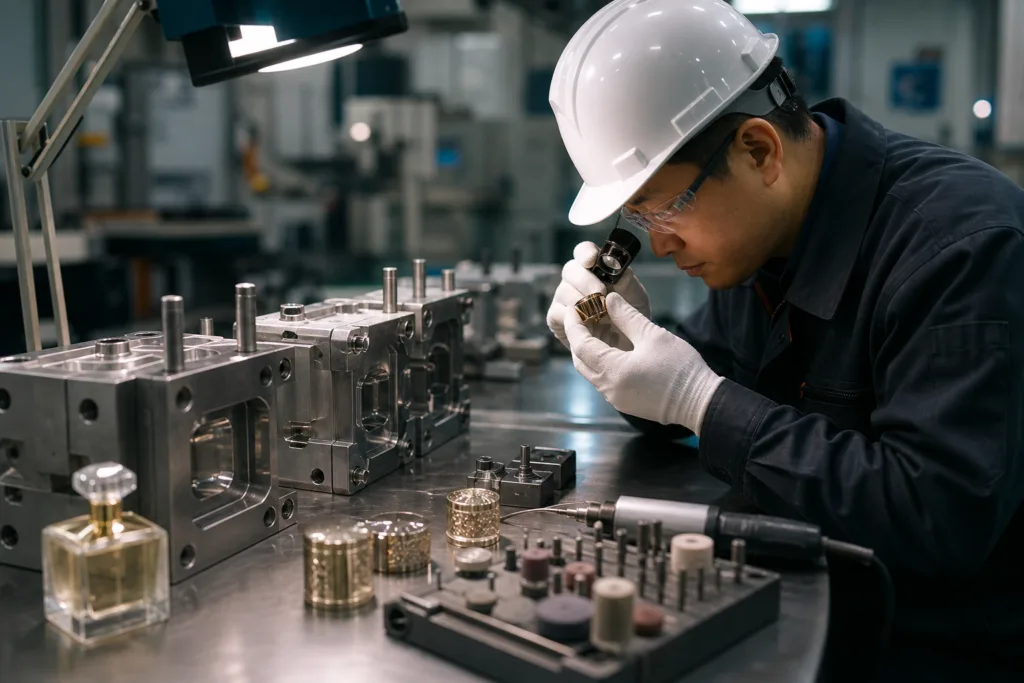
For buyers who need a structured approval path, sample development and approval process is where the practical decision points usually become clear. A good sample process should answer more than “does it look nice?” It should answer whether the cap can be made repeatedly with acceptable variation.
Useful sample checkpoints include:
- Dimension check against the approved bottle
- Finish uniformity under close inspection
- Logo clarity and positioning
- Color match to the approved reference
- Opening feel, seating stability, and scratch risk
Key takeaway: A sample is not only a visual proof; it is a production test. If the sample is not checked carefully, bulk orders can amplify small errors into expensive problems.
Supplier Selection Checklist for Custom Perfume Cap Projects
Choosing a supplier is partly a pricing decision, but mostly a capability decision. The right manufacturer should be able to understand your bottle, translate the design into a workable structure, and manage quality from mold development through packing.
When buyers compare suppliers, they should ask for evidence of process discipline, not just product photos. This includes whether the supplier can support drawings, tool development, fit confirmation, finish sampling, and inspection in a controlled sequence.
A useful procurement mindset is supported by selecting a custom perfume cap supplier and evaluating MOQ and lead time, because capacity, trust, and quality verification matter when a project moves from concept to repeat production.
Here is a practical checklist:
- Can the supplier work from bottle samples and accurate drawings?
- Do they understand metal cap structure, inserts, and fit engineering?
- Can they explain finish options in manufacturing terms?
- Do they have a clear sample approval process?
- Can they support branding treatments and artwork consistency?
- Are MOQ and lead time aligned with your launch plan?
- Do they provide documented QC checkpoints before shipment?
At Caps Ltd, we approach these projects as custom development work, not standard resale. That matters because a fragrance buyer usually needs coordination between design, tooling, finish, and production control, especially when the cap is part of a branded packaging story rather than a generic closure.
MOQ, Lead Time, Tooling, and Cost-Performance Trade-Offs
MOQ and lead time should always be reviewed alongside the design itself. A more complex cap may look excellent, but if tooling is expensive or the minimum order is too high for the launch plan, the project may become difficult to execute.
Metal caps with custom molds, special finishes, or magnetic assemblies generally require more planning than simpler components. Buyers should clarify whether the quotation includes tooling, how samples are charged, and what portion of the schedule is needed for development versus production.
Cost-performance is not about finding the cheapest cap. It is about finding the right balance between brand value, manufacturing reliability, and commercial feasibility. A slightly higher unit cost can be justified if the cap improves bottle presentation, reduces defect risk, or supports premium retail positioning.
When comparing quotations, separate these items clearly:
- Tooling or mold development cost
- Sample and revision cost
- Unit production price
- Finish complexity
- Packing and export handling
If the project is private label perfume packaging, it is often wise to lock the launch quantity, target finish, and bottle sample before requesting a final production schedule.
Quality Control Points That Reduce Risk in Bulk Production
Quality control should begin before bulk production, not after shipment. A dependable supplier will inspect dimensions, surface quality, finish adhesion, and assembly performance at multiple stages.
For cosmetic packaging buyers, basic manufacturing discipline is essential because the closure becomes part of the product’s presentation and handling safety. The FDA’s supplier quality control and container/closure handling requirements are a useful reminder that packaging components should be handled in a way that avoids contamination, damage, and inconsistent quality.
Common QC checkpoints for perfume caps include:
- Incoming material check
- Dimensional inspection after molding or casting
- Polishing and surface preparation review
- Plating or coating thickness and coverage review
- Logo alignment and appearance check
- Assembly fit test on the actual bottle
- Final visual and packaging inspection
Finish defects in decorative metal caps often appear small at first, but they become obvious on shelf. Uneven plating, dust in paint, loose inserts, or poor edge polishing can quickly lower the perceived value of the whole fragrance line.
How to Choose the Right Perfume Cap for Luxury, Private Label, or Mass-Market Positioning
The right cap depends on what the bottle is meant to communicate. A luxury perfume line usually needs weight, precision, and refined finish. A private label range may prioritize brand flexibility, repeatability, and moderate tooling investment. A mass-market project may focus more on unit cost and stable supply.
For luxury positioning, buyers often prefer zinc alloy or other metal structures with plated or carefully painted finishes. For private label, the ideal solution may be a balanced design that supports branding while still allowing practical MOQ and lead time. For mass-market use, simpler structures can still work well if fit and finish are controlled tightly.
The decision becomes easier when you define these four points first:
- Target retail position
- Required bottle compatibility
- Expected order volume
- Visual and tactile brand priorities
If your project needs a more premium presentation, luxury perfume cap manufacturing options can help frame the level of detail, finish refinement, and structure control that a high-end fragrance package usually requires.
Why Work with a Custom Perfume Cap Manufacturer Instead of a General Packaging Supplier
A general packaging supplier may be able to source caps, but a custom perfume cap manufacturer is more likely to understand structural fit, material behavior, finishing complexity, and production control. That difference matters when a project includes special shapes, branding treatment, or tight cosmetic standards.
Manufacturing support is especially valuable when the buyer needs development help instead of a catalog part. A dedicated partner can guide mold planning, sample iteration, finish selection, and assembly testing in a way that reduces costly revisions later.
For brands launching private label or distributor-led collections, private label perfume cap solutions are often the best path because they align customization, commercial planning, and repeatability. That is where a manufacturer like Caps Ltd can add value beyond supply: by helping the buyer make a cap that fits the bottle, the budget, and the brand story at the same time.
Common Mistakes Buyers Should Avoid
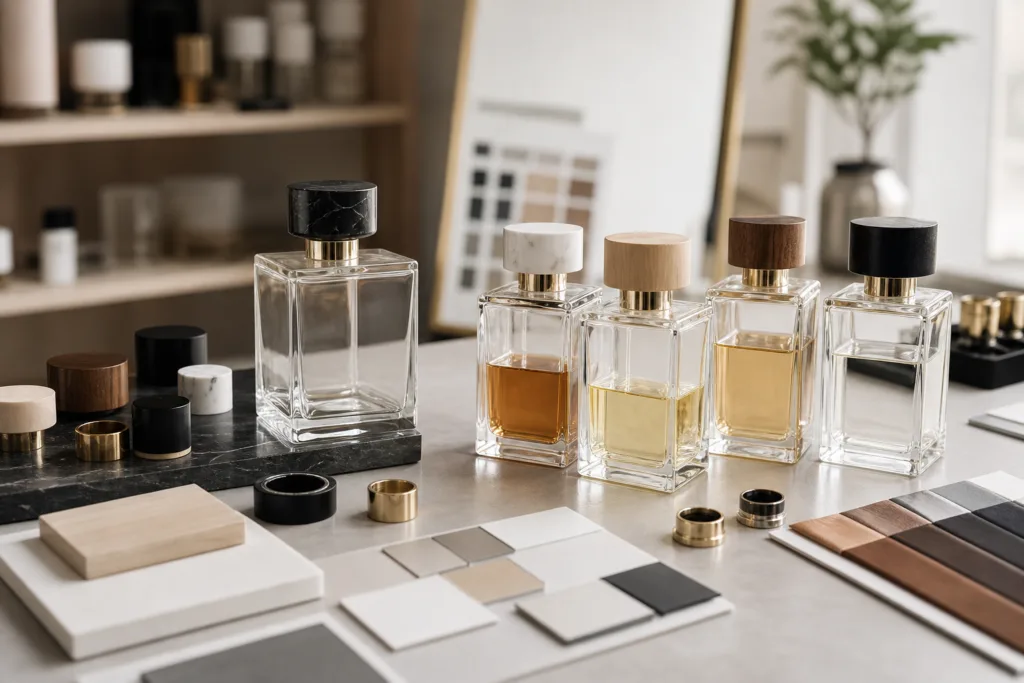
Most problems in perfume cap sourcing come from incomplete information at the start. A few practical mistakes account for a large share of fit, finish, and production issues.
- Sending artwork before confirming bottle dimensions
- Choosing finish before deciding the final cap material
- Approving a sample under conditions that do not reflect real use
- Ignoring logo depth and finish contrast during design
- Assuming MOQ and lead time will be simple for a custom metal cap
- Skipping final fit checks on the exact bottle being used
When these issues are avoided, the project usually becomes easier to manage and much easier to scale. If a buyer wants a dependable development path, it helps to work with a supplier that treats the project as a controlled manufacturing process rather than a quick quotation exercise.
How Caps Ltd Supports Custom Perfume Cap Development
From our decorative metal cap production perspective, the best projects start with clear inputs and realistic targets. We prefer to review the bottle, the artwork, the finish reference, and the expected quantity before confirming the development route.
At Caps Ltd, we support perfume cap projects through material selection, mold development, bottle fit review, surface finishing, logo treatment, sample development, QC, and export packaging planning. That workflow helps fragrance brands and packaging distributors reduce risk before bulk production begins.
Key takeaway: The most successful perfume caps are not just attractive; they are built around fit, finish, manufacturability, and repeatable quality.
Frequently Asked Questions
What should I confirm before ordering custom perfume caps?
You should confirm bottle neck dimensions, cap material, finish target, logo treatment, MOQ, and lead time before ordering custom perfume caps. These details determine whether the cap can be manufactured, fitted, and finished correctly without repeated revisions.
Are zinc alloy perfume caps suitable for luxury fragrance packaging?
Yes, zinc alloy perfume caps are suitable for luxury fragrance packaging when you want a solid hand feel, strong shape definition, and decorative flexibility. They usually require more development planning than lightweight caps, but they often create a more premium presentation.
What is the difference between electroplated and painted perfume caps?
Electroplated perfume caps are chosen for metallic shine and decorative depth, while painted perfume caps are better when color control or matte styling matters more. The right choice depends on the brand look, handling conditions, and the level of surface consistency required.
How do I avoid bottle fit problems during development?
You avoid bottle fit problems by testing the actual bottle, confirming insert dimensions, and checking seating depth before bulk production. Fit should be reviewed during sampling, because a cap that looks correct in drawings may still wobble, sit unevenly, or scratch the glass.
Why is sample approval so important for perfume caps?
Sample approval is important because it shows how the cap behaves in real production conditions, not just on paper. A sample lets the buyer verify color, logo clarity, finish quality, and fit before the full order is made.
What should I look for in a perfume cap supplier?
You should look for manufacturing capability, bottle fit support, finish control, clear sampling communication, and realistic MOQ and lead time planning. A good supplier should be able to guide you through development and maintain quality in bulk production.