
In perfume packaging design, the cap often does more branding work than buyers expect. It is the first tactile part people hold, the most visible silhouette above the bottle, and one of the clearest signals of whether a fragrance feels mass-market, premium, or luxury.
For fragrance brands, packaging teams, and procurement buyers, custom caps are not just decorative accessories. They influence shelf presence, perceived value, bottle compatibility, production feasibility, and how consistently the final product communicates the brand story.
For projects that need a more refined cap shape, stronger shelf impact, or better fit between design intent and manufacturing reality, you can review luxury perfume packaging support as a practical starting point. At Caps Ltd, we approach fragrance packaging as a development process: we help buyers evaluate cap structure, material selection, finish options, logo treatment, bottle fit, sampling, and production planning so the final cap supports the brand instead of complicating it.
Why the Cap Is Often the First Luxury Signal in Perfume Packaging Design
The cap is usually the first component a buyer notices when they pick up a bottle. Even before fragrance notes are understood, the hand feel, weight, and surface finish create an immediate impression of quality.
That is why perfume packaging design should not treat the cap as a final accessory. It is a branding surface, a functional component, and a manufacturing decision at the same time. If the cap feels hollow, unstable, or visually disconnected from the bottle, the whole package can seem less premium.
How tactile cues shape luxury perception is a useful idea here: people respond strongly to touch, weight, and material cues when judging value. In fragrance packaging, that means a cap’s mass, finish smoothness, and balance can directly influence how the product is perceived on shelf and in hand.
Key takeaway: A luxury fragrance is often judged in seconds, and the cap is one of the fastest ways to communicate premium quality.
How Custom Caps Influence Shelf Visibility and Brand Positioning
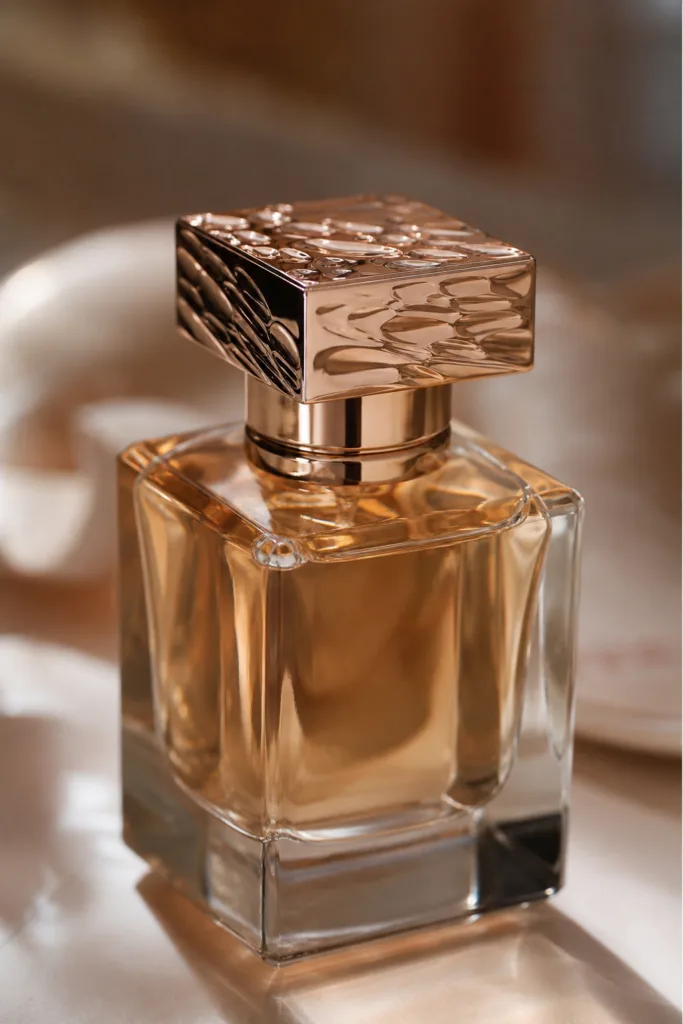
Custom perfume caps help a brand stand out because they create a recognizable visual signature. When the cap shape, proportion, and finish are distinctive, the bottle becomes easier to identify from a distance and more memorable after the first touch.
Brands positioning themselves as niche, prestige, or limited edition usually need more than a standard cylindrical cap. They often need a cap silhouette that feels intentional, sculptural, or technically precise. That can mean taller proportions, bolder shoulders, flatter tops, faceted sides, or a heavier metal body that visually anchors the bottle.
From a manufacturing point of view, the best design is not always the most complicated one. The most effective cap is the one that balances brand recognition, fit accuracy, finish consistency, and bulk production stability.
What buyers should ask before finalizing the cap concept
- Does the cap shape look like the intended brand tier?
- Will the silhouette read clearly beside competing bottles on shelf?
- Does the finish support the fragrance story: polished, matte, painted, or plated?
- Can the shape be manufactured consistently at the expected MOQ?
- Will the cap feel stable and premium when opened and closed repeatedly?
custom perfume cap design becomes valuable when these questions must be translated into a workable production brief. At this stage, design intent needs to be paired with bottle dimensions, artwork requirements, finish references, and cost targets.
Cap Shape as a Branding Tool
Cap shape is one of the most visible branding tools available in perfume packaging design. Even when the bottle itself is simple, the cap can make the entire set feel custom and premium.
Shape affects more than appearance. It also influences graspability, balance, mold complexity, and how easily the cap can be polished, plated, or painted. Sharp edges, deep grooves, and very thin wall transitions may look attractive in a concept drawing but can create finishing or assembly problems later.
From our manufacturing perspective, the most successful shapes usually have a strong profile with practical surfaces for finishing. A good cap should be recognizable from the front, stable in the hand, and realistic to produce at the required scale.
Common shape directions and what they communicate
| Shape direction | Brand impression | Manufacturing consideration |
|---|---|---|
| Rounded and soft | Accessible, elegant, calm | Easier to finish smoothly, less sharp detail |
| Faceted and geometric | Modern, precise, architectural | Requires careful polishing and plating consistency |
| Tall and sculptural | Luxury, prestige, statement-led | May increase weight and mold complexity |
| Flat and minimal | Clean, contemporary, understated | Needs excellent proportion control to avoid looking plain |
custom cap shape development options are especially important when a brand wants a distinct silhouette without compromising manufacturability. The right shape should strengthen the visual identity while still allowing reliable surface treatment and bottle assembly.
Why Zinc Alloy Is Common in Premium Fragrance Caps
For luxury perfume caps, zinc alloy is often selected because it offers the structural strength and density needed for a premium result. It supports heavier caps, more defined edges, and a more substantial feel than many lightweight alternatives.
Zinc alloy also works well for complex shapes. It can be die cast into forms that would be difficult to achieve cleanly with lighter materials, especially when the design includes branding detail, contour changes, or decorative surfaces.
That said, zinc alloy is not automatically the right choice for every project. It usually makes sense when the packaging brief values tactile presence, finish depth, and a premium unboxing experience. If the fragrance is positioned as a lightweight, minimal, or cost-sensitive line, another material strategy may be better.
Key takeaway: Zinc alloy is valuable not because it is heavy by itself, but because it gives a cap the structure, surface quality, and presence that many luxury projects need.
Material comparison for fragrance caps
| Material | Typical advantage | Typical trade-off |
|---|---|---|
| Zinc alloy | Premium weight, strong shape definition, luxury feel | Higher tooling and material cost than lightweight options |
| Plastic | Lower weight and lower cost | May feel less premium in luxury positioning |
| Mixed structure | Cost balance with selective premium effect | Requires careful engineering to avoid weak perception |
For buyers comparing premium options, zinc alloy perfume cap options are worth reviewing when the brand wants a heavier cap, sharper detail, or a more luxurious hand feel. The main task is to match material choice to the brand tier and to the bottle structure, not just to the visual concept.
How Cap Weight Changes Hand Feel and Perceived Value
Weight is one of the most underestimated parts of fragrance packaging design. A heavier cap can make a perfume feel more expensive before the consumer even sprays it, while an overly light cap may weaken the perception of quality even if the bottle artwork is strong.
In luxury packaging, weight is not only about physical mass. It is also about balance. A cap that feels top-heavy, unstable, or oddly hollow can create a negative impression, especially when the bottle is picked up and replaced several times.
We usually advise buyers to consider weight together with shape, finish, and bottle height. A small cap can still feel premium if the weight distribution is right, while a large cap can feel disappointing if the wall thickness, insert design, or assembly looseness makes it feel cheap.
How weight affects different fragrance strategies
- Luxury and niche fragrances often benefit from stronger weight cues.
- Private label projects may use moderate weight to balance budget and premium perception.
- Travel or lifestyle lines may prioritize convenience over heaviness.
- Gift sets may need a cap that feels substantial without making the package unstable.
Electroplated Finish or Painted Finish: Which One Works Better?
The choice between electroplated and painted finishes shapes both appearance and production behavior. Electroplating often gives a brighter metallic effect, while painted finishes can deliver solid colors, matte effects, or stronger tone control.
For luxury perfume caps, electroplating is frequently chosen when the brand wants a reflective premium look. Painted finishes are often preferred when the design calls for a specific color identity, soft-touch appearance, or a more controlled matte or satin visual.
From a manufacturing perspective, the right finish depends on the shape, use environment, and branding goal. Electroplated surfaces rely heavily on polishing and preparation, while painted surfaces rely on coating uniformity, color matching, and surface protection.
electroplated perfume cap finishes are often best when a brand wants visual depth and a polished metal impression. If the project needs stronger color control or a softer visual effect, painted perfume cap finish options may be the better route.
Electroplated vs painted cap finishes
| Finish type | Visual effect | Production focus |
|---|---|---|
| Electroplated | Metallic, reflective, premium depth | Polishing quality, adhesion, finish uniformity |
| Painted | Solid color, matte, satin, soft visual control | Color matching, coating evenness, surface protection |
In both cases, the cap must be engineered so the finish can survive handling, assembly, and packaging. A beautiful prototype is not enough if the finish chips during transport or looks inconsistent in bulk.
Logo Decoration Options That Strengthen Brand Recognition
Logo treatment is one of the most effective ways to make a custom cap feel truly branded. The right decoration method can turn a simple cap into a recognizable packaging asset.
Common methods include embossing, debossing, engraving, printing, and plated contrast effects. Each method creates a different relationship between the logo and the surrounding surface. Embossing gives physical relief, debossing creates a recessed brand mark, engraving delivers sharper precision, and plated contrast can help the logo stand out visually against the body finish.
Choose the decoration method based on how visible the logo needs to be, how the cap will be finished, and how durable the mark must remain after handling. For some luxury brands, subtle logo placement is more appropriate than large front-facing branding. For others, a more visible mark helps reinforce shelf recognition.
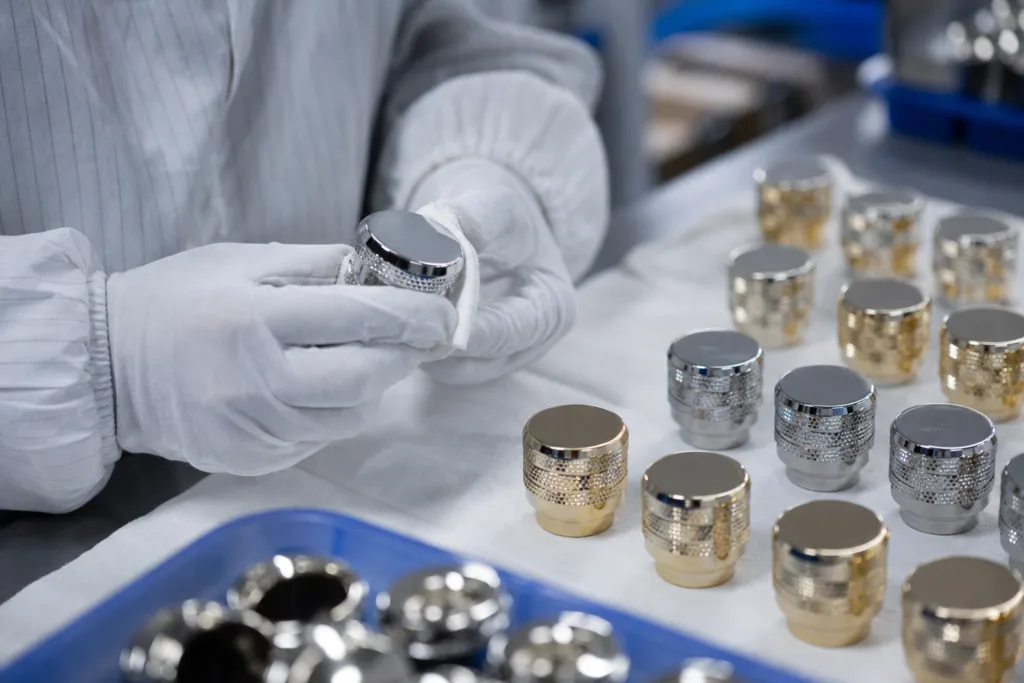
logo and branding treatments should be decided early, because logo depth, edge clarity, and finish contrast affect both tooling and surface treatment. If the artwork is too shallow or the shape too busy, the brand mark may disappear once the cap is plated or painted.
Logo methods and when they fit best
| Logo method | Main advantage | Best fit for |
|---|---|---|
| Embossing | Strong tactile identity | Luxury caps with prominent brand marks |
| Debossing | Controlled and elegant detail | Minimalist or understated packaging |
| Engraving | Precise and refined appearance | Premium brands that need crisp detail |
| Printing | Flexible color branding | Graphic or multi-color identities |
| Plated contrast | High visual separation | Metallic logos and premium contrast effects |
How Bottle Matching and Fit Engineering Protect the Packaging Concept
A luxury cap that does not fit the bottle properly will weaken the whole project. Fit is not only a technical issue; it is a brand issue because loose assembly, wobble, or misalignment immediately makes the packaging look less controlled.
Important fit checks include neck fit, insert fit, assembly stability, pull-off behavior, and alignment with the bottle shoulder and neck finish. Even when the cap looks perfect in renderings, small dimensional differences can change the final result significantly.
This is why the bottle sample, neck drawing, or actual bottle file should be confirmed before final tooling. A cap designed without accurate bottle data can lead to rework, delayed sampling, or avoidable production adjustments.
bottle fit engineering for custom caps is the stage where these risks are reduced. We review the bottle neck structure, insert requirements, and assembly targets early so the cap is designed around the actual packaging system, not just an aesthetic concept.
Fit issues buyers should watch closely
- Cap sits too high or too low on the bottle.
- Insert grip is too loose or too tight.
- Cap rotates or wobbles after assembly.
- Shoulder alignment looks uneven from the front.
- Closing force feels inconsistent between samples.
How Cap Structure Supports Niche, Luxury, and Private Label Projects
Different fragrance categories need different cap structures. A niche fragrance may want a highly recognizable sculptural cap, while a private label project may need a balanced design that is easier to launch in larger quantities.
Luxury projects often allow more room for complex shaping, heavier materials, and detailed finishing. Private label projects usually require more control over cost, tooling, and lead time, which means the cap design should be visually effective without becoming too difficult to produce or finish consistently.
Structure also affects packaging assembly. A cap with a deep internal cavity, for example, may support a strong visual profile but require tighter dimensional control. A simpler structure may be easier to produce, but the brand may need stronger finish work or logo treatment to create distinction.
At Caps Ltd, we often evaluate structure together with production intent, because a visually appealing design that fails during bulk assembly is not a good packaging solution. The goal is to protect the brand concept while making the cap realistic for the planned order size.
From Concept to Production: What Happens in Mold Development and Sampling
Once the design direction is clear, mold development turns the concept into a manufacturable cap. This stage matters because it determines whether the final part will hold the intended shape, fit the bottle correctly, and reproduce the finish consistently in production.
A strong development process usually begins with confirmed drawings, bottle samples or dimensions, finish references, logo artwork, and target quantity. From there, the mold is planned, samples are made, and the design is reviewed for proportion, fit, finish, and assembly behavior.
Sample approval should not focus only on appearance. Buyers should also check whether the cap closes cleanly, whether the finish is even across complex surfaces, and whether the logo remains legible under normal lighting.
sample development for perfume caps is where the difference between a good concept and a reliable product becomes visible. A sample should prove that the design can move from visual idea to stable bulk production.
Development checkpoints worth confirming
- Drawing review and bottle compatibility check
- Mold concept and tooling feasibility review
- First sample appearance and dimensional check
- Finish matching and logo clarity review
- Assembly validation with the real bottle
- Approval for bulk production and packaging plan
Common Design Mistakes That Weaken Luxury Branding
Many perfume cap projects fail for the same reasons. The design looks strong on screen, but the final result feels less premium because of poor fit, weak finish control, or unrealistic structure.
One common mistake is over-designing the cap. Too many grooves, sharp edges, or tiny features can make polishing and plating difficult, which often reduces finish quality. Another common issue is choosing a cap weight that feels impressive in isolation but becomes awkward once the bottle is assembled.
Logo placement also causes problems when it is added too late. If branding is not designed with the surface and finish in mind, the mark may become too small, too shallow, or visually lost after coating.
Typical mistakes and their consequences
| Mistake | Consequence | Better approach |
|---|---|---|
| Ignoring bottle fit early | Loose assembly, rework, delays | Confirm bottle dimensions before tooling |
| Choosing overly complex shapes | Poor finish consistency | Balance design detail with manufacturability |
| Adding logo too late | Weak branding visibility | Plan logo treatment during design development |
| Not validating samples | Bulk production risk | Approve appearance, fit, and finish before mass run |
How to Balance Aesthetics, Cost, MOQ, and Lead Time
The most effective perfume packaging design decisions are usually the ones that balance beauty and production reality. A cap can look luxurious, but if it requires excessive tooling complexity, difficult plating, or extended sample cycles, the launch plan may suffer.
Buyers should look at cost in layers: tooling cost, unit cost, finish cost, sample cost, packaging cost, and lead time risk. Sometimes a slightly simpler shape or a more controlled finish creates a better overall result because it reduces production instability.
MOQ is also part of the design discussion. A highly customized cap may only make sense if the quantity supports tooling and sampling efforts. For smaller projects, it may be smarter to use a structure that still feels custom through finish and logo treatment, rather than through extreme shape complexity.
Key takeaway: The best luxury packaging is not the most expensive concept; it is the one that can be produced consistently, approved quickly, and delivered with the intended brand impact.
What to Check Before Choosing a Custom Perfume Cap Supplier
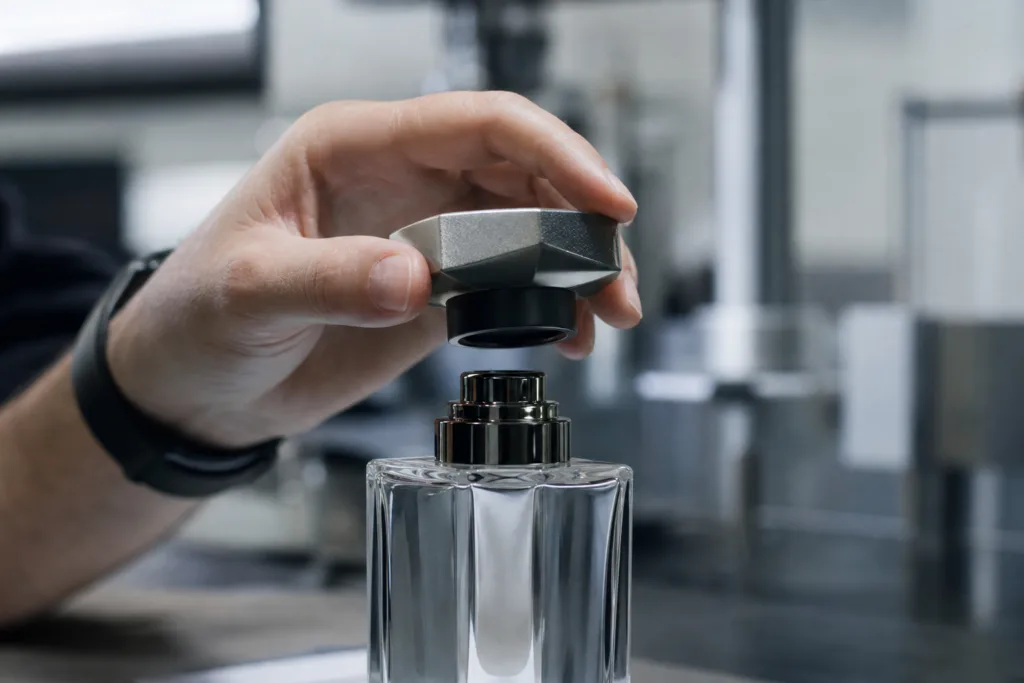
Supplier evaluation should focus on development capability, fit control, finish consistency, and communication speed. A capable partner should be able to discuss mold development, surface treatment, logo treatment, and assembly concerns in practical terms.
We recommend asking for clear process details rather than only visual references. Buyers should know how the supplier checks dimensions, how samples are approved, how finish variation is managed, and how production QC is handled before bulk packing.
For projects involving custom cap shapes, bottle fit, or luxury finish matching, the supplier should be able to explain the trade-offs between design ambition and manufacturability. That is especially important when the fragrance launch has a fixed timeline or when the bottle has already been selected.
Supplier questions that help avoid risk
- Can the supplier work from bottle samples, drawings, or 3D files?
- Will the supplier review fit before mold development?
- How are plated and painted finishes approved?
- What is the sample iteration process before bulk production?
- How is export packaging handled to protect finish quality?
A Practical Framework for Premium Perfume Packaging Design
If you want the cap to strengthen luxury branding, start with the brand message and work backward into engineering decisions. Ask what the cap should communicate, then decide how shape, weight, material, finish, and logo treatment will deliver that message.
In practical terms, that means confirming the bottle first, then choosing the cap structure, then reviewing finishing options, then developing samples, and finally approving bulk production controls. This sequence reduces rework and keeps the visual concept aligned with the real packaging system.
For brands and procurement teams, the most useful approach is to treat the cap as part of the fragrance experience rather than a separate accessory. When the cap feels right in the hand, fits cleanly on the bottle, and matches the brand tier, the whole package becomes more credible.
At Caps Ltd, we support that process by helping buyers move from concept to production with clear material guidance, decorative finish options, fit engineering, and sample validation. That is usually the difference between a cap that merely looks custom and a cap that truly supports the brand.
Frequently Asked Questions
Why do custom perfume caps matter so much in perfume packaging design?
Custom perfume caps matter because they strongly influence first impression, hand feel, and shelf presence. The cap is often the first physical cue a buyer experiences, so its shape, weight, finish, and branding detail can make the whole fragrance feel more premium or more ordinary.
Is zinc alloy always the best material for luxury perfume caps?
No, zinc alloy is not always the best choice, but it is often a strong option for premium projects. It is especially useful when the brand wants a heavier feel, sharper shape definition, and a more substantial luxury impression, while lighter materials may suit lower-cost or minimalist applications better.
How do I choose between electroplated and painted finishes?
Choose electroplated finishes when you want a reflective metallic look and strong premium depth. Choose painted finishes when the project needs tighter color control, matte or satin effects, or a more specific brand color identity.
What should I confirm before starting custom mold development?
You should confirm the bottle dimensions, neck fit, logo artwork, finish reference, quantity target, and sample expectations before mold development starts. These details help reduce redesign risk and improve the chance that the first sample will match the production goal.
How can I prevent fit problems between the cap and bottle?
Prevent fit problems by using real bottle data or a physical bottle sample during development. Neck fit, insert fit, and assembly stability should all be checked early so the cap does not wobble, sit unevenly, or require rework after sampling.
What is the most common mistake buyers make when sourcing perfume caps?
The most common mistake is focusing on appearance before manufacturability. Buyers sometimes approve a concept that looks attractive but is difficult to finish, hard to fit, or too complex for stable bulk production, which leads to delays and quality issues later.