
Perfume Cap Case Studies
Explore perfume cap case studies built around real B2B packaging needs. This page helps fragrance brands, private label teams, packaging buyers, and design agencies see how custom cap projects move from concept to sample, finish approval, and bulk production planning.
Case studies help buyers evaluate more than appearance. They show how a cap concept is developed, how bottle fit is reviewed, how finish choices affect the final look, and how sampling supports bulk production decisions. At Caps Ltd, our project approach focuses on practical manufacturing details such as material selection, tooling, surface finish control, logo execution, and fit with the bottle neck and closure system.
If you are still comparing options, start with our Perfume Cap Buyer Guide or review our main Perfume Bottle Caps page before sending an RFQ.
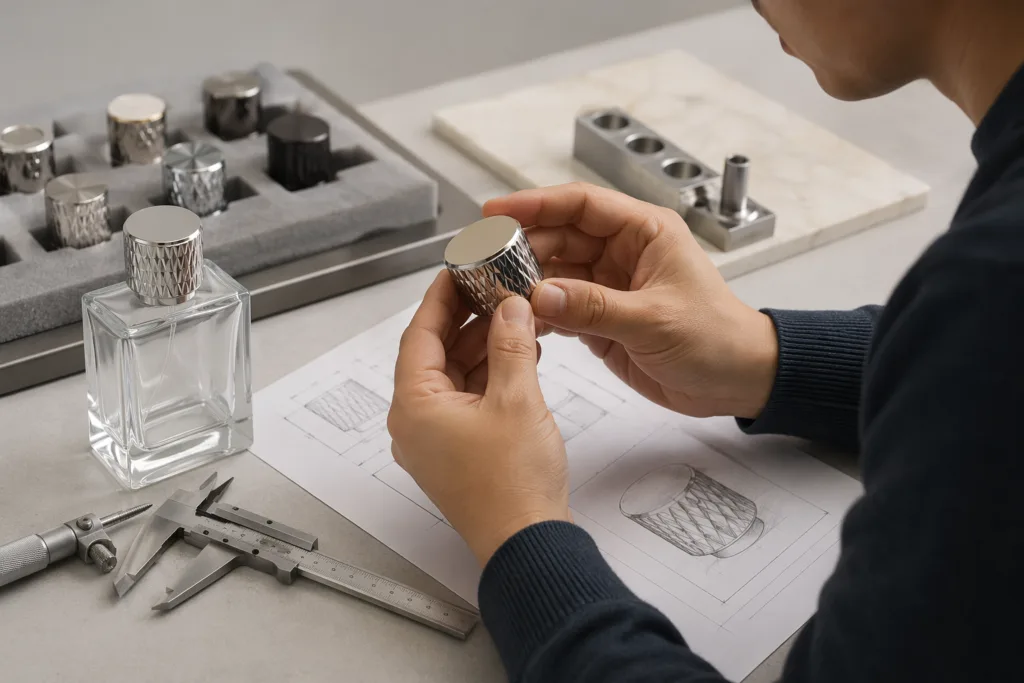
What Buyers Can Learn From These Case Studies
These case studies are useful for teams that need to validate a supplier before moving into tooling or production.
- How a design idea is translated into a manufacturable cap
- Which cap material and finish best match brand positioning
- How zinc alloy weight changes the luxury feel of a perfume package
- How logo engraving, embossing, or decorative details are handled
- What happens during sample development and approval
- How bottle fit engineering reduces risk before bulk production
- How surface finish consistency is checked before shipment
Featured Case Study Categories
This resource hub is designed to organize project examples by buyer goal, cap style, and manufacturing challenge.
- Luxury fragrance cap development
- Zinc alloy cap projects with custom shapes
- Logo engraved perfume cap programs
- Electroplated finish approval projects
- Painted cap color matching examples
- Bottle fit coordination with glass perfume bottles
- Packaging programs for limited edition and gift set launches
How to Read a Perfume Cap Case Study
Not every successful cap project starts with a perfect technical drawing. Some buyers send sketches, reference samples, bottle photos, logo artwork, or a target finish sample. The important part is whether the project can move through a clear development path.
A useful perfume cap case study should show:
- Project objective and brand positioning target
- Material choice and cap structure direction
- Shape, weight, and decorative requirements
- Bottle neck or insert fit requirements
- Surface finish selection and sample review points
- Tooling or mold considerations
- Sampling steps and approval criteria
- QC checkpoints before bulk production
What Makes a Strong Custom Cap Project
A strong perfume cap project balances design intent with manufacturing control. In many fragrance packaging programs, buyers want a cap that looks premium in photos and on shelf, but also performs well in assembly, handling, and production repeatability.
Important decision factors include:
- Material: zinc alloy or other requested construction approach
- Finish: electroplated, painted, polished, brushed, or mixed surface treatment
- Logo method: engraved, embossed, debossed, printed, or insert-based branding
- Shape complexity: round, square, faceted, sculpted, or brand-signature forms
- Fit: insert design, inner tolerance, bottle neck compatibility, and closure feel
- Packaging: protective packing for samples and export shipment
Sample-to-Bulk Details Buyers Should Watch
Case studies are most valuable when they explain how early samples connect to bulk production planning. A cap may look good in a rendering but still require changes in insert structure, surface preparation, edge detail, or logo depth before production is stable.
During supplier evaluation, buyers should look for evidence of:
- Clear sample development stages
- Finish confirmation before production release
- Color and plating consistency review
- Communication on mold, tooling, and approval points
- Inspection planning before shipment
- Support for export packing and order follow-up
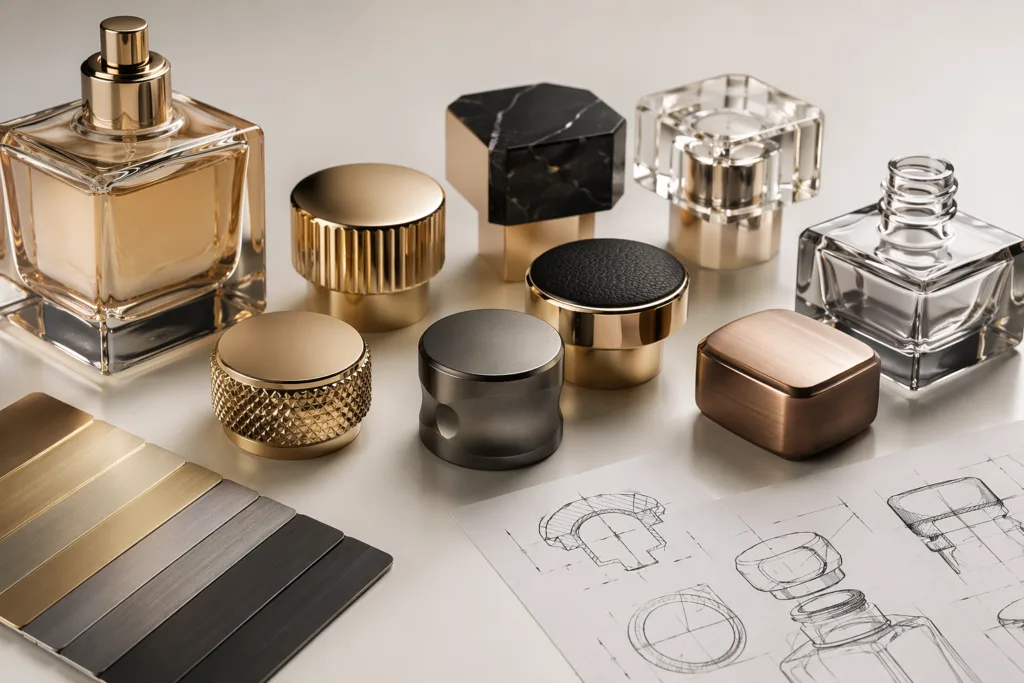
Related Example Spotlight
One focused example in this section is the custom zinc alloy cap for luxury fragrance project. This type of project is especially relevant for buyers who need a heavier cap, a premium hand feel, a refined plated or painted finish, and logo details that support luxury positioning.
This example is a good fit for:
- Luxury perfume packaging teams
- Niche fragrance brands launching signature bottles
- Private label perfume companies building premium lines
- Packaging distributors sourcing upgraded cap options
- Design agencies developing branded fragrance presentations
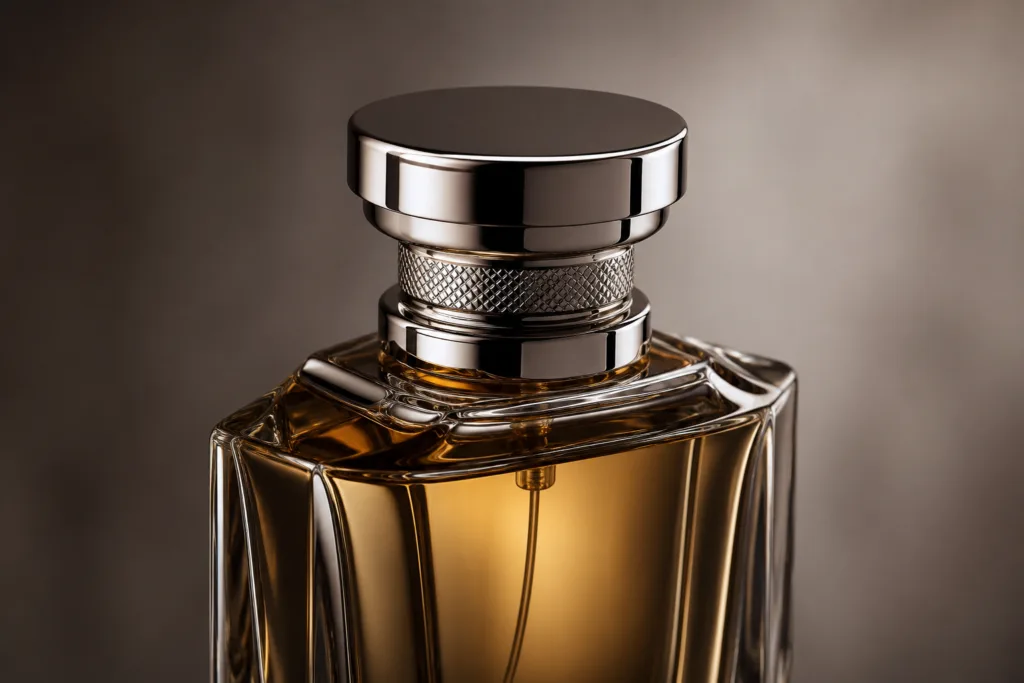
When to Request a Quote Instead of Only Reviewing Examples
Case studies are useful for direction, but many buyers already have enough information to start a project discussion. If you have a bottle drawing, cap dimensions, a target finish, a logo file, or a reference sample, it is usually faster to move into technical review.
You should request a quote when you already know:
- Your bottle or neck size
- Your target cap shape or style
- Whether you want zinc alloy or another requested structure
- Your preferred finish direction
- Your artwork or branding requirement
- Your sample and launch timeline
- Your estimated order quantity range
Need a case-study-backed supplier for your next perfume cap project?
Send your drawings, bottle details, finish references, or existing samples for review. Caps Ltd supports custom cap development, finish sampling, bottle-fit coordination, and bulk production planning for fragrance packaging buyers.
Continue your evaluation with these buyer resources:
Frequently Asked Questions
You can see how custom perfume cap projects are developed, including material choice, finish direction, logo details, bottle fit considerations, sampling steps, and production planning.
Yes. Many buyers begin with sketches, bottle photos, reference caps, or finish samples. Case studies help show how early concepts can move into engineering review and sample development.
Zinc alloy is a major focus because many premium perfume cap projects require weight and strong finish presentation. However, the case studies can also help buyers understand decoration, fit, and development methods across different cap styles.
They show whether a supplier can manage shape complexity, finish consistency, logo execution, sample approval, QC checkpoints, and communication through bulk production.
Yes. If you already have bottle details, cap dimensions, artwork, finish targets, or samples, you can move directly to /get-quote/ or /upload-specs/ for project review.
Prepare bottle neck details, target cap size, shape references, finish direction, logo artwork, quantity estimate, and any sample or packaging requirements if available.