
Custom Perfume Cap Checklist
Use this custom perfume cap checklist to prepare your project before RFQ, sampling, or mold review. It helps perfume brands, packaging buyers, and sourcing teams organize the details that affect design accuracy, bottle fit, finish consistency, tooling, and production planning.
What This Checklist Helps You Control
This checklist is designed to reduce risk in the early stages of development.
It helps you define:
For buyers developing custom perfume bottle caps for a new launch, this checklist can shorten back-and-forth communication and make the RFQ process more accurate.
- Cap style, shape, and brand positioning
- Bottle neck and closure fit requirements
- Material and target weight expectations
- Surface finish direction and color matching needs
- Logo application method
- Sample approval priorities
- Mold, MOQ, and lead time discussion points
- Packing and shipment requirements
Checklist Step 1 — Define the Brand Look Before Discussing Tooling
- Target market: luxury, niche, private label, gift set, refillable, or promotional
- Desired look: minimal, classic, premium, decorative, bold, heavy, or sculptural
- Preferred cap shape: round, square, oval, cylindrical, stepped, faceted, or custom profile
- Brand identity elements: logo, monogram, symbol, text, pattern, or signature surface texture
- Reference images, sketches, or packaging mood boards
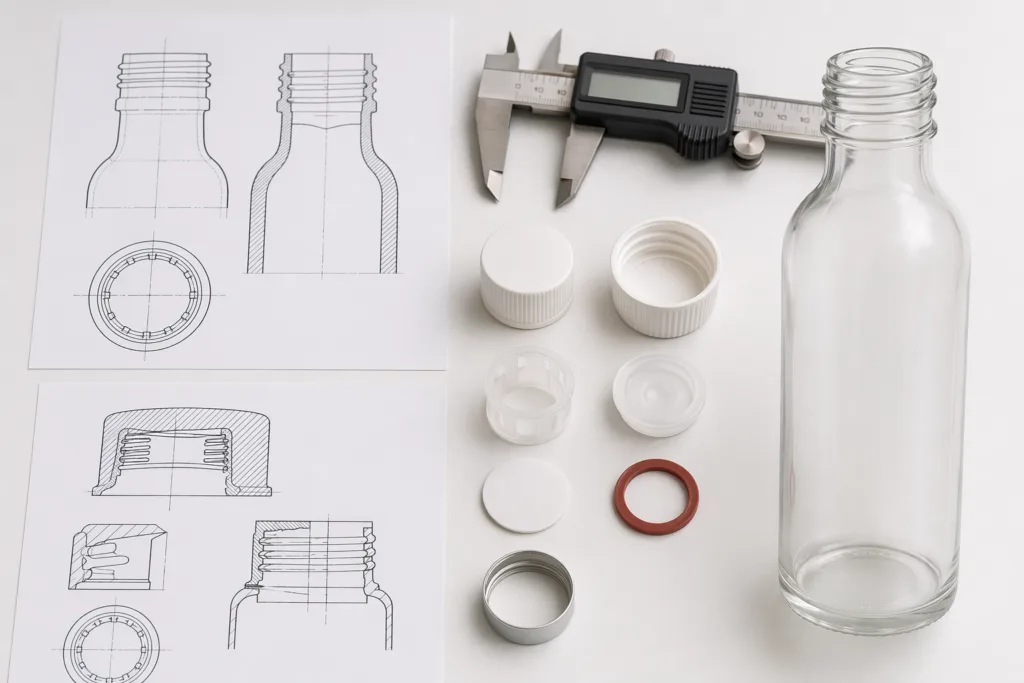
Checklist Step 2 — Confirm Bottle Fit and Closure Details Early
- Bottle neck dimensions
- Collar dimensions
- Pump or crimp details
- Existing cap sample or bottle sample
- Neck finish drawings
- Tolerance requirements
- Pull force or user experience preference
- Whether the cap must work with an existing bottle supplier setup
Checklist Step 3 — Choose the Right Material and Weight Direction
- Preferred cap material
- Whether heavy feel is required
- Weight target range if known
- Whether the cap is decorative only or part of a specific user experience
- Need for insert compatibility and secure assembly
Checklist Step 4 — List Surface Finish Requirements Clearly
Surface finish affects appearance, cost, production workflow, and consistency control. Buyers should define both the target look and any finish performance concerns.
Your checklist should include:
Useful related pages:
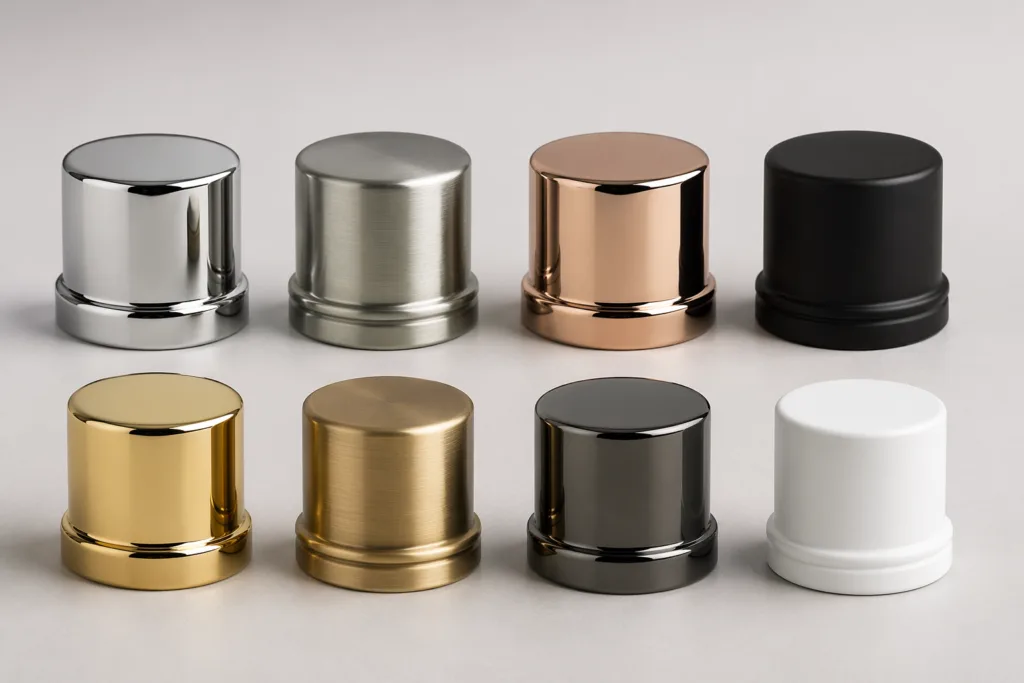
- Finish type: polished, brushed, electroplated, painted, matte, glossy, or mixed finish
- Color direction: gold, silver, black, rose gold, gunmetal, white, custom painted color, or other brand tone
- Texture expectations: smooth, satin, brushed line, mirror, sand-like, or patterned
- Whether edges, logo areas, and side walls need different treatments
- Whether color matching to packaging components is required
- Whether sample approval must be under specific lighting conditions
- electroplated perfume caps
- painted perfume caps
- perfume cap finish guide
- finish color chart
Checklist Step 5 — Decide How the Logo Will Be Applied
- Vector logo artwork if available
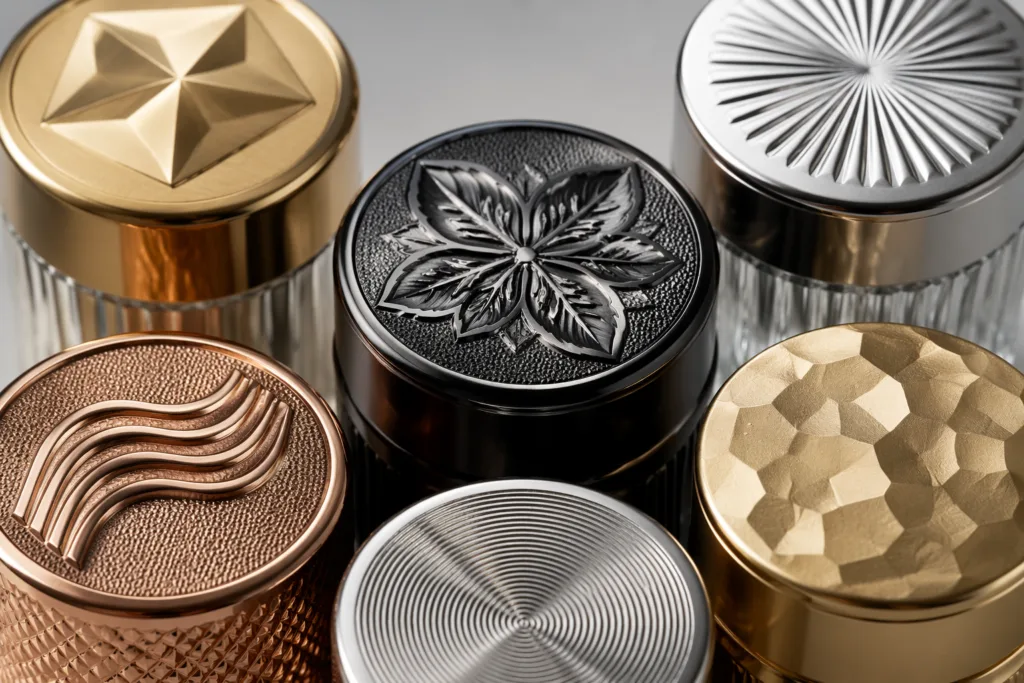
- Preferred logo method: engraving, embossing, debossing, printing, insert badge, or combined treatment
- Logo location on top, side, shoulder, or multiple surfaces
- Required logo size and orientation
- Whether the logo should be subtle or highly visible
- Any concern about readability after plating or painting
Checklist Step 6 — Prepare Technical Files That Speed Up Quoting
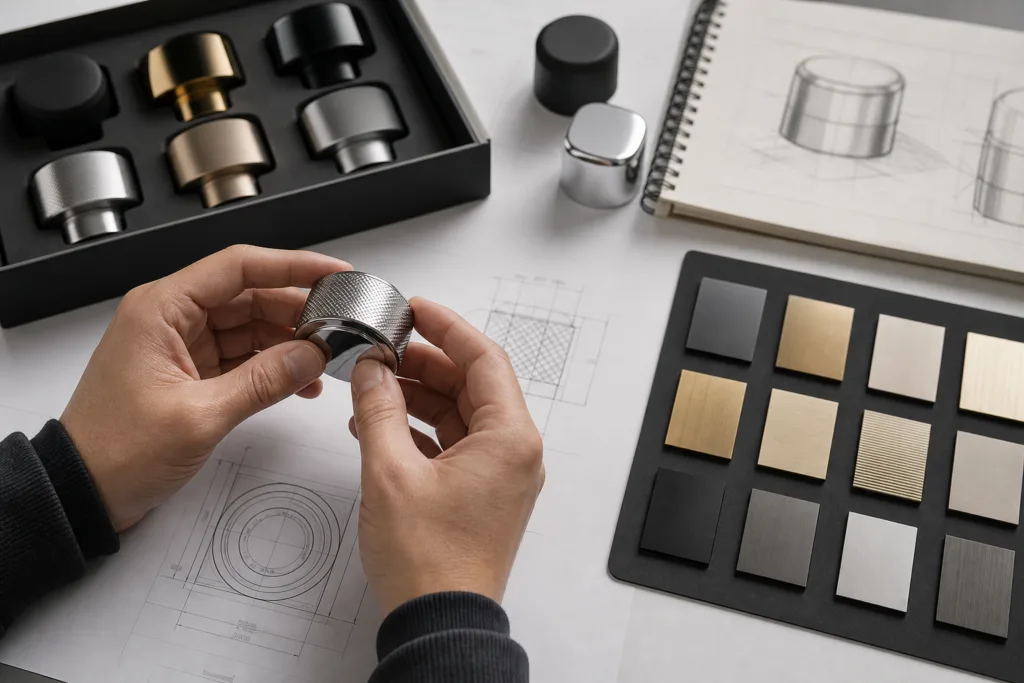
- 2D drawings
- 3D files
- Bottle technical drawings
- Existing cap samples
- Artwork files
- Finish references
- Pantone or color references where relevant
- Assembly notes
- Packaging requirements
- Target launch timing
Checklist Step 7 — Identify Sample Approval Criteria Before Sampling Starts
- Cap shape accuracy
- Bottle fit and seating
- Insert performance
- Surface finish quality
- Color consistency
- Logo clarity
- Weight and hand feel
- Scratch, plating, paint, or polishing expectations
- Assembly condition
- Carton and packing protection if needed
Checklist Step 8 — Ask the Right Questions About Mold, MOQ, and Lead Time
- Does this design require a new mold?
- Are there shape details that may affect tooling complexity?
- Which finishes add extra process steps?
- Will the logo method affect lead time?
- What sample stages are recommended?
- How should MOQ be planned for a first order versus repeat orders?
- What factors may change production timing?
Checklist Step 9 — Review Quality and Inspection Expectations Before Bulk Order Approval
A cap that looks good at sample stage still needs stable process control in production. Buyers should define which points matter most for inspection and acceptance.
Your quality checklist may include:
Related quality resources:
- Finish consistency across production lots
- Plating or paint appearance standards
- Surface defect tolerance
- Logo position consistency
- Assembly strength
- Bottle fit consistency
- Color comparison standard
- Final inspection method
- Export packing condition
- quality control for perfume cap projects
- surface finish testing
- final inspection for perfume caps
Buyer Use Cases — Who Should Use This Checklist
This checklist is useful for:
If your project falls into a specific buyer scenario, you may also want to review:
- Perfume brand owners preparing a custom launch
- Private label perfume companies managing packaging development
- Cosmetic packaging buyers comparing supplier readiness
- Packaging distributors collecting technical information from clients
- Fragrance design agencies translating concept work into production data
- Sourcing teams evaluating custom cap feasibility before RFQ
- private label perfume packaging caps
- packaging distributors
- fragrance design agencies
- perfume brand owners
Quick Pre-RFQ Checklist
Before you contact Caps Ltd, try to confirm as many of these points as possible:
Even if some details are still open, sending partial information is better than waiting for a perfect file set. Early review often helps identify missing technical points.
- Product positioning and target market
- Cap style and approximate shape
- Bottle neck, collar, and closure details
- Material preference
- Weight direction
- Finish type and color direction
- Logo artwork and application preference
- Reference images or samples
- Sampling expectations
- Estimated order quantity range
- Target launch timing
- Packing or assembly notes
Next Step Options for Buyers
Frequently Asked Questions
It helps buyers prepare the design, fit, finish, logo, and production details needed for more accurate quoting and smoother sample development.
Not always. Reference images, bottle samples, and basic fit information can still help start the review. Technical drawings improve accuracy when available.
Bottle neck dimensions, collar details, pump or crimp structure, insert requirements, and any existing cap or bottle samples are important for fit evaluation.
Yes, at least at a direction level. Finish choice affects process steps, tooling considerations, sample planning, and overall project cost.
Yes. Sample review is often used to check cap shape, bottle fit, finish quality, logo appearance, and overall hand feel before bulk production.
You can still submit the information you have. Early supplier review can help identify missing points and guide the next steps.